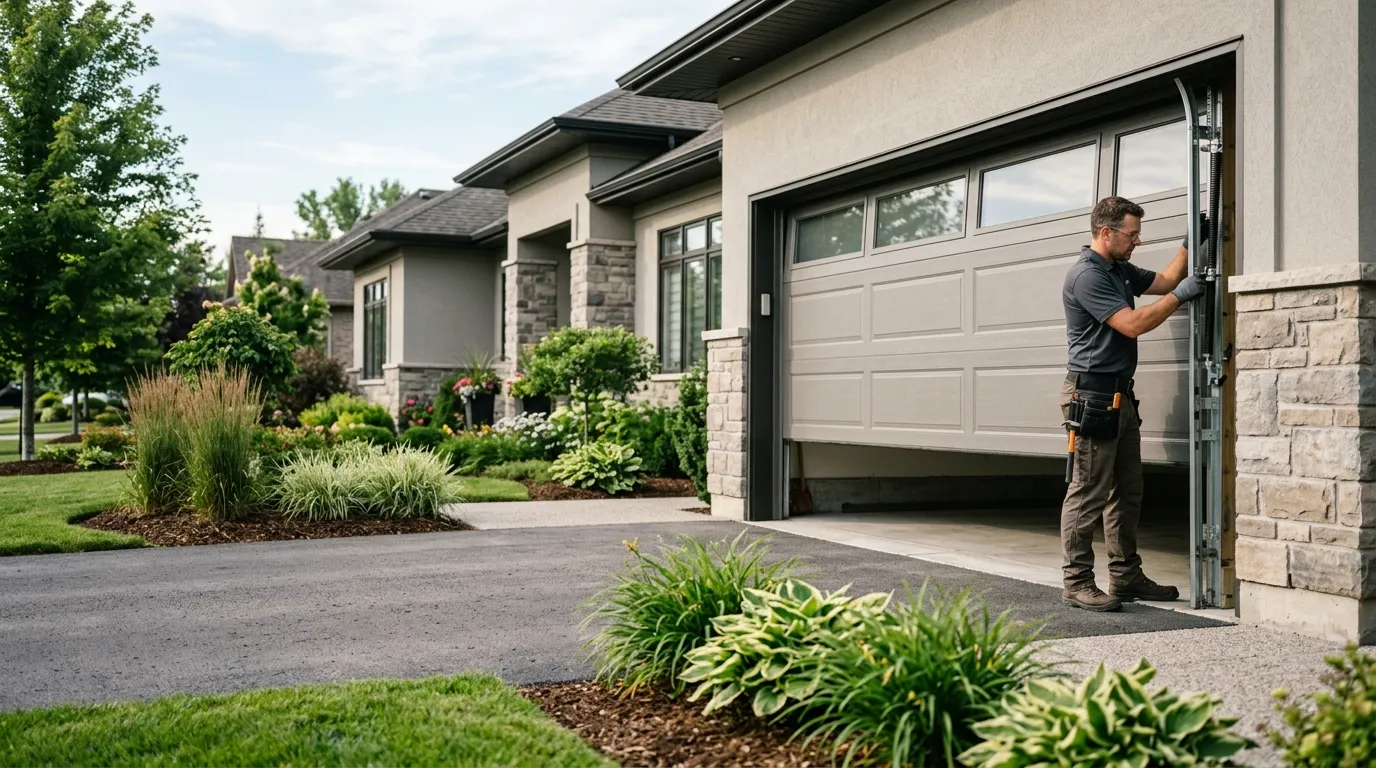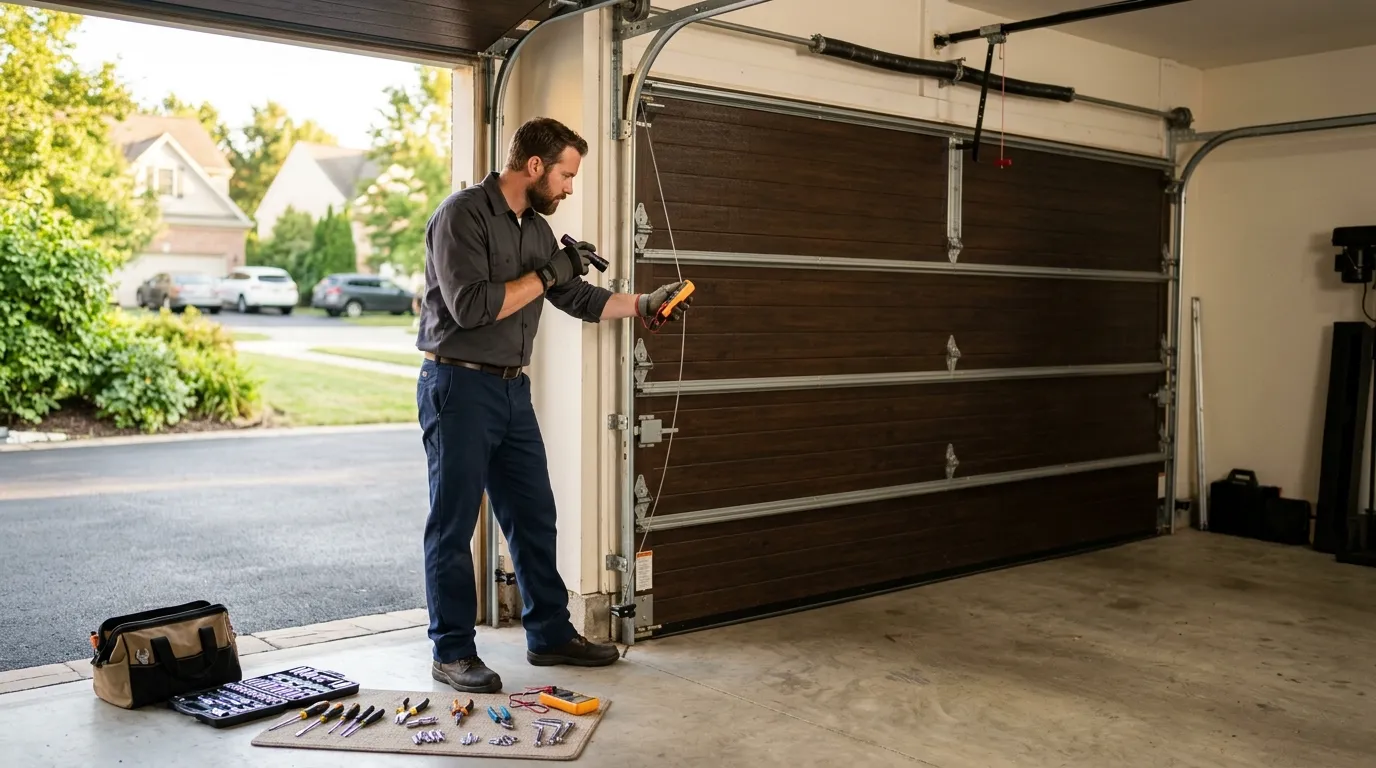
The DIY Question
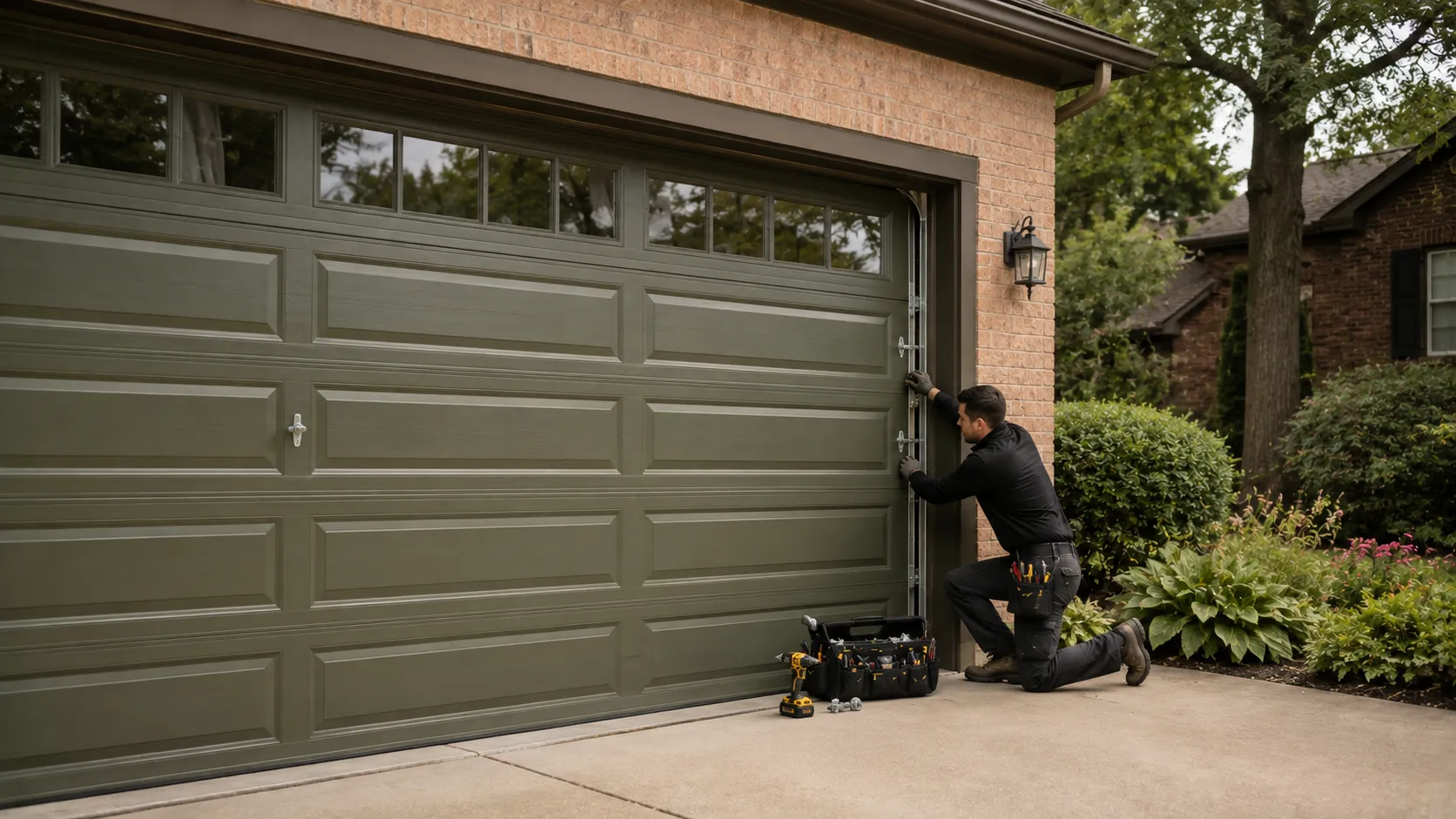
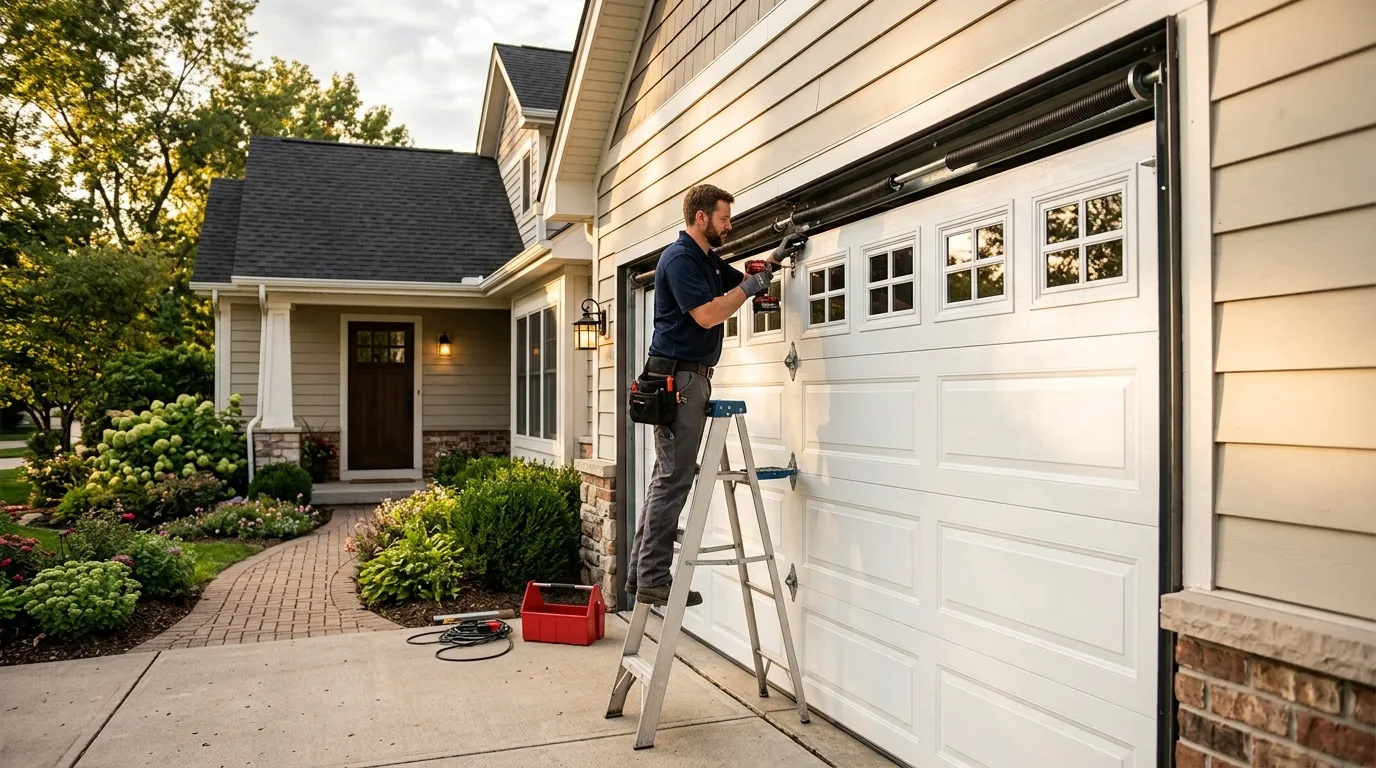
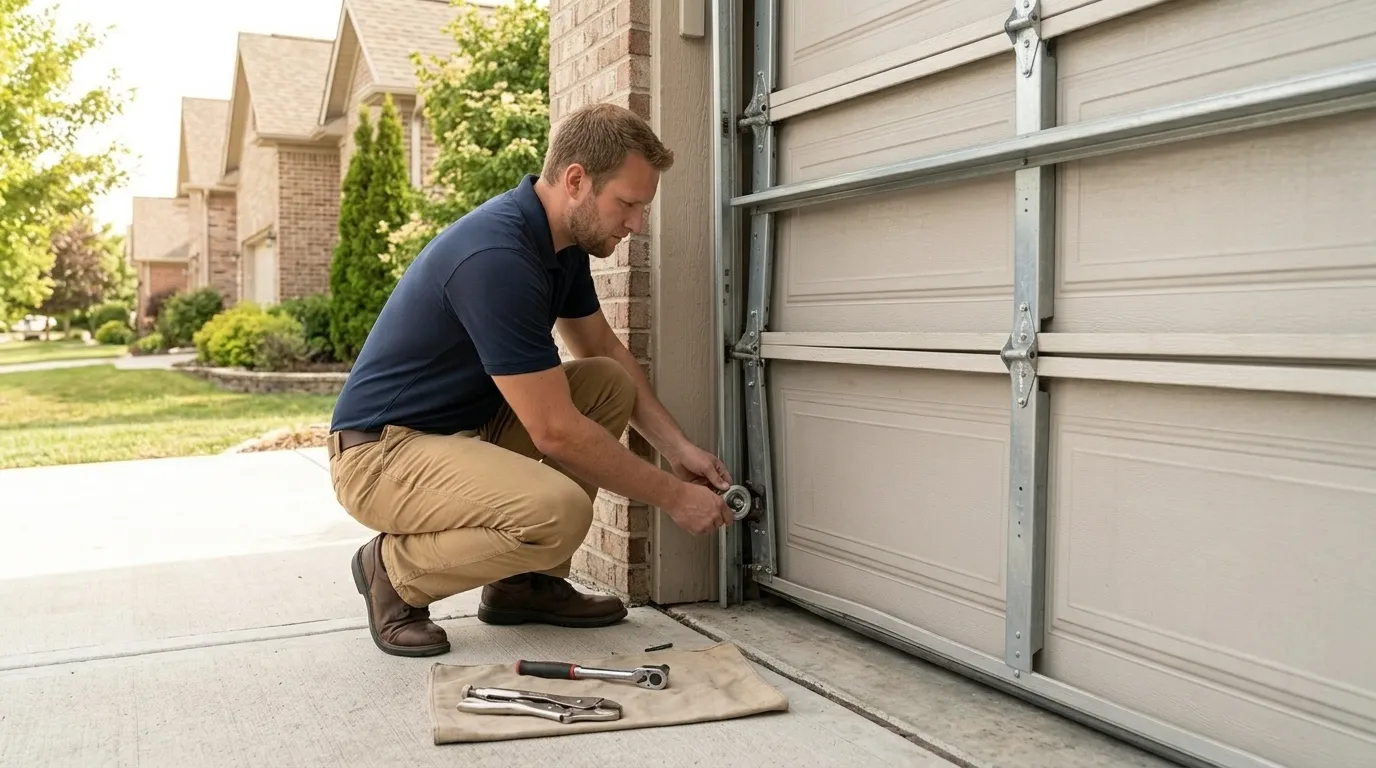
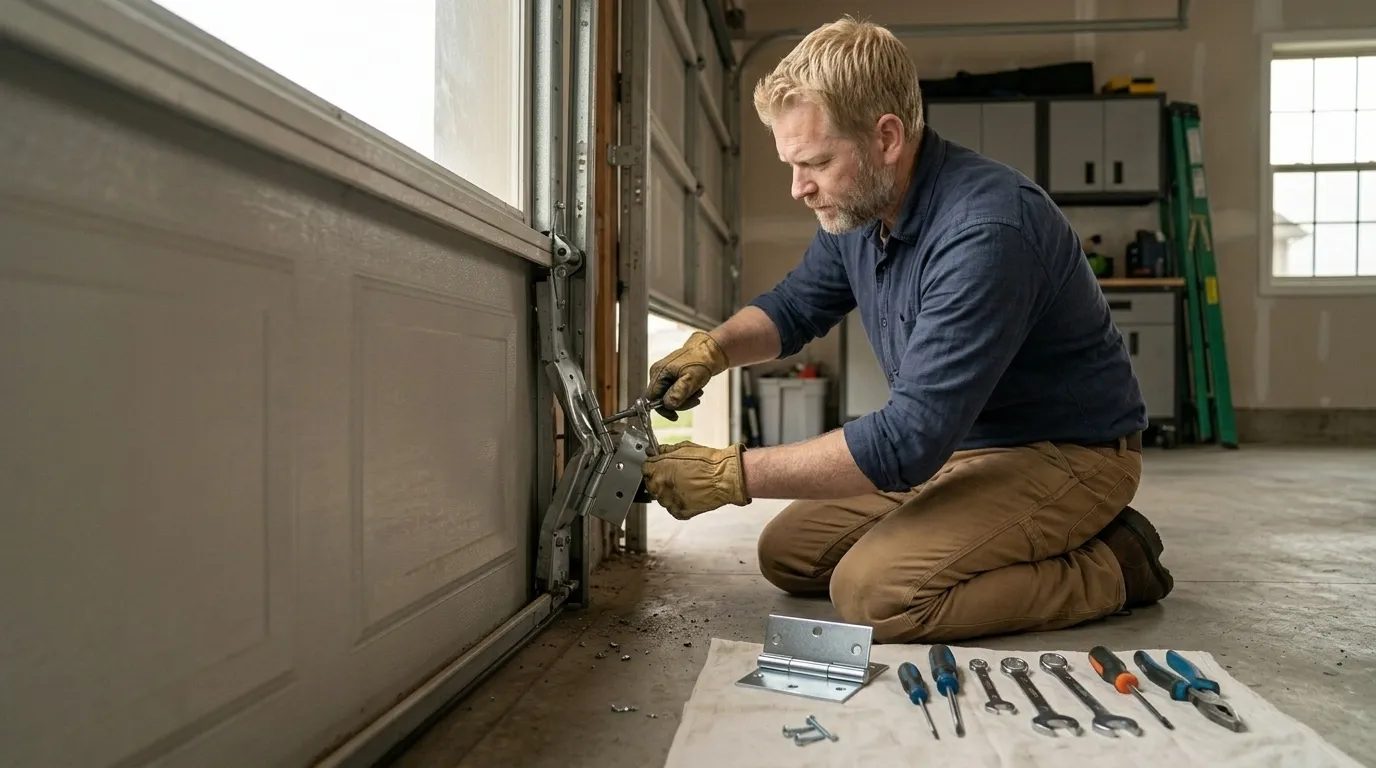
You can watch a dozen videos on popping a roller back into a track, and some of them aren't wrong. If the door is only slightly cocked, still closed, and nothing is bent, you might be able to loosen the track bolts, tap it back square, and retighten. That's the limit of what a homeowner should try.
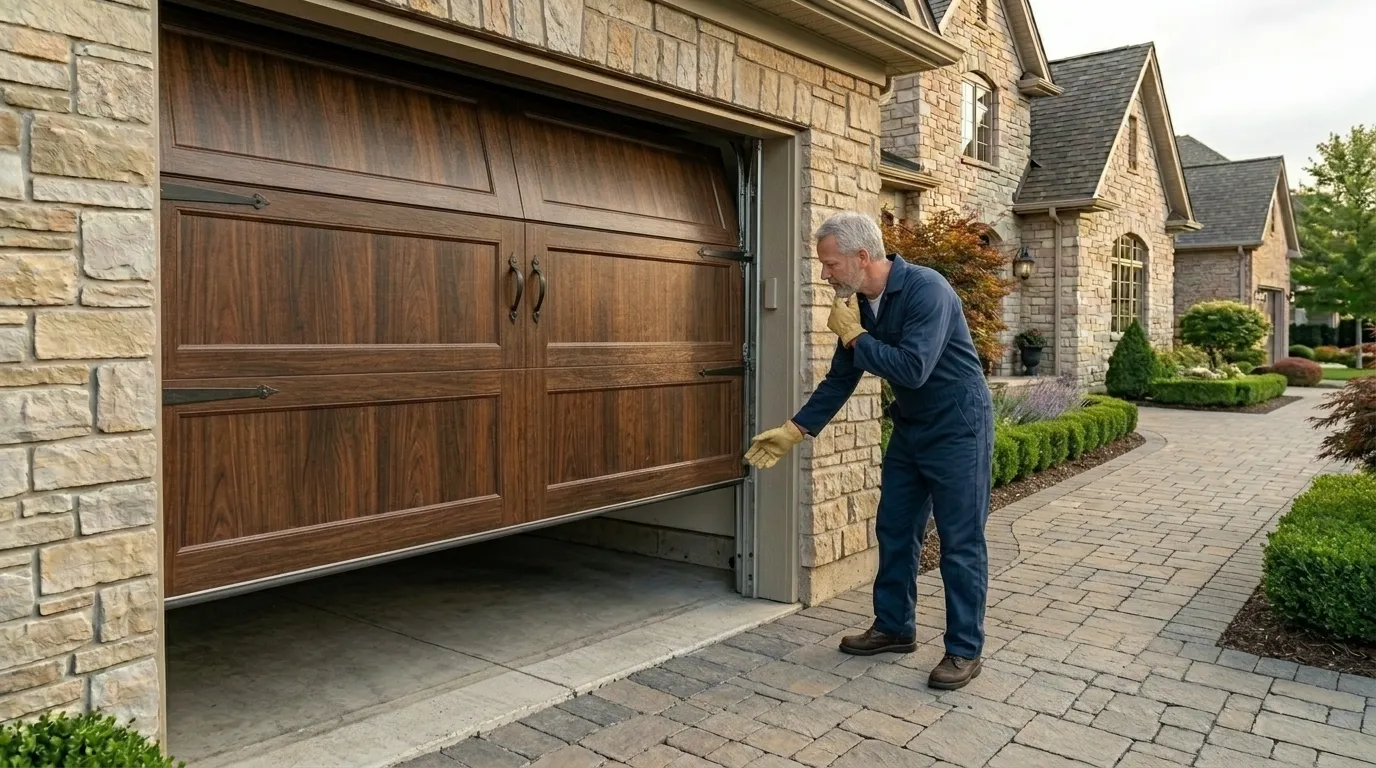
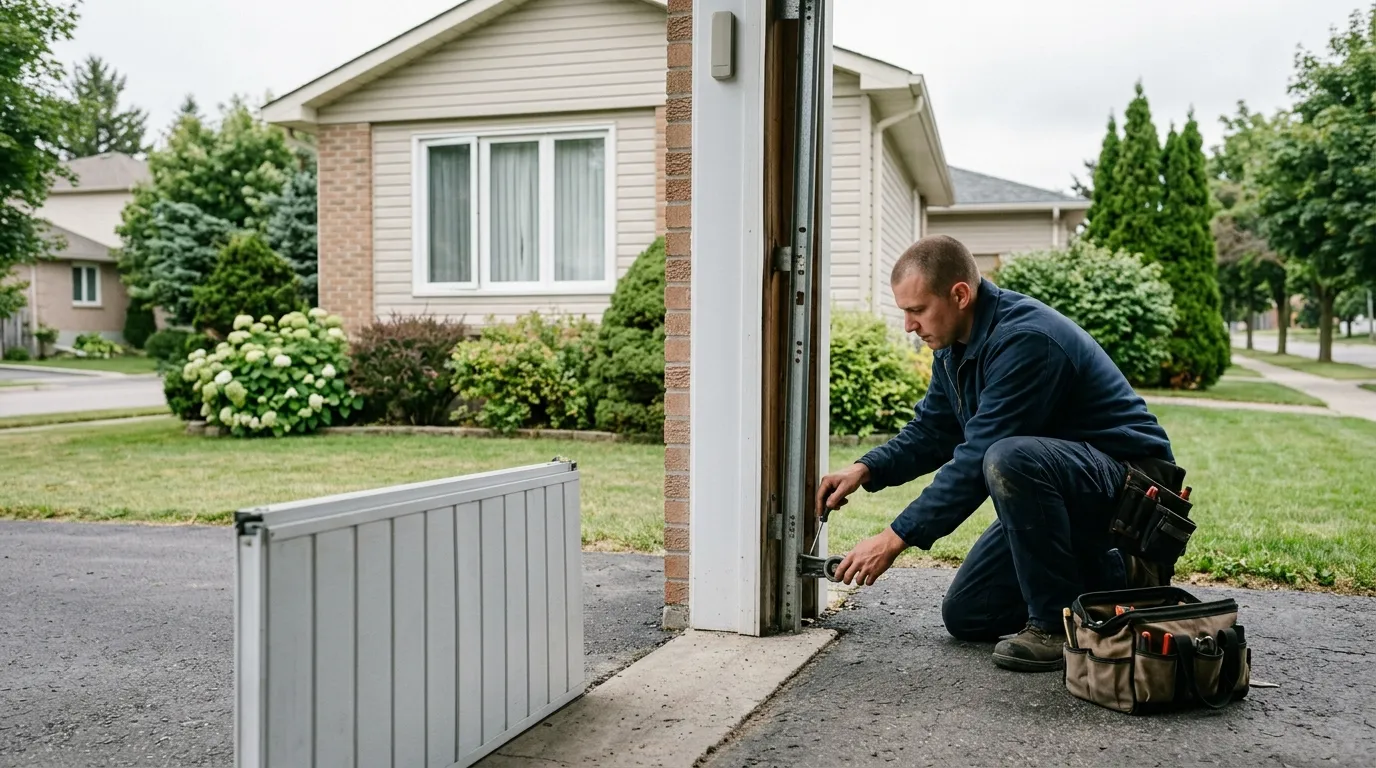
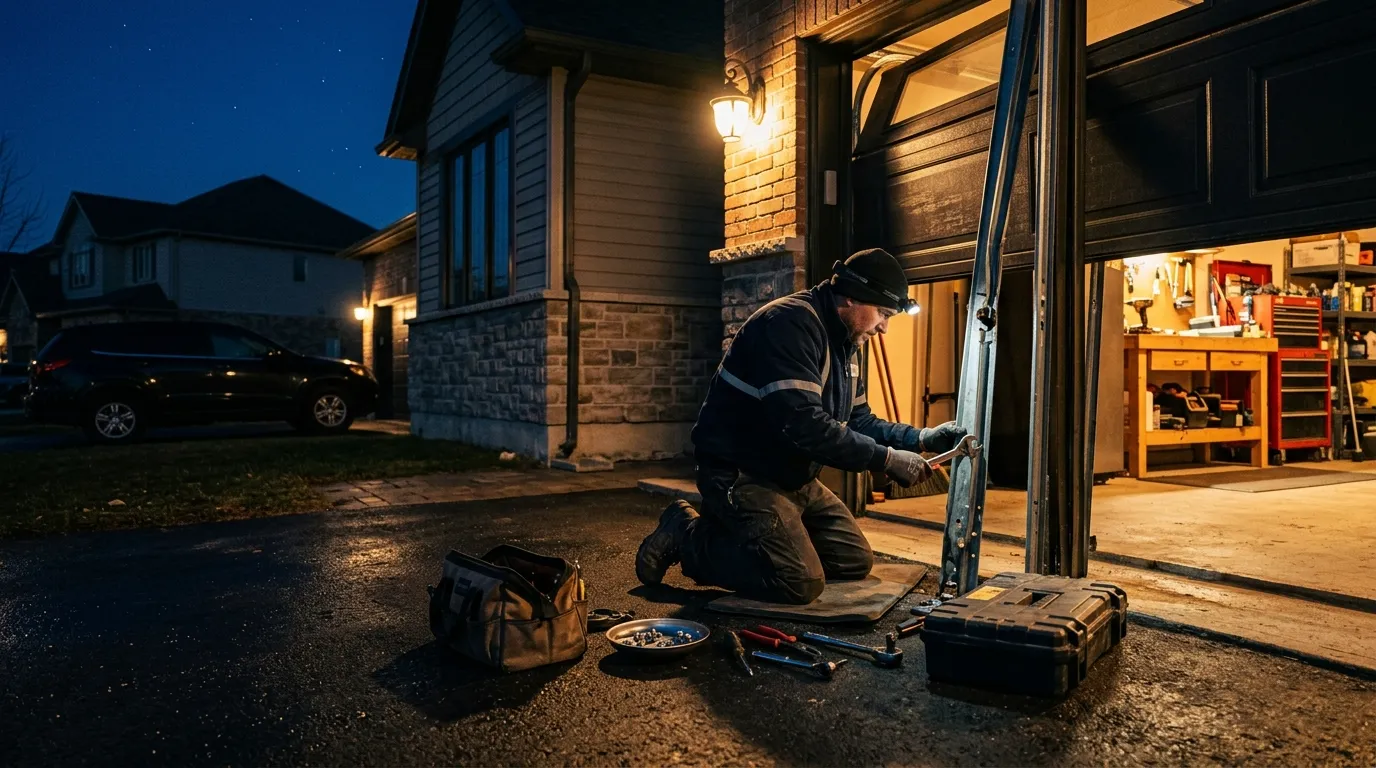
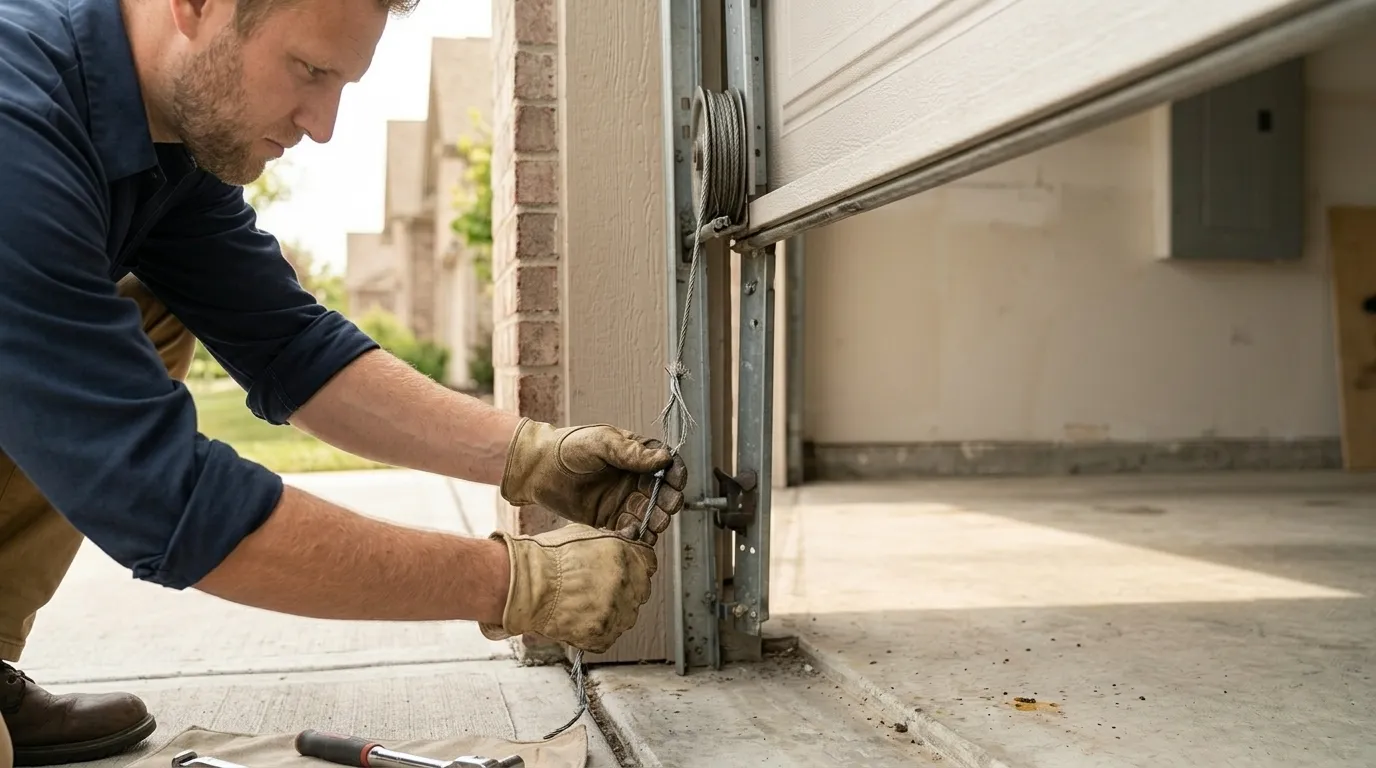
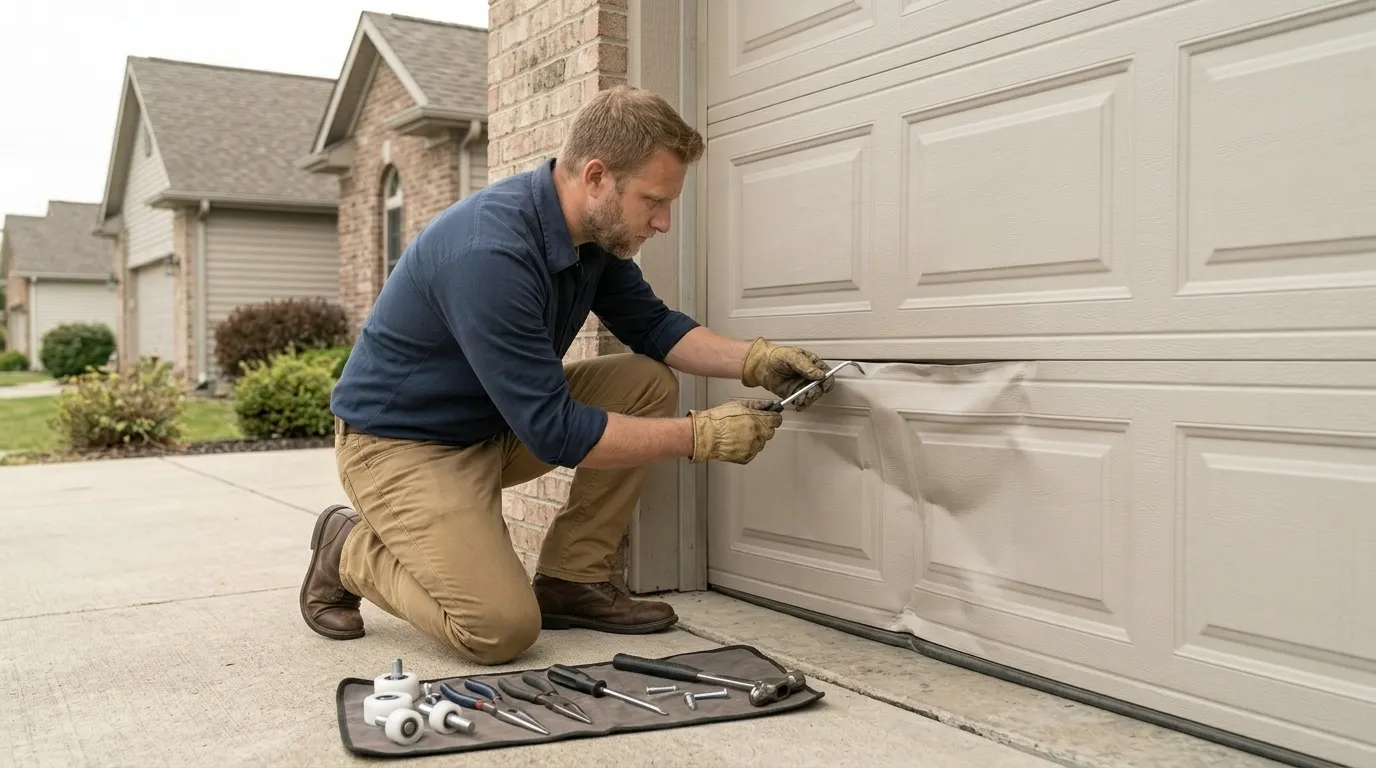
Past that point, stop. A door hanging half off its track is under spring tension you can't see and can't control by hand. If a cable jumped a drum, if the bottom panel is wedged against the jamb, or if the track itself is bent rather than just knocked loose, you're working against 100-150 pounds of door with no safe way to hold it. We get calls where someone tried to force a panel back and bent the track worse, or pulled a hinge clean off the panel, turning a repair into a replacement.
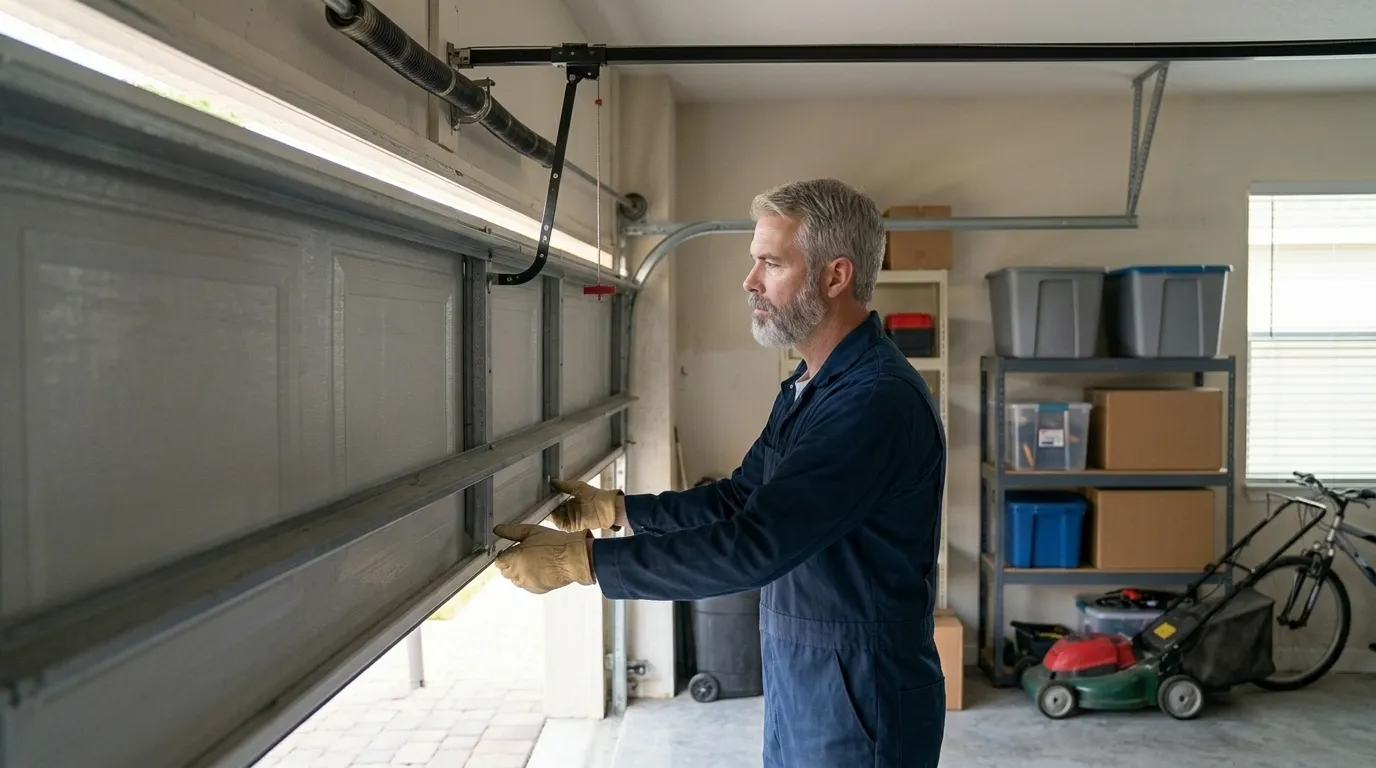
Our honest limit: we don't recommend torsion spring work as a DIY job, ever, and we won't walk you through it over the phone. If the door is off track and won't move freely by hand with the opener disconnected, leave it alone and call. That's not us protecting a job - that's the actual line between a repair and an ER visit.
How Long You Are Without the Door
An off-track door usually means the door doesn't move at all - not up, not down, not on the opener. If it happened with the door open, you've got a garage that won't close, which matters a lot going into a Colorado winter. If it happened with the door down, you're locked out of the garage side entirely until someone gets a look at it.
What actually determines how long you're stuck is what's underneath the symptom. A roller that jumped a track because a bracket loosened is often a same-visit fix - loosen, realign, retighten, test. A bent track from a car bumping the door, or a broken cable that let one side drop, usually means parts on the truck or parts ordered, because bent track doesn't get hammered straight and trusted again.
We don't quote a blanket turnaround here because it depends on which of those two situations you're in, and that's exactly what the diagnostic visit sorts out. What we can tell you is that leaving a door racked on a bent track and running the opener anyway is how a $200 fix turns into a new door and opener both.
Why It Happens Here
A lot of the housing across this service area went up between 1952 and 2010, with the typical build year landing around 1997, and a good chunk of that stock - across the 23 named subdivisions we work in - dates specifically to the 1980s and 90s. That matters because that era is when a lot of builders installed lighter steel track and stamped-metal brackets that hold up fine for years and then let go all at once when a roller finally wears through its bearing.
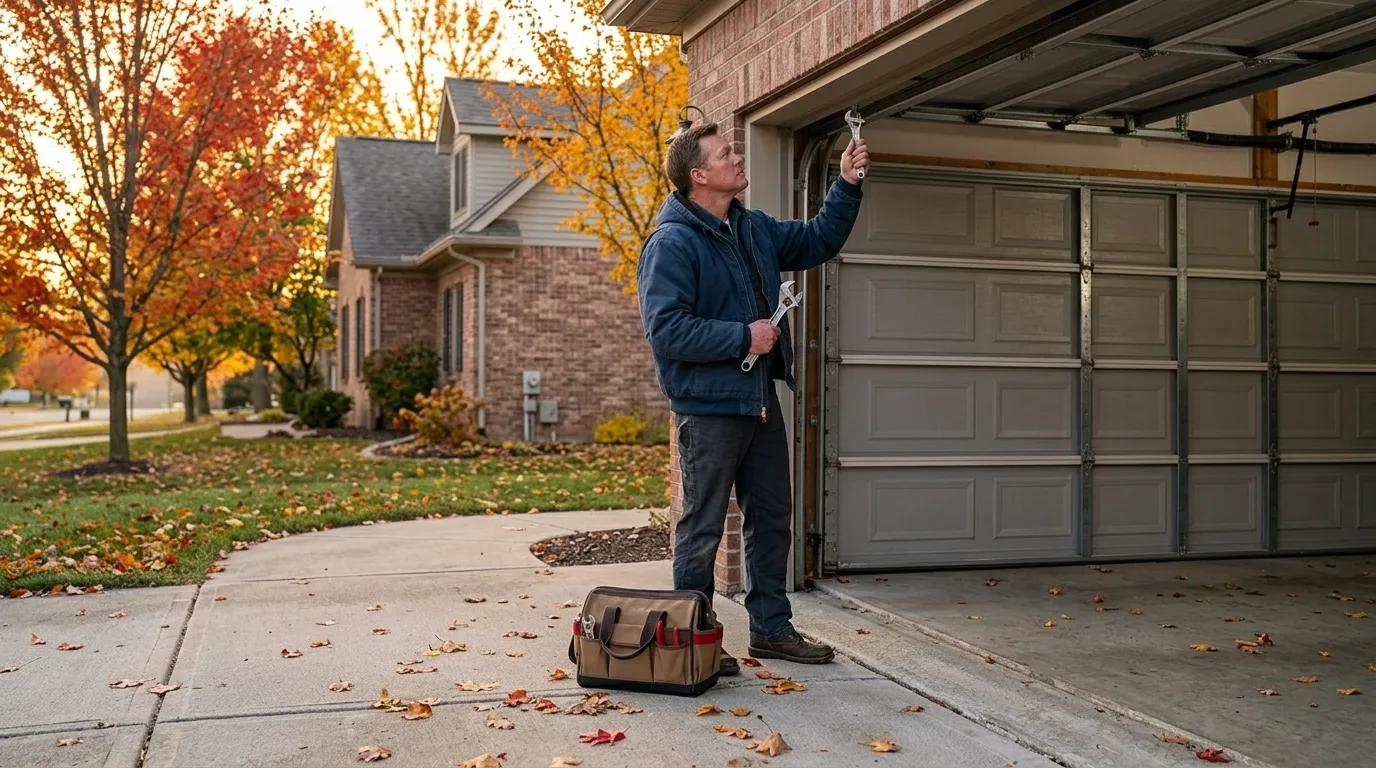
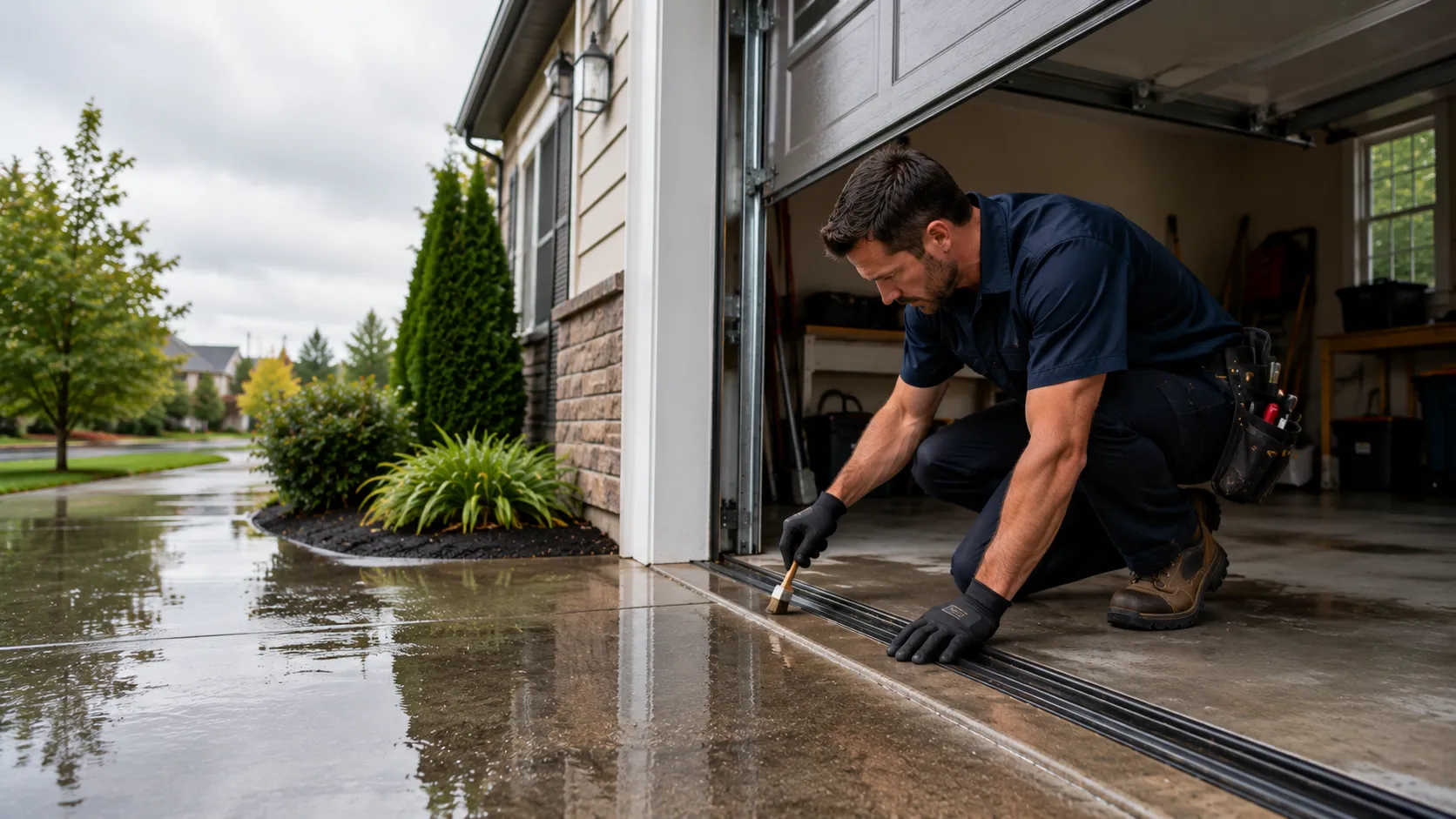
This area also sits in a climate band rated cold and severe, which means the door and its hardware go through a wide swing every year - summer heat that softens lubricant and expands metal slightly, followed by hard winter cold that stiffens grease and makes brackets brittle right when the door gets used the most, hauling cars in and out through snow. A track bracket that's been slowly working loose all summer is more likely to finally let go on the first hard cold snap, when the metal contracts and something that was barely holding stops holding.
With roughly 53,412 owner-occupied houses in this service area, most of them built in that same window, the pattern we see on service calls isn't random - it's the same brackets and the same gauge track wearing out on the same schedule.