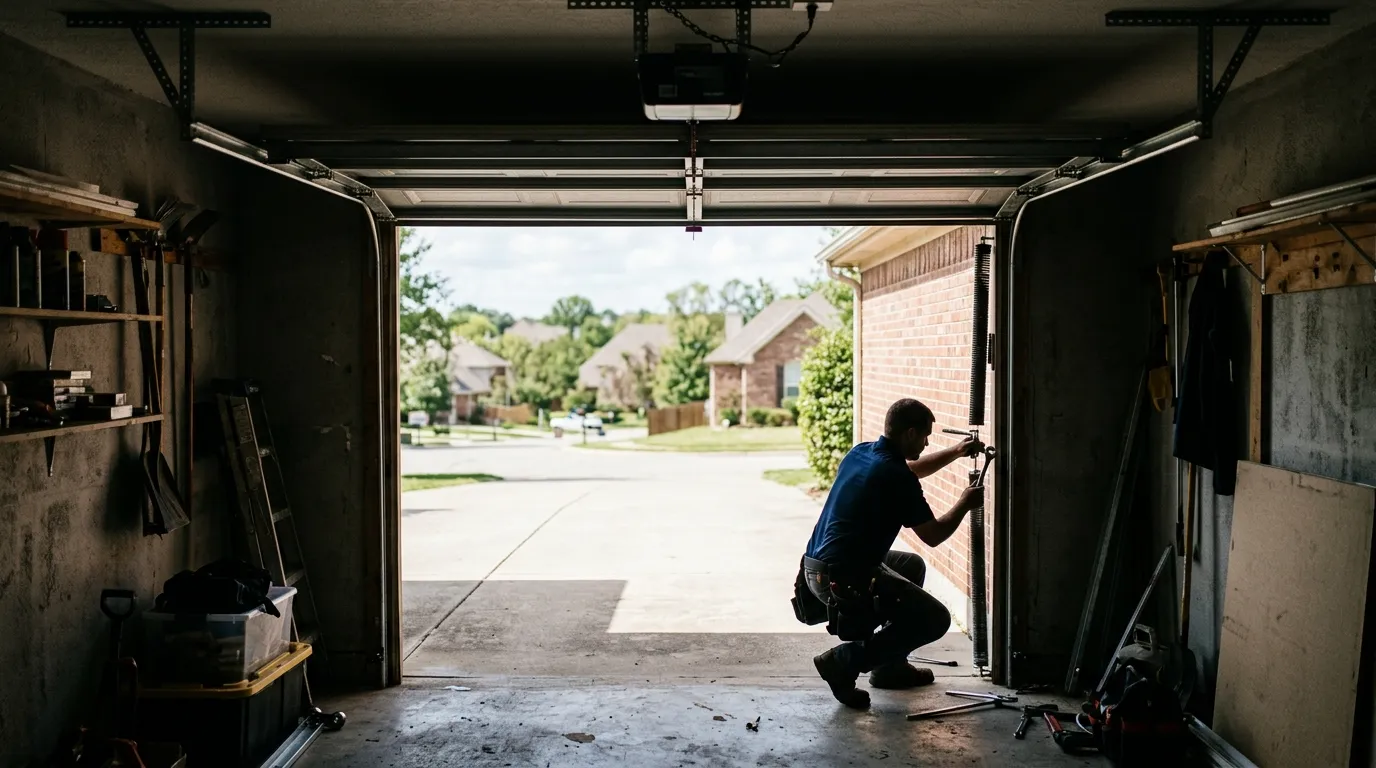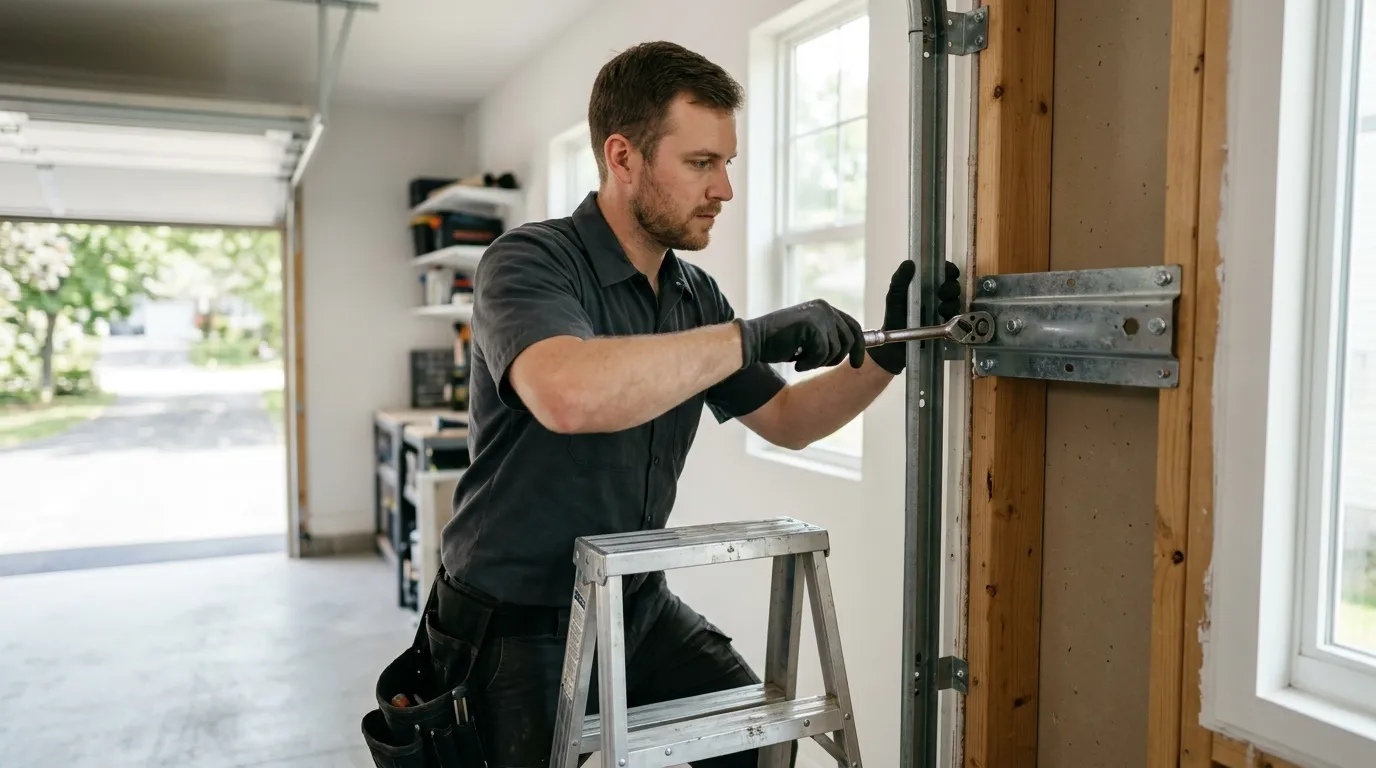
The DIY Question
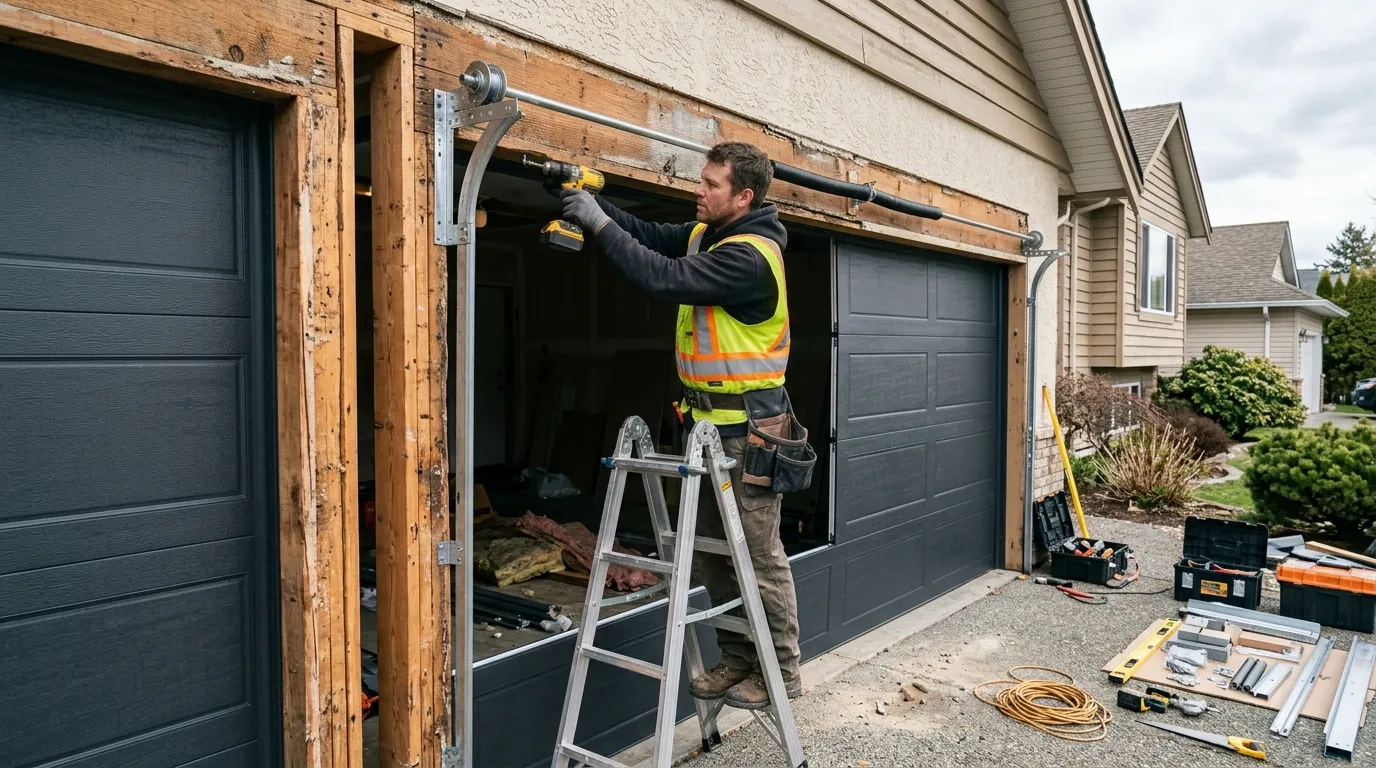
A torsion spring holds enough stored energy to snap a wrist or worse, and that doesn't change based on your address. What does change is what's behind your door. Housing across this service area mostly went up between 1952 and 2010, with the median build year landing at 1997, so you've got a wide spread of hardware generations behind these panels - some single-spring setups from the 80s, some dual-spring systems from newer builds, a handful of oddball originals on the older end.
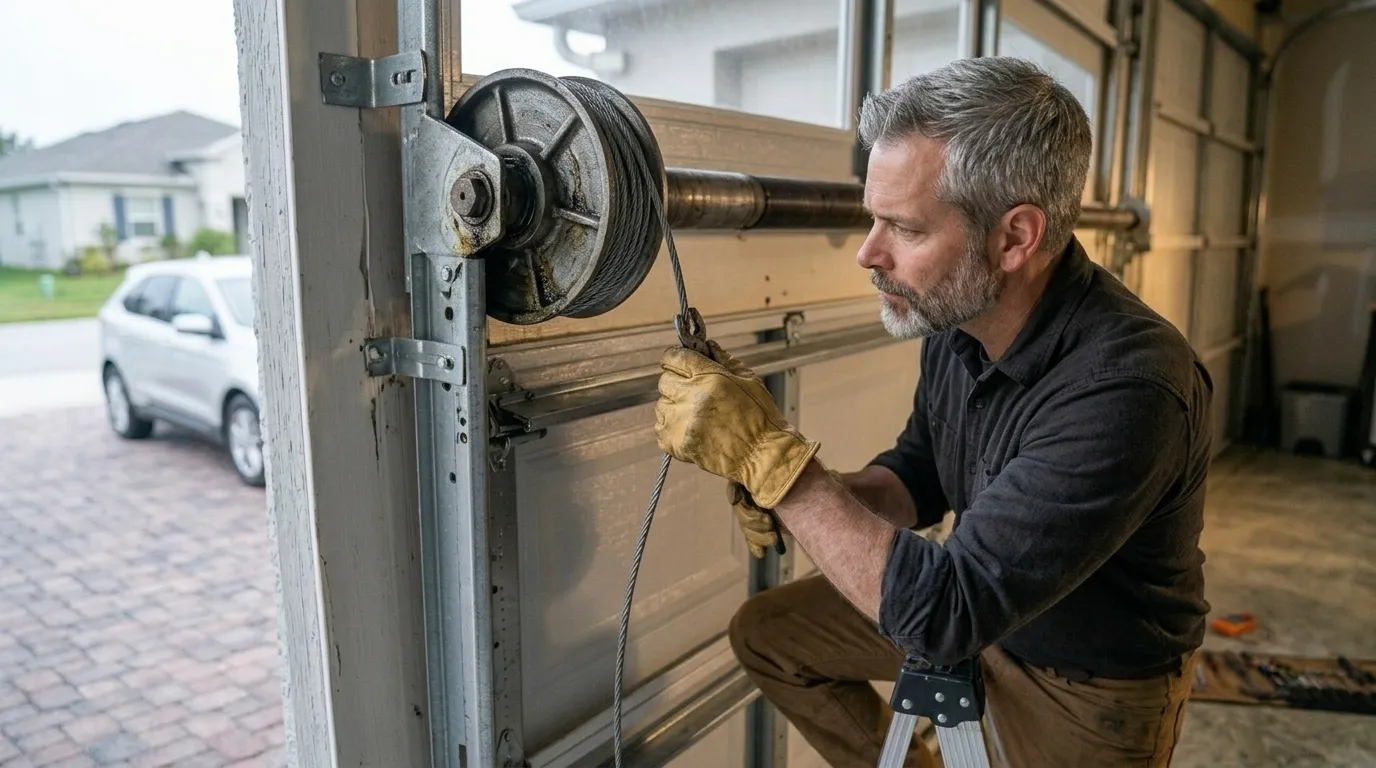
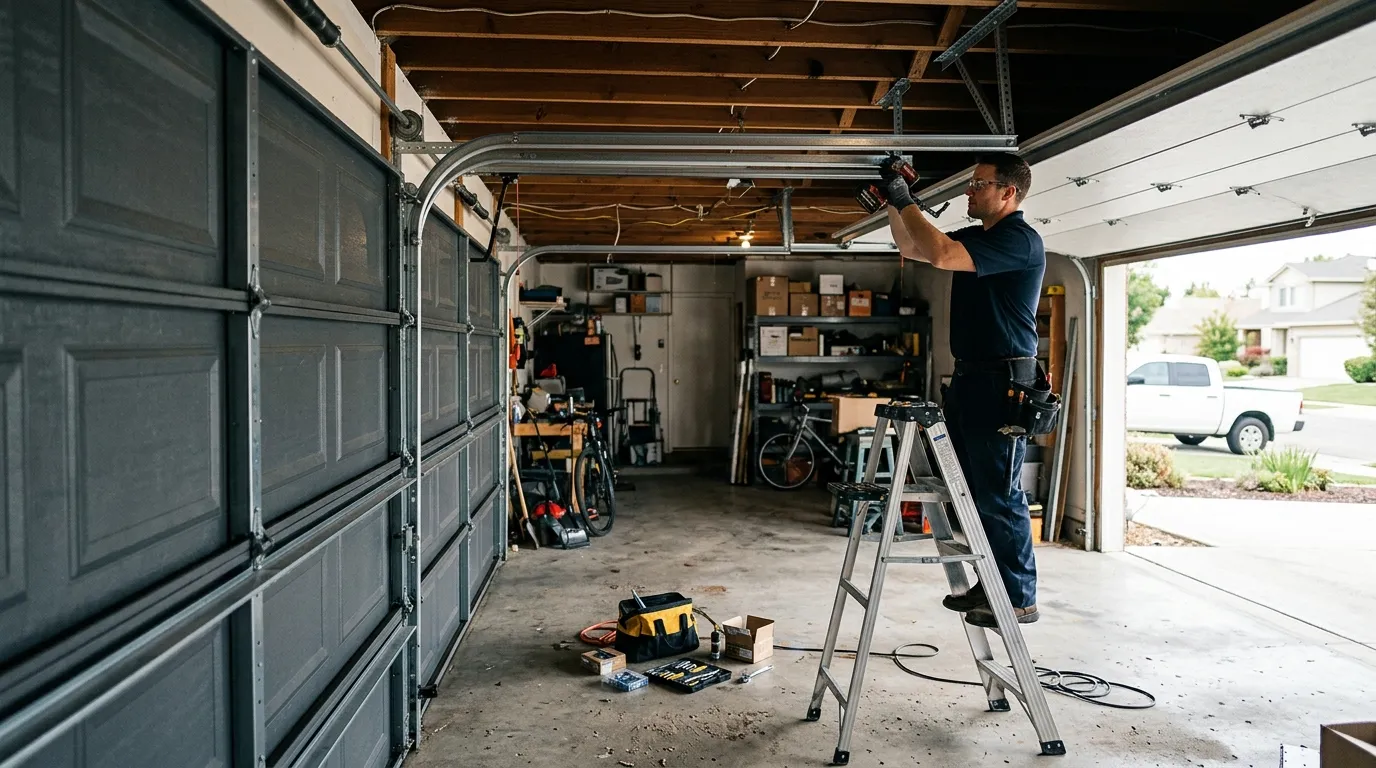
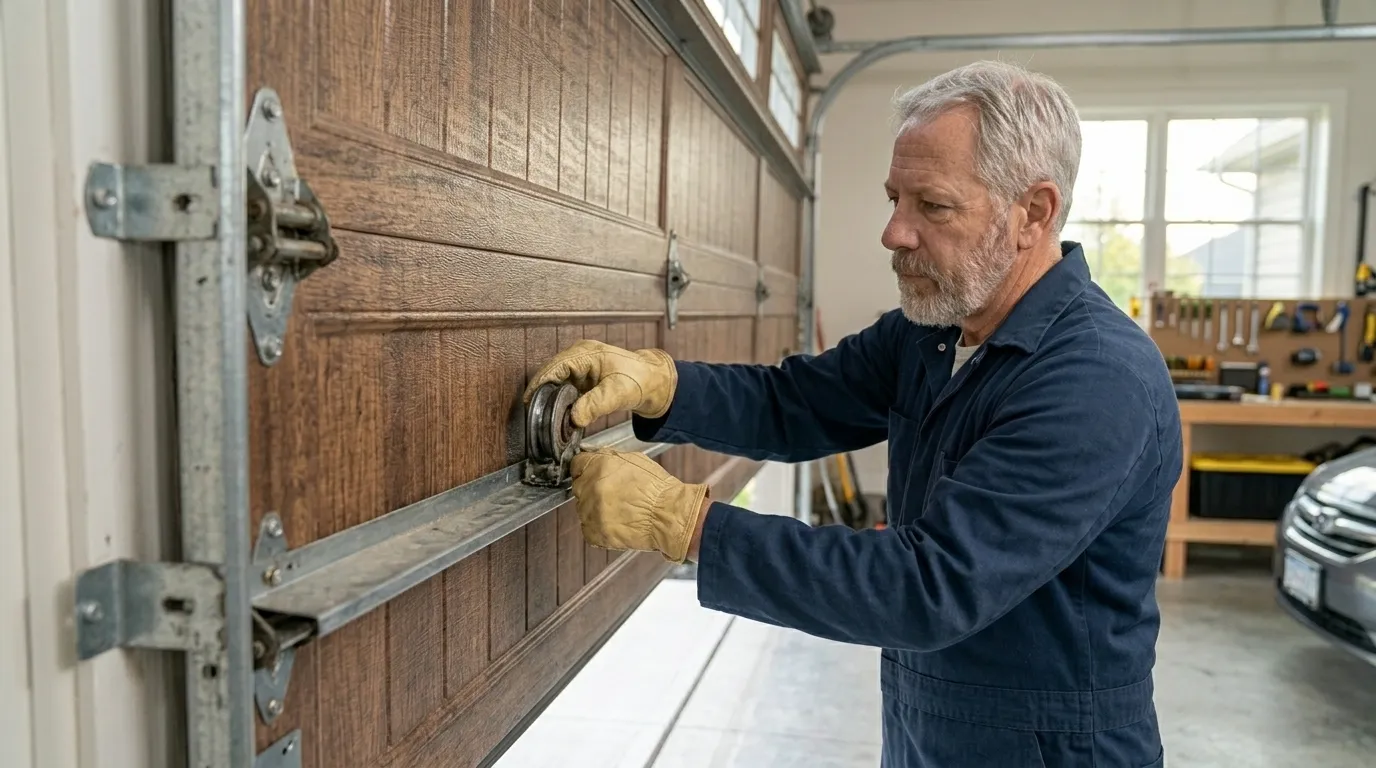
That spread matters because the winding bar, the cone size, the cable drum - none of it is universal. Guess wrong on wire gauge or wind direction and you either strip the setup or launch the bar across the garage. We're not going to tell you it can't be done by a careful person with the right tools. We're going to tell you that on a door this size, the margin for error is a trip to the ER, not a redo.
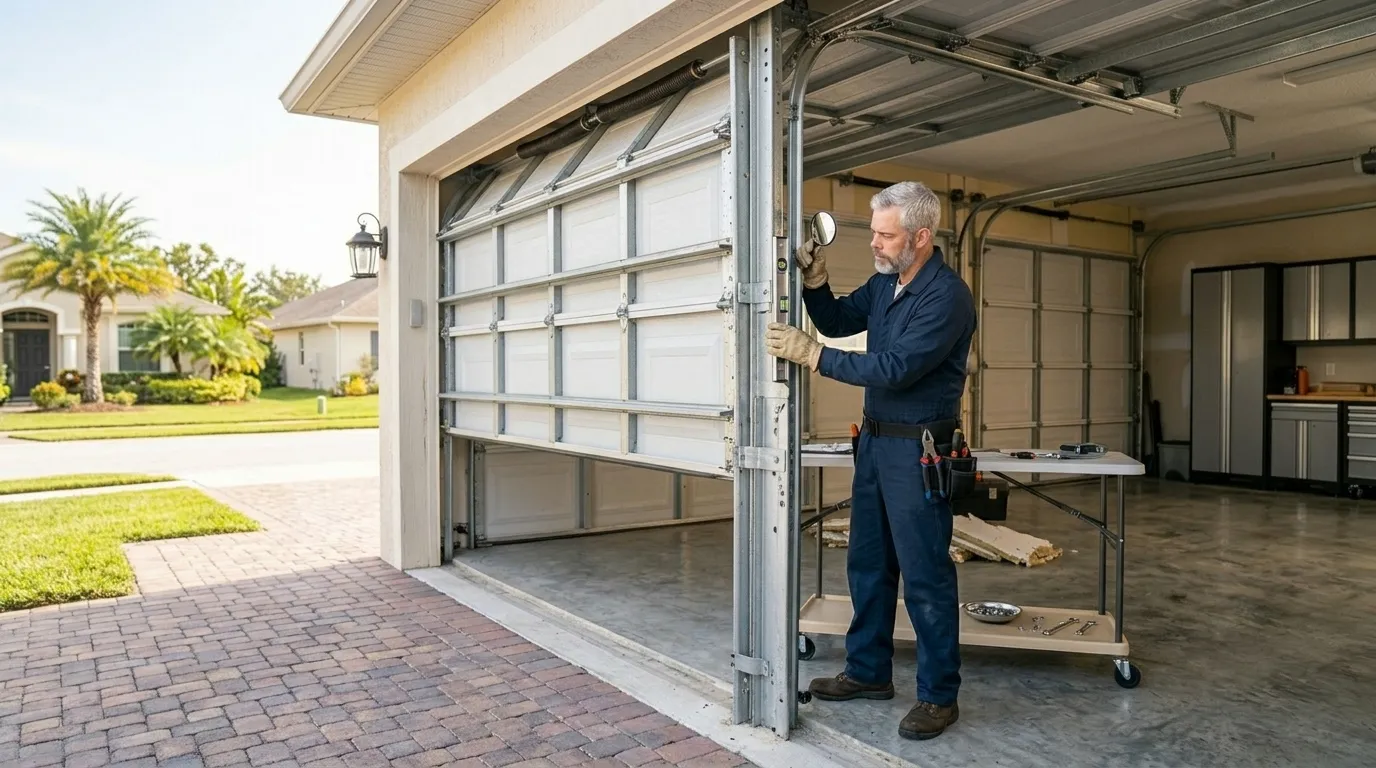
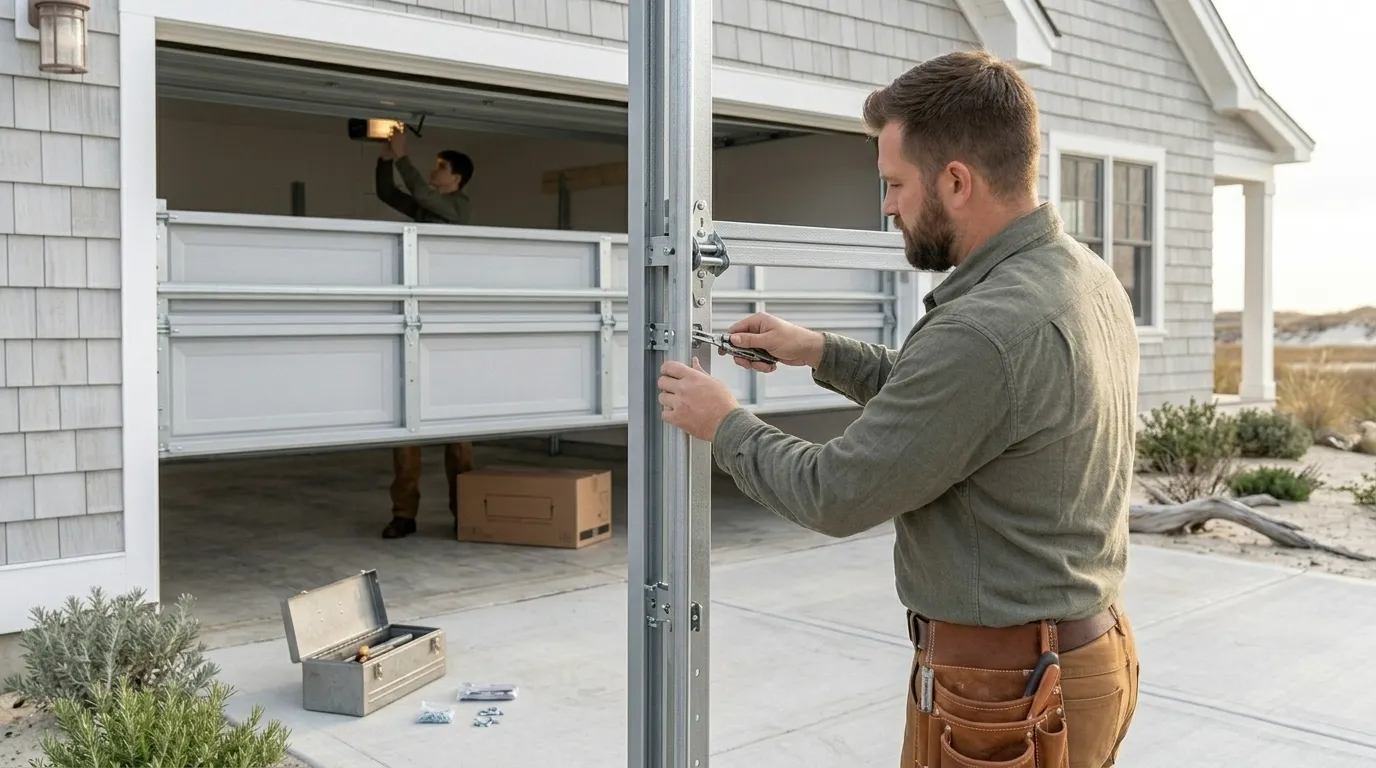
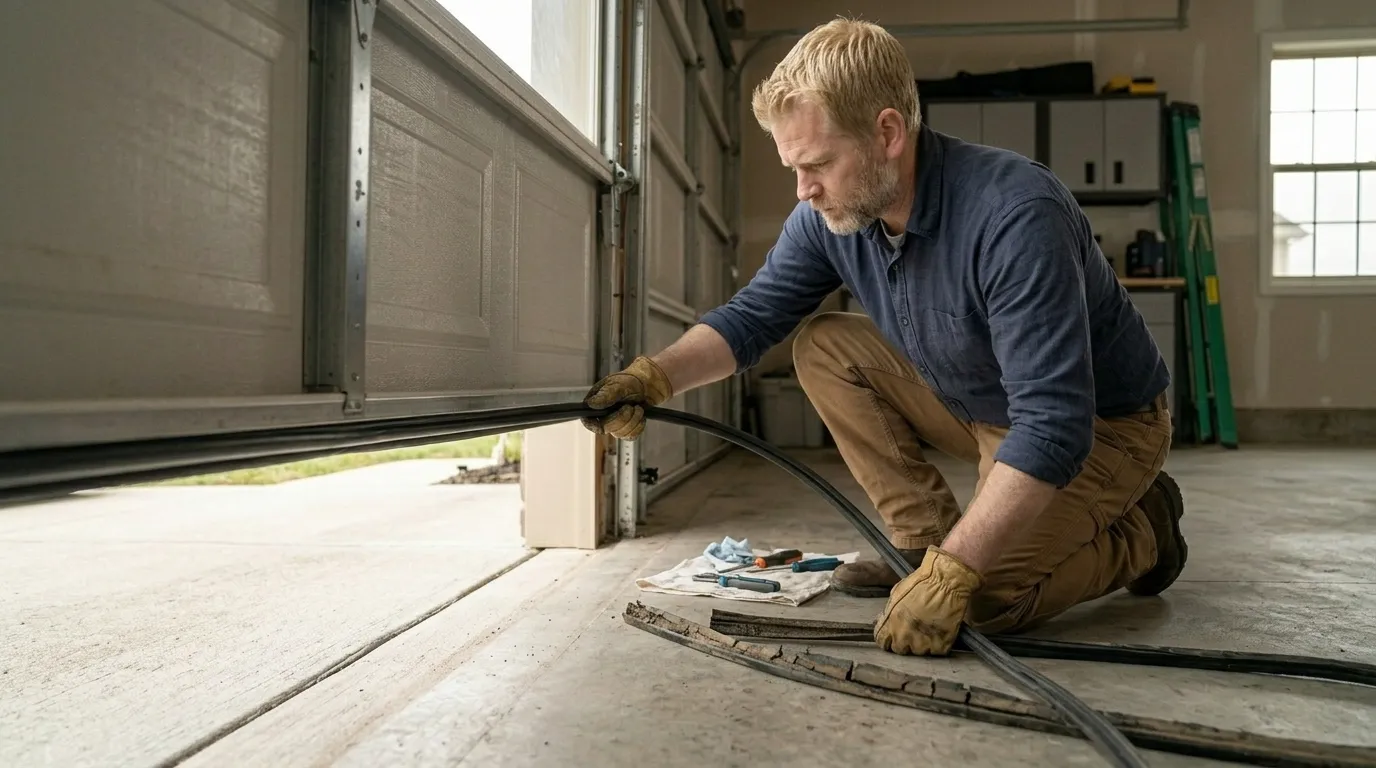
What you can safely check yourself: whether the door is actually a spring problem versus a track, opener, or sensor issue. If the door won't budge and you see a visible gap in a coil above the door, or the cable's gone slack, that's a spring call. Past that point, it's a phone call, not a YouTube afternoon.
How Long You Are Without the Door
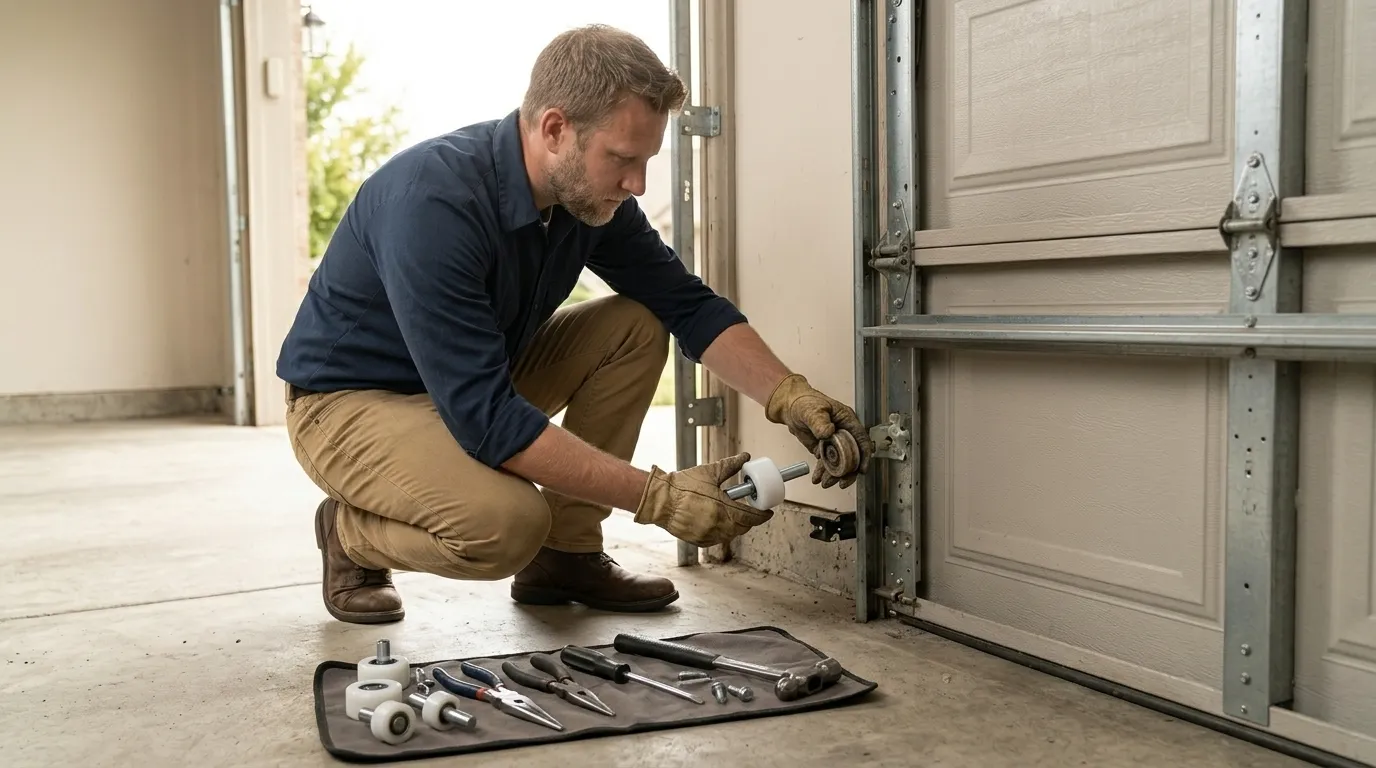
Most spring jobs on the common torsion sizes found in this area's 1980s-90s housing stock get handled same visit - the part's on the truck, the wind pattern is standard, and it's a straightforward swap. Where it slows down is the older end of the build range, doors from the earlier part of that 1952-2010 span that carry a spring size or a shaft diameter nobody stocks in volume anymore. On those, we're honest with you up front: it may take an extra day to get the exact part rather than force a substitute that'll wear wrong.
A broken spring almost always means a stuck door - up or down, whichever position it failed in - because the opener isn't built to lift or hold that weight on its own. If it failed down, you've lost the garage as an entry and the bay as secure storage until it's fixed. If it failed up, you've got a garage that won't close, which in a cold-climate winter is worse than an inconvenience.
We don't pad the timeline to sound impressive, and we don't promise a number we can't back with parts on hand. The honest answer is: common torsion sizes, same day; uncommon ones, ask when you call and we'll tell you straight.
Why It Happens Here
Most of the stock in the 23 named areas we track dates to the 1980s and 90s, which is exactly when single-spring torsion setups were standard and are now aging out on their own timeline regardless of use. A spring rated for several thousand cycles doesn't care how careful you were with the door - metal fatigue is metal fatigue, and a 30-plus year old spring is closer to its limit than a 10-year-old one no matter the brand.
Winters here fall into the severe end of the cold climate band, and steel spring wire gets more brittle as the mercury drops. Combine that with a door cycling through a cold garage twice a day and you get more breaks concentrated in winter months than the rest of the year - it's not bad luck, it's metallurgy plus climate plus age stacking on the same part.
There's also a sizing issue on some of the older builds in that 1952-2010 range: doors built to older lift-weight assumptions sometimes got matched with a spring gauge that was adequate then but is undersized for insulated replacement panels installed since. That mismatch shortens spring life regardless of how well the door's otherwise maintained.