Why It Happens Here
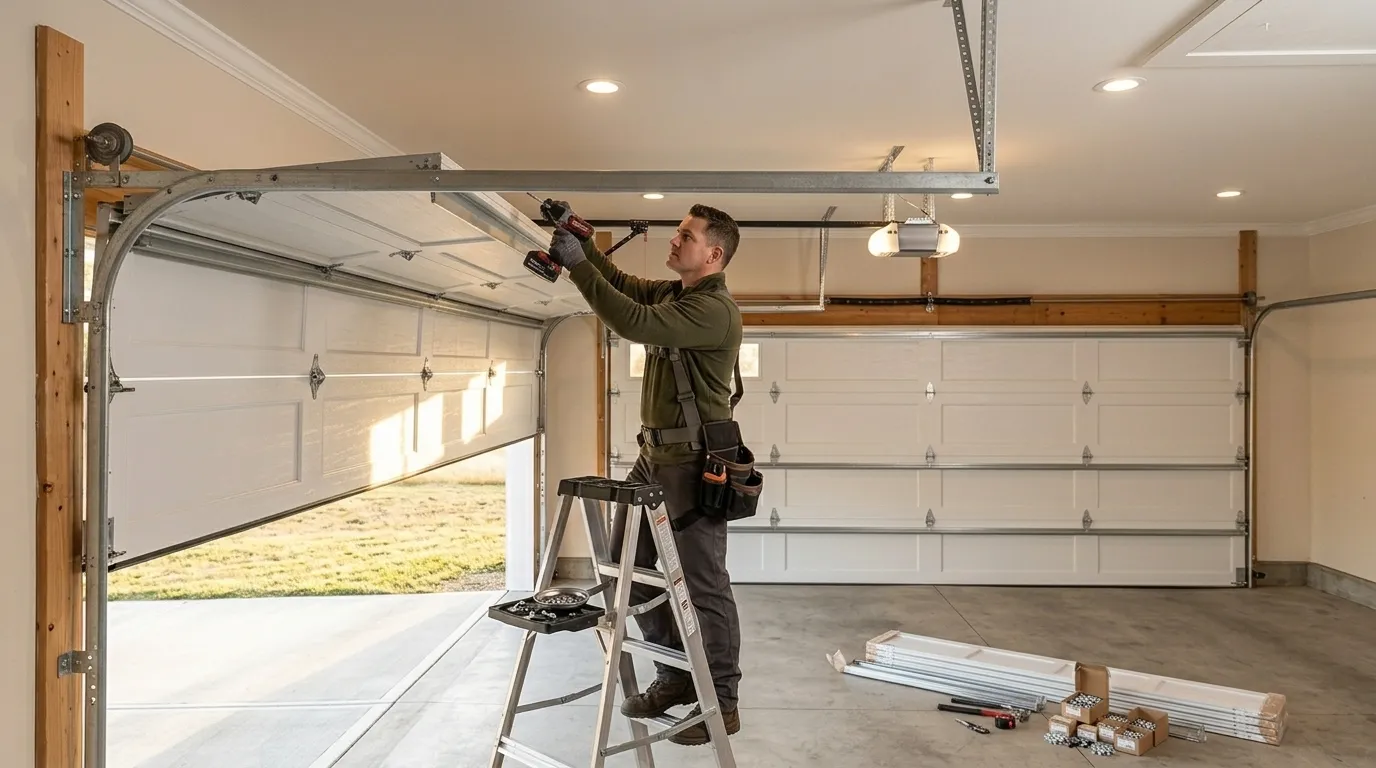
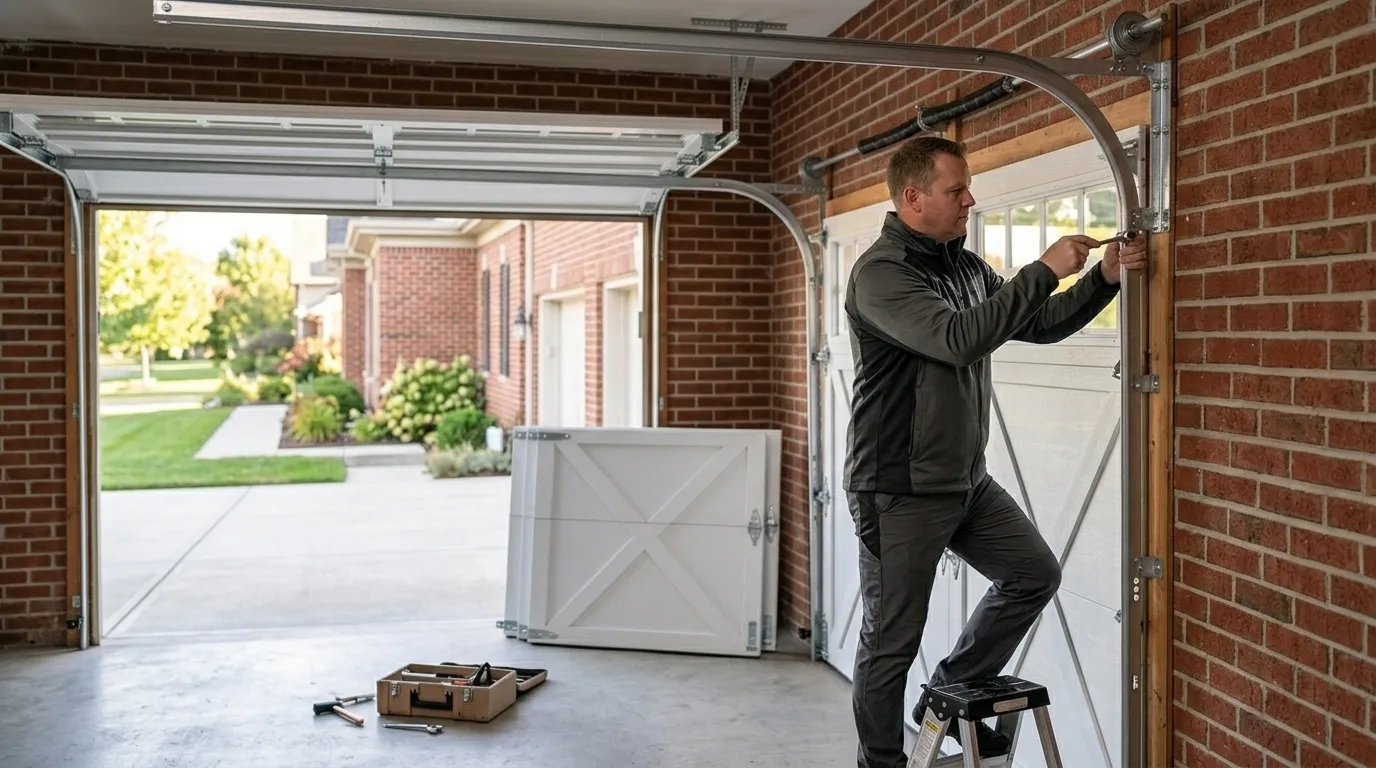
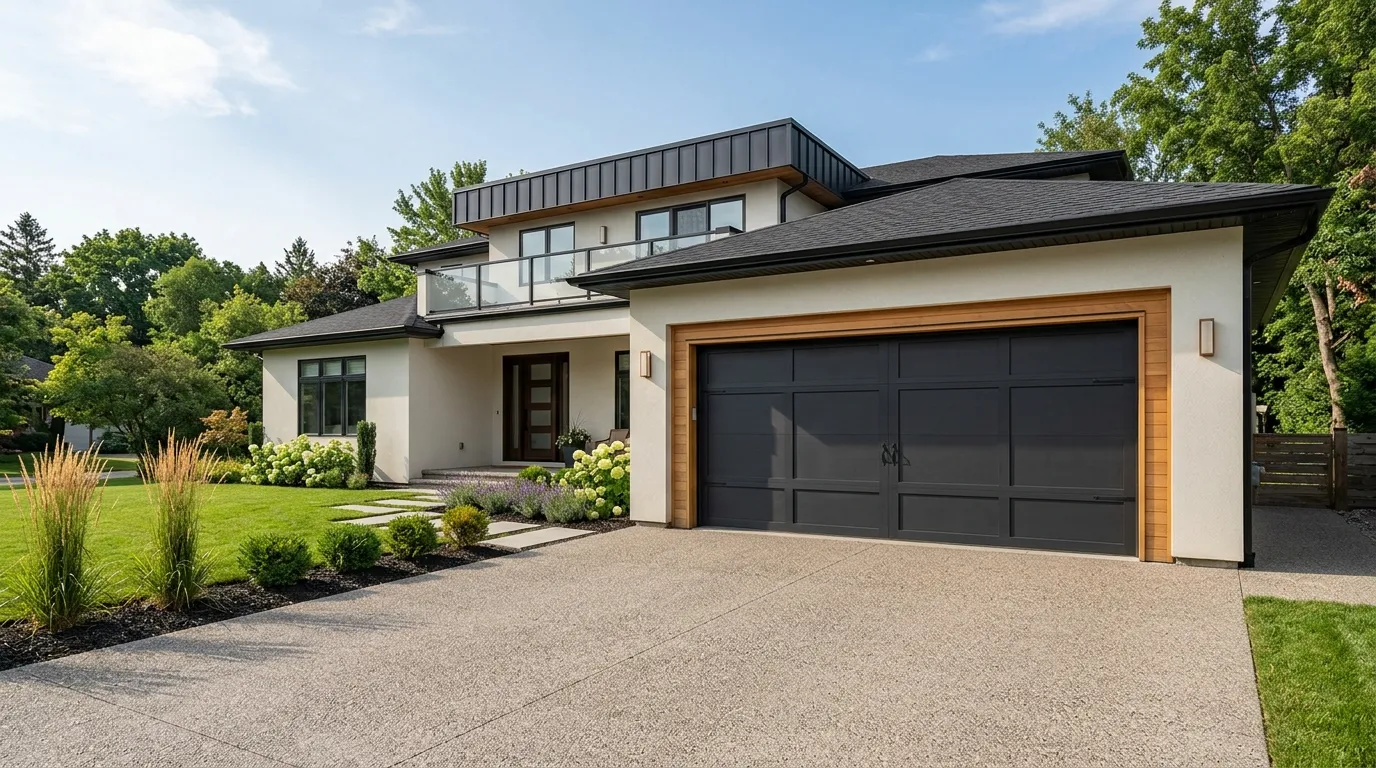
Most of the houses we get called to in Frederick went up around 2007, a full decade newer than the median build year across the wider Longmont service area, which sits closer to 1997. That gap matters more than it sounds. Homes from the 2000s building boom came standard with lighter steel doors, factory-set roller tracks, and extension or torsion springs sized to a specific panel weight. A door built to that spec runs fine for years, then a bracket works loose or a hinge wears oval and the roller walks out of the track instead of riding in it.
We drive out from Longmont, about 8 miles south, to handle these calls. The climate band here is the same cold, severe winter pattern that hits the rest of the service area, and that's a factor too: track brackets that flex slightly in summer heat and contract hard in a cold snap are a common reason a roller pops loose on a newer door, even one that's barely a decade old. On an older home with heavier original hardware, the failure mode is usually different - worn cable, not a walked-out roller. Frederick's stock skews toward the newer failure.
We're not guessing at your house's age from the street. If your home was built well before or after 2007, the specific cause may differ from what's typical here, and we'll diagnose it on site rather than assume.
Stocked Parts
Because Frederick's housing stock is newer than most of what we service, the door hardware tends to be more standardized - common roller sizes, common track gauges, common spring ratings that match what came off the factory line in the mid-2000s. That means when a roller has jumped the track or a bent track section needs swapping, we're often working with parts that are still in common production rather than hunting down something obsolete.
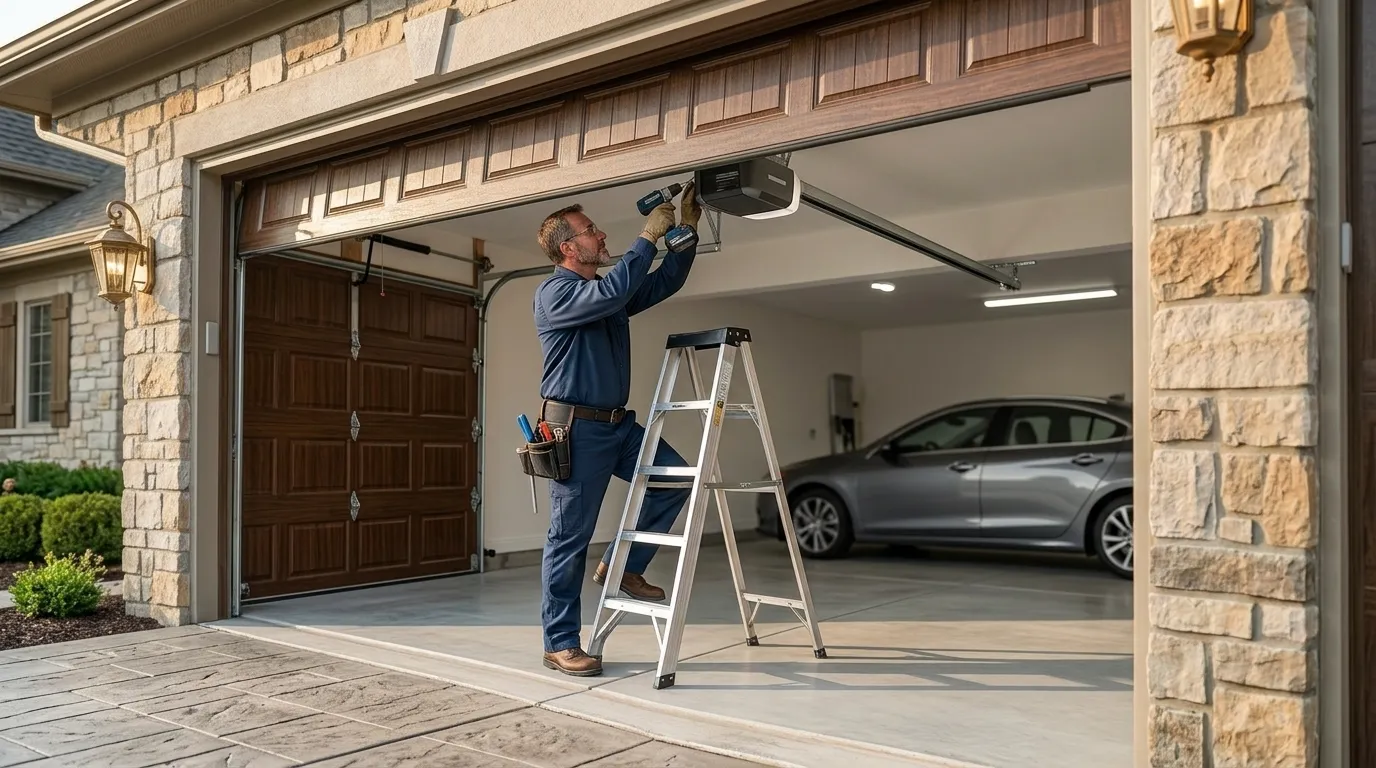
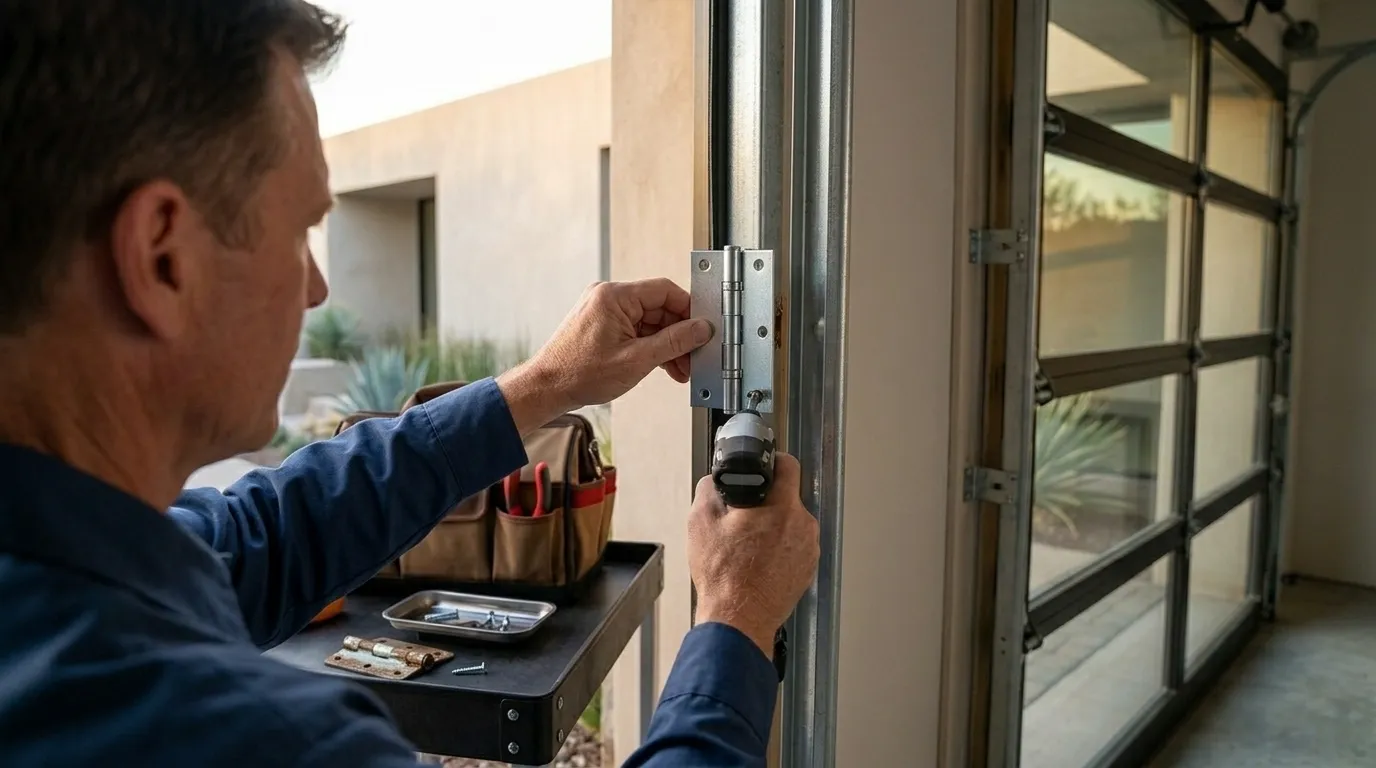
What we carry on the truck covers the routine cases: replacement rollers, track sections, end bearing plates, and cable for the roller side of the door. What we don't stock and can't promise same-visit is anything tied to a discontinued opener bracket or a custom panel width - those get ordered once we've seen the door in person. If your track has been bent badly enough that the whole rail needs replacing rather than straightened, that's also usually a return trip, since we don't carry every rail length on the truck.
We'd rather tell you that up front than promise a one-visit fix and come back with the wrong part in hand.
The DIY Question
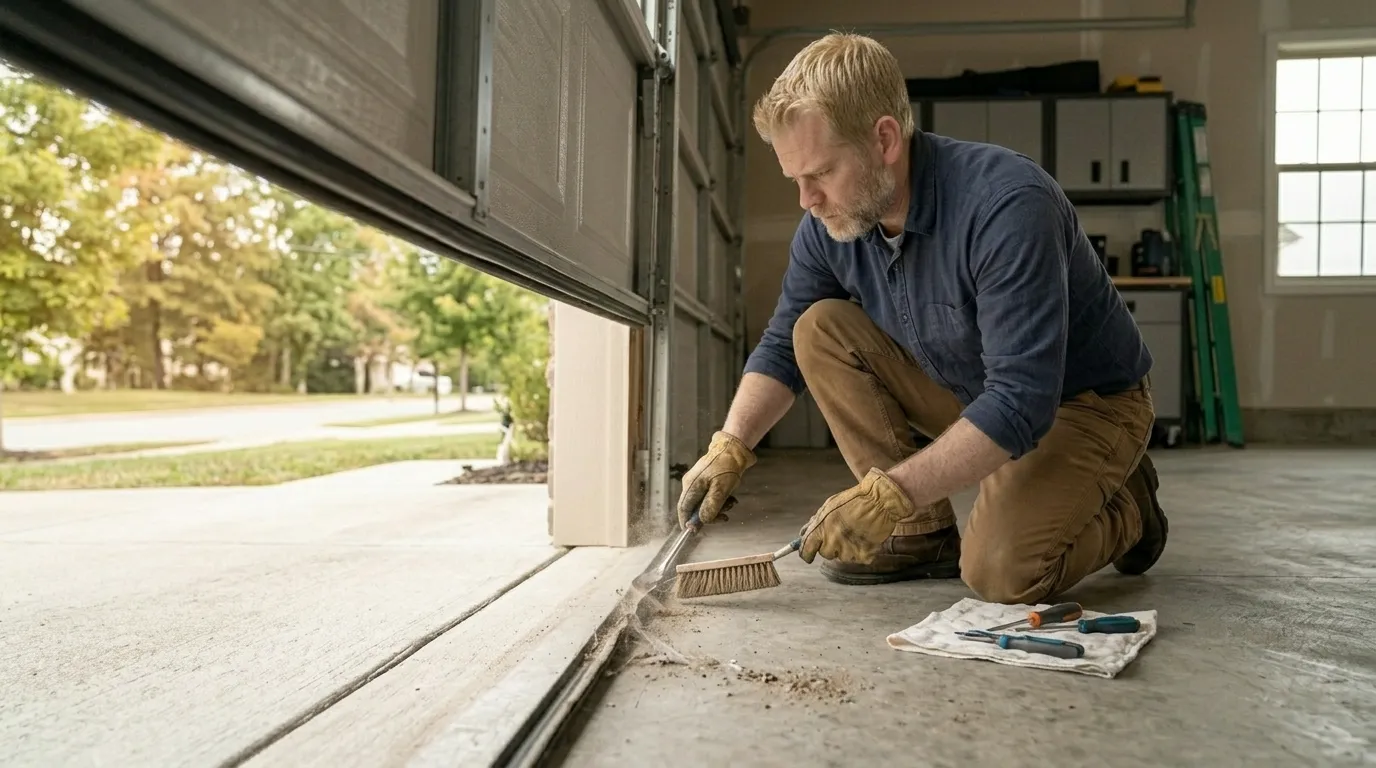
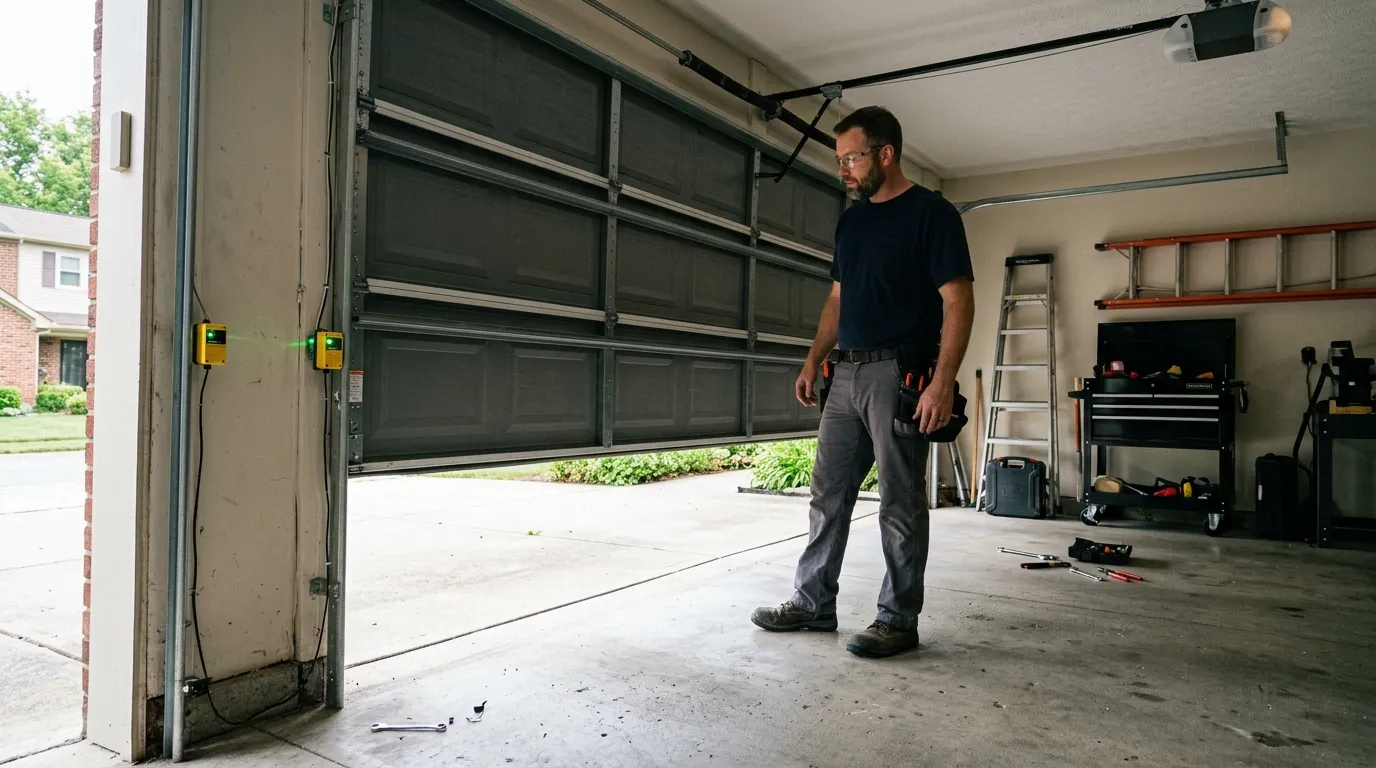
A door that's slightly off track, with the panel still square and the rollers still attached, is sometimes something a homeowner can nudge back by hand - carefully, with the opener disconnected and the door manually supported. If your door is hanging at an angle, if a spring looks like it's under tension, or if you can't tell whether the cable is intact, that's not a DIY job. Torsion springs on these doors store enough force to break a finger or worse, and a track that's bent rather than just knocked loose needs to come off cleanly or it'll keep throwing rollers.
Our honest answer: if the fix is re-seating a roller and tightening a bracket, it's a fifteen-minute job for someone with the right tools, and we won't pad a small call into a bigger one. If the track itself is bent or the opener has been fighting a stuck door for weeks, that's usually cheaper to deal with now than after it strips a gear or bends a panel.
Booking a Visit
We work Frederick from our base in Longmont, roughly 8 miles up the road, so we're not a same-block operation the way a local landmark-anchored shop might be - we schedule the drive in with the rest of the day's calls in the area. That's not a downside for an off-track repair specifically, since it's rarely a same-hour emergency the way a door stuck open overnight can be. Tell us what you're seeing - a roller out of the channel, a grinding sound, a door hanging crooked - and we'll bring the parts likely to match a 2000s-era build, plus the basics that fit older stock in case your house is the exception.