What the Repair Takes
The fault we see most in Erie isn't a rusted-out cable snapping under decades of neglect - it's a factory-original cable reaching the end of its rated life on a door that's still relatively young. Erie's median home was built around 2007, which means most garage doors here are running the same lift cable the builder installed almost twenty years ago. That cable was fine for the first decade. Now the strands at the drum end are starting to fray, and on a lot of these doors it's the first hardware failure the homeowner has ever had to deal with.
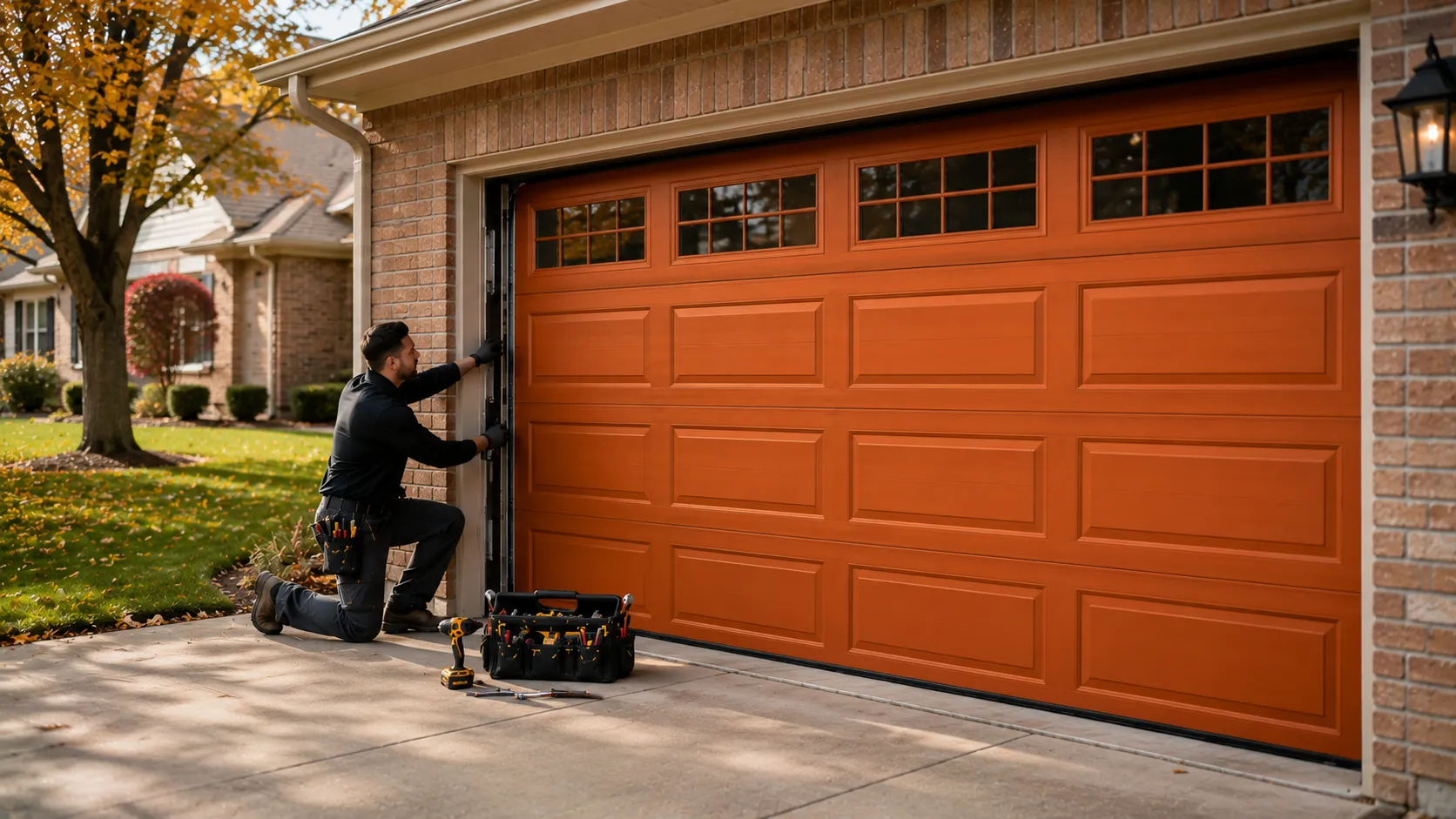
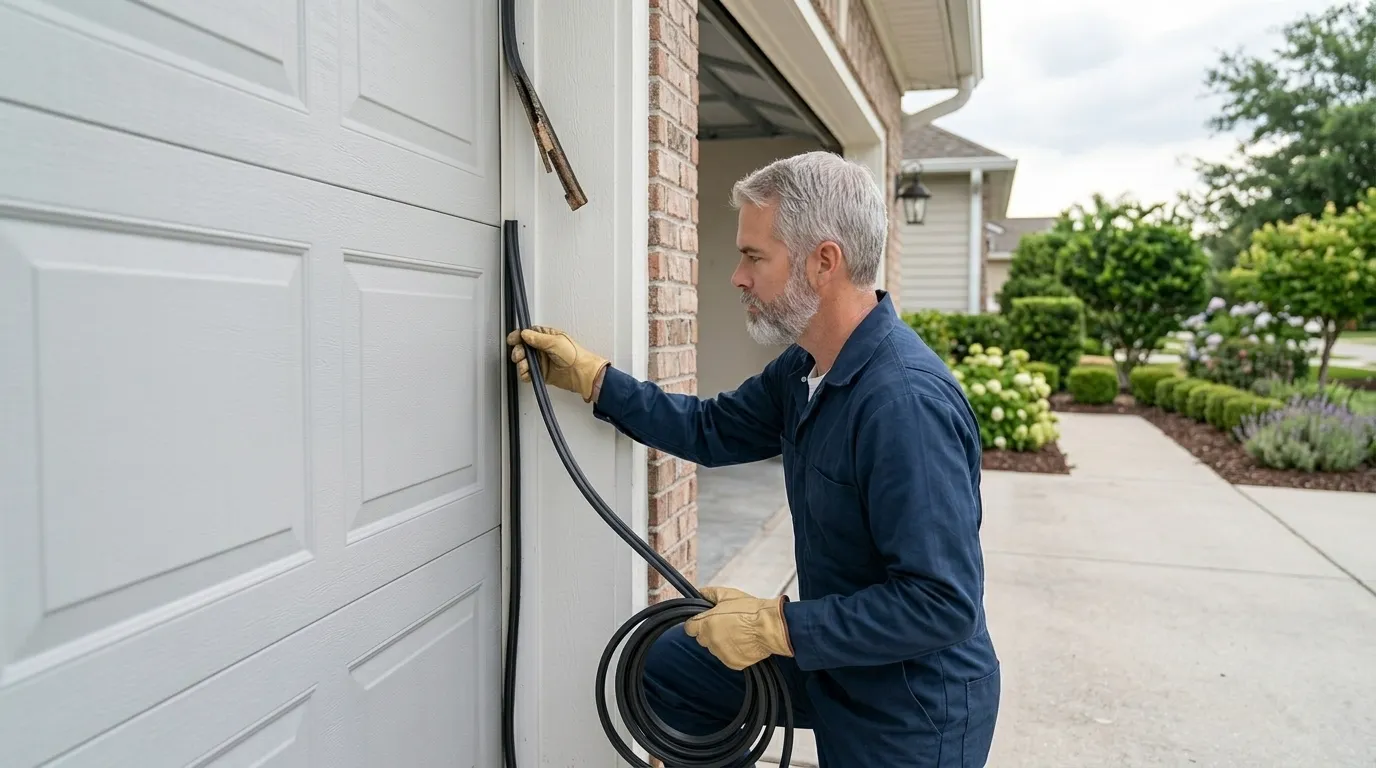
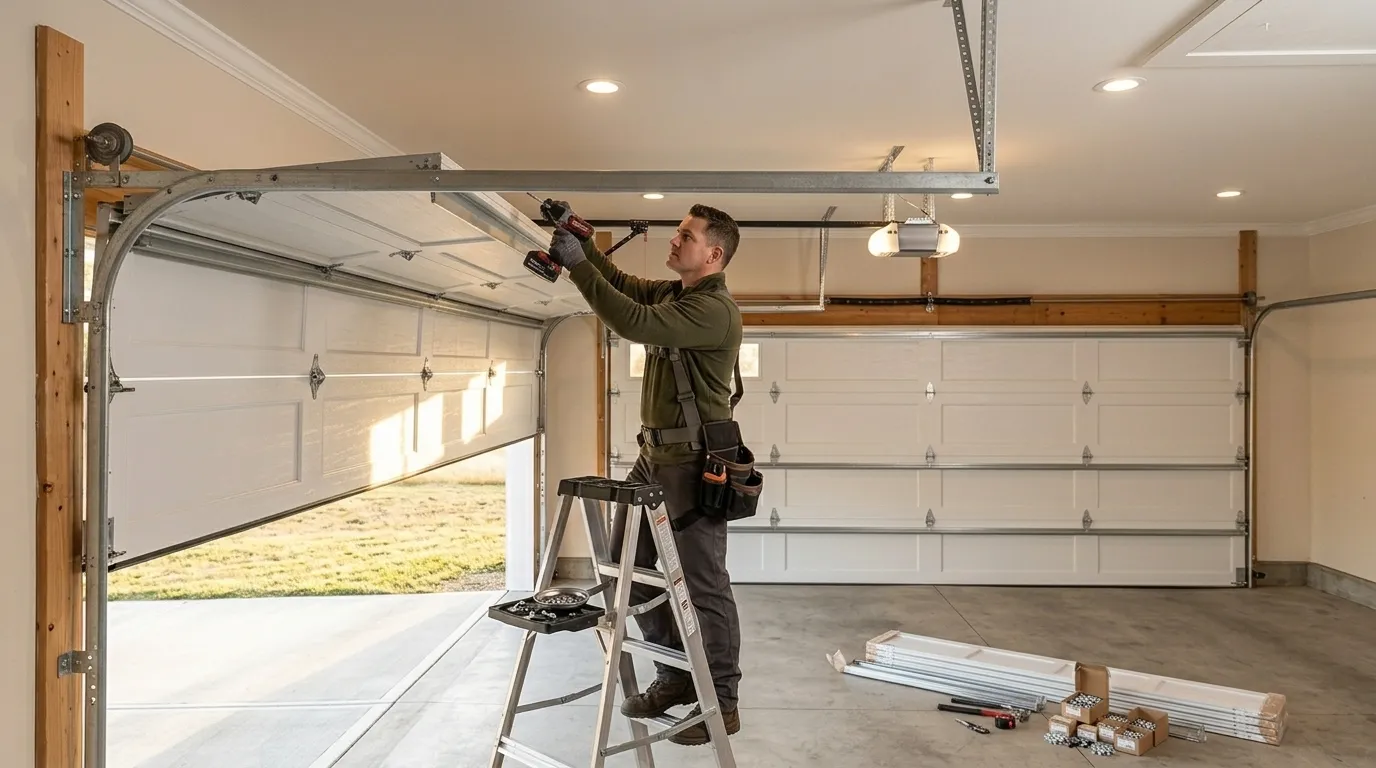
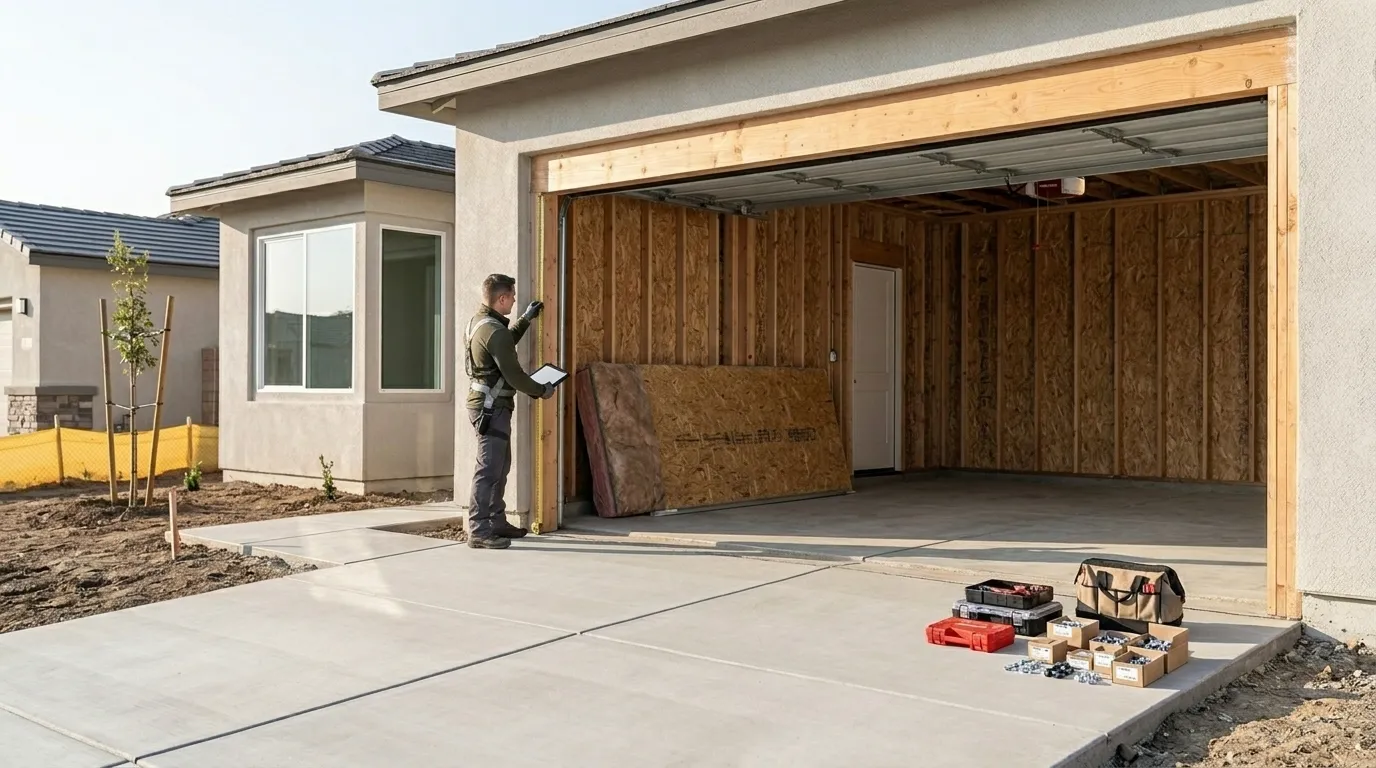
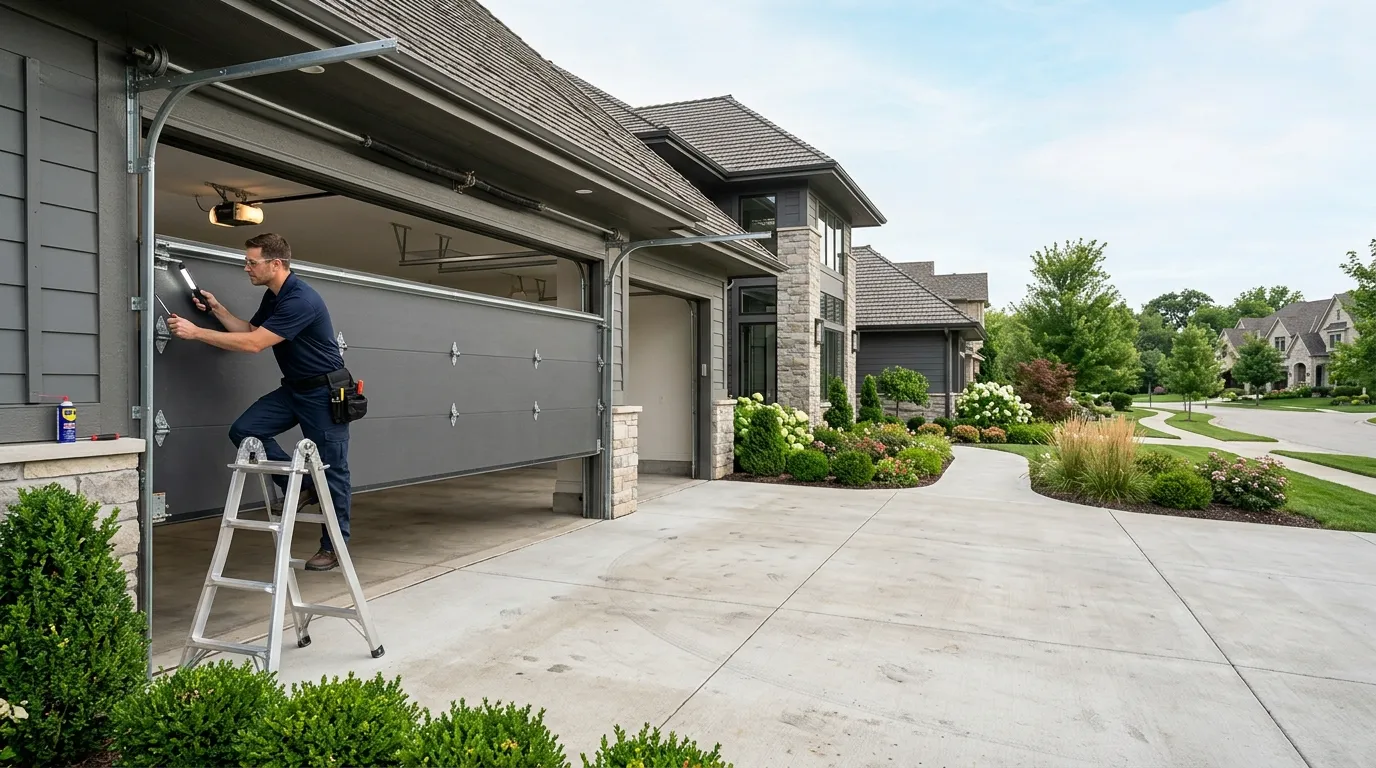
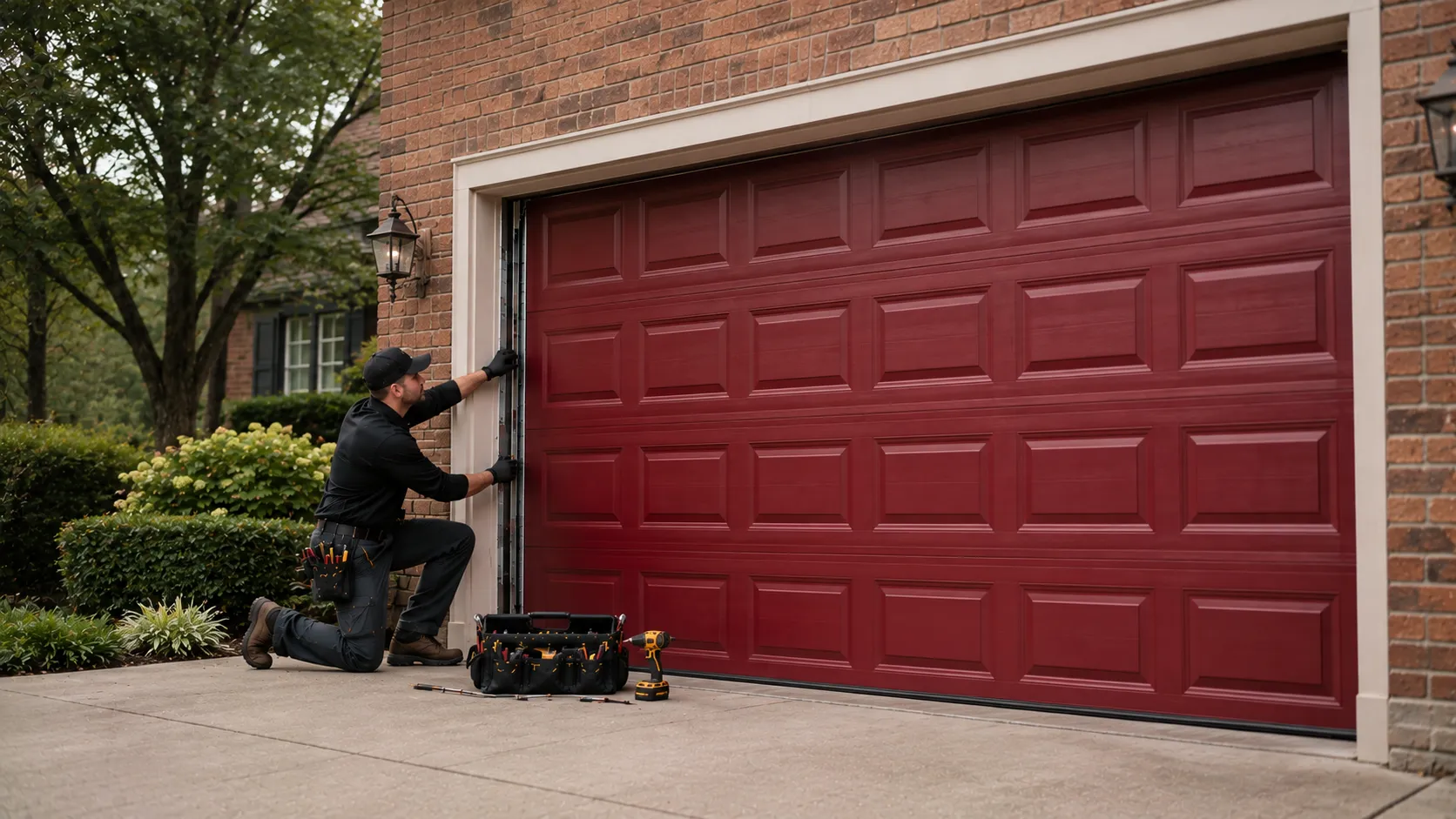
The job itself is straightforward once we're on site: disconnect the opener, clamp the door, release spring tension safely, pull both cables (we do both sides even if only one has failed, because the other one is the same age and about to go), check the drums for wear grooves, and re-set tension evenly so the door doesn't rack sideways on the track. If the drum itself is chewed up from the old cable jumping its groove, that gets swapped too. On a standard double door this is a parts-and-labor job, not a full door replacement - replacement only comes up if the track or panel took damage from the door dropping unevenly.
Booking a Visit
We run this job out of Longmont, and Erie sits about 10 miles out - close enough that it's a normal stop on the route, not a special trip, but we're not going to promise a same-hour arrival the way a shop physically inside town might. Tell us on the phone whether the door is stuck shut, stuck open, or hanging at an angle. A door hanging crooked on one cable is the one we move up the schedule for, because the other cable is often about to go too and a door that drops the rest of the way can bend a track or crack a panel.
Have the door's approximate age or your move-in year handy if you know it - on a town built out mostly in one stretch like Erie, that tells us a lot about which cable gauge and drum style we're likely dealing with before the truck even leaves. See our Erie service page for the rest of what we cover out here, or check the Longmont cable repair page if you're closer to that side of the service area.
What You Are Seeing
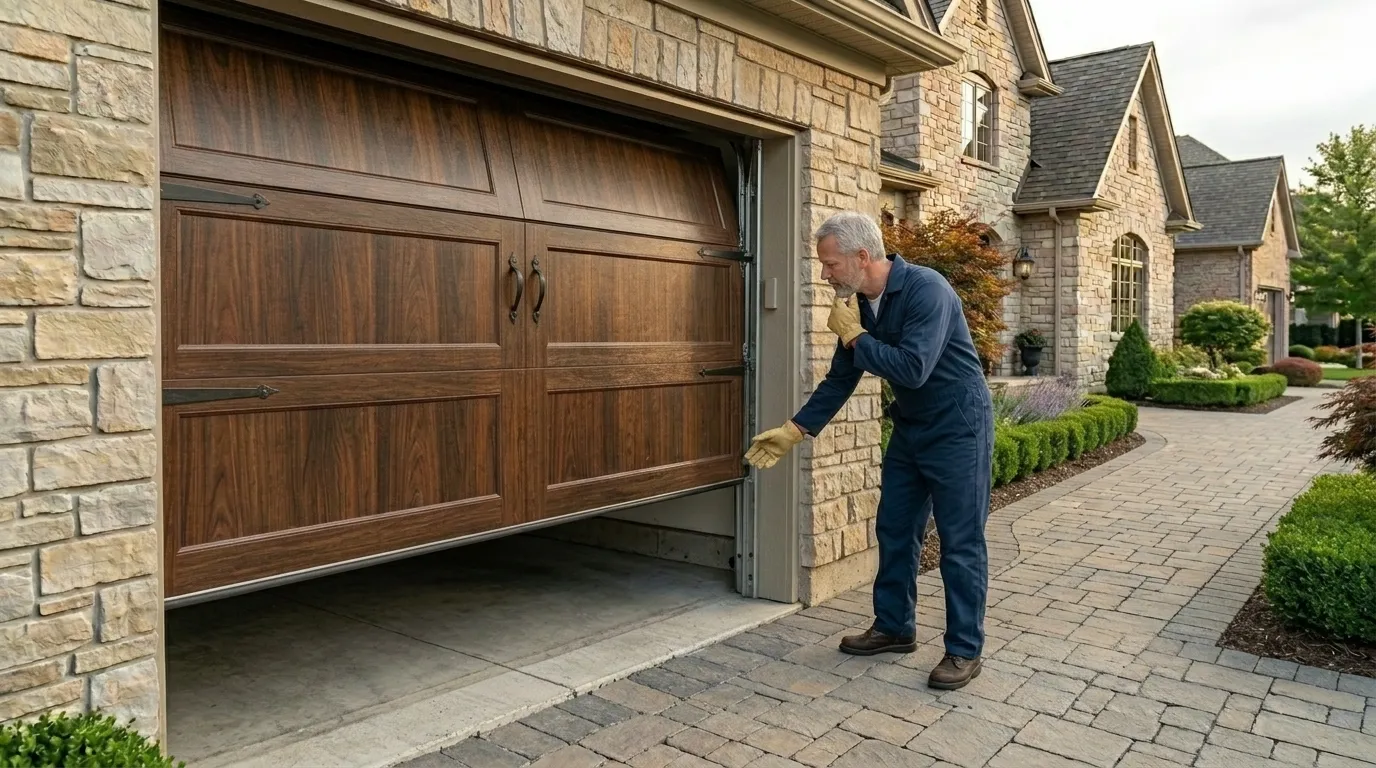
A loud bang followed by the door refusing to move, or moving only a few inches before stopping, is almost always a snapped cable. If the door is hanging noticeably lower on one side, or the bottom corner is tilted while the rest of the door sits level, that's a cable that's still attached but has jumped its drum groove or is down to its last few strands.
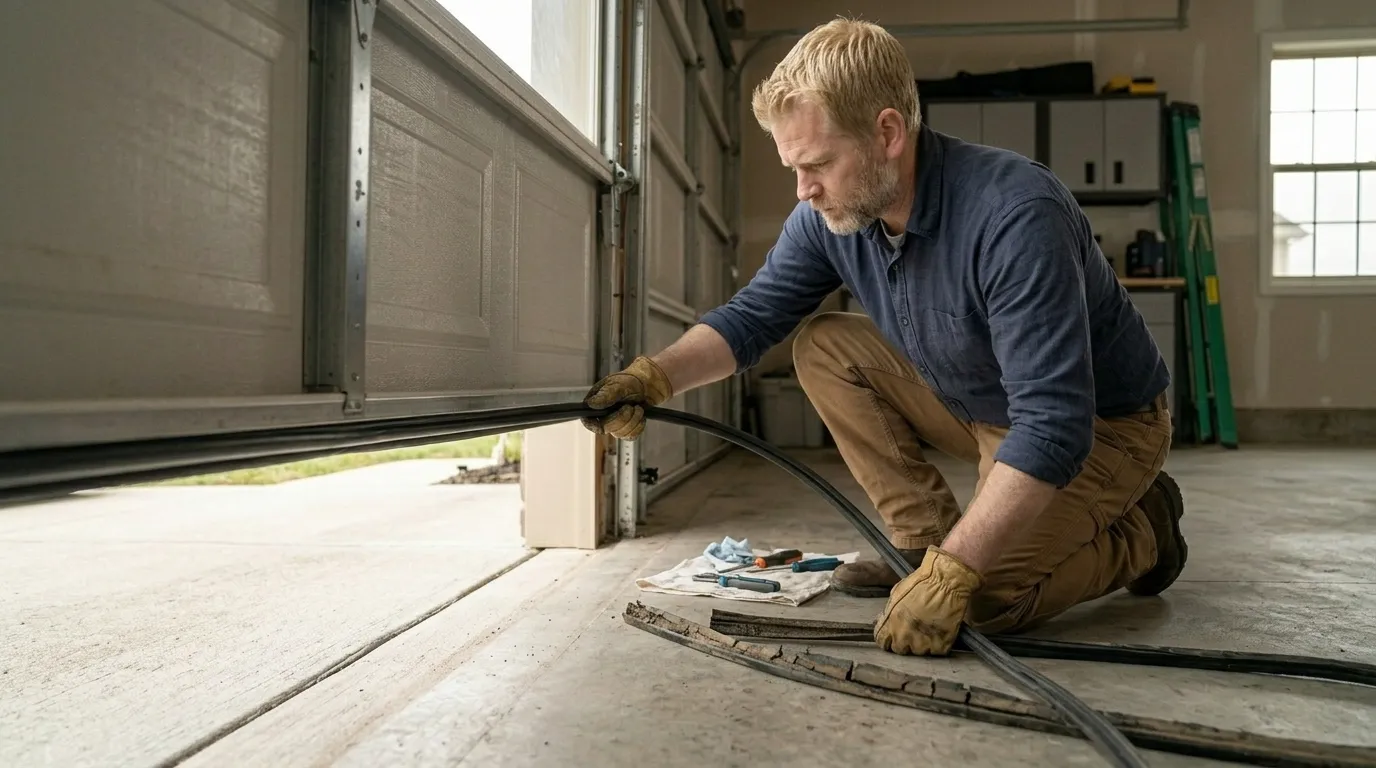
A slower warning sign, easy to miss, is fraying you can actually see at the bottom bracket or up near the drum - thin wire ends sticking out past the main cable line. On the newer door stock common in Erie, this shows up as wear rather than rust, since most of these installs are only in the fifteen-to-eighteen-year range rather than the thirty-plus-year original hardware we run into on the older side of the service area. If you can see daylight through separated strands, don't run the opener again. Running a partially failed cable under motor load is what turns a cable job into a track-and-panel job.
The DIY Question
We'll say this plainly: don't try to swap a garage door cable yourself if the door uses a torsion spring, which almost all of these newer builds do. The spring holds enough stored tension to cause a serious injury if it's released wrong, and the cable is what's connecting that tension to the door - you can't safely separate the two without the right winding bars and clamps.
What you can safely do yourself: look at the cable without touching it, note where it's frayed, and check whether the door is hanging level. That's useful information to give us on the phone. What you shouldn't do is disconnect the opener and try to muscle the door up manually to "get by" until we arrive - on a door with one cable already gone, that uneven lift is exactly what bends a track. If the door is stuck and the car's inside, leave it stuck. A stuck door is a repair. A door that dropped because someone forced it open is often a bigger one.