What the Repair Takes
Erie's median household income sits at $163,644, well above the $116,074 median for the wider service area we cover out of Longmont. That number matters more than it sounds like it should, because it changes where the repair-or-replace line falls. On an older door with a burned-out opener board and worn rollers, a homeowner at the area median often patches it and moves on. In Erie, where the median house was built around 2007, we're usually not looking at that kind of accumulated wear. The door and opener are still inside a normal service life, so a failed spring or a bent track is almost always a repair, not a replacement conversation.
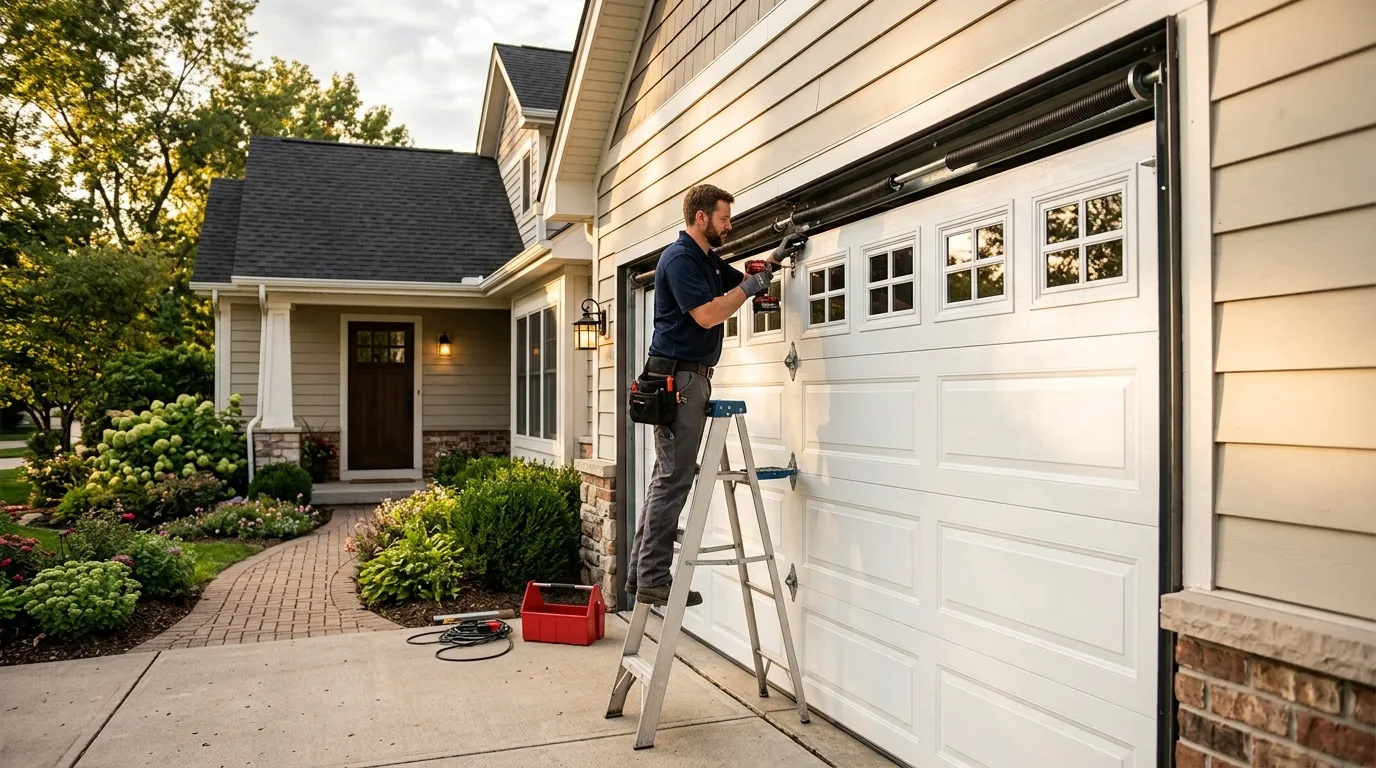
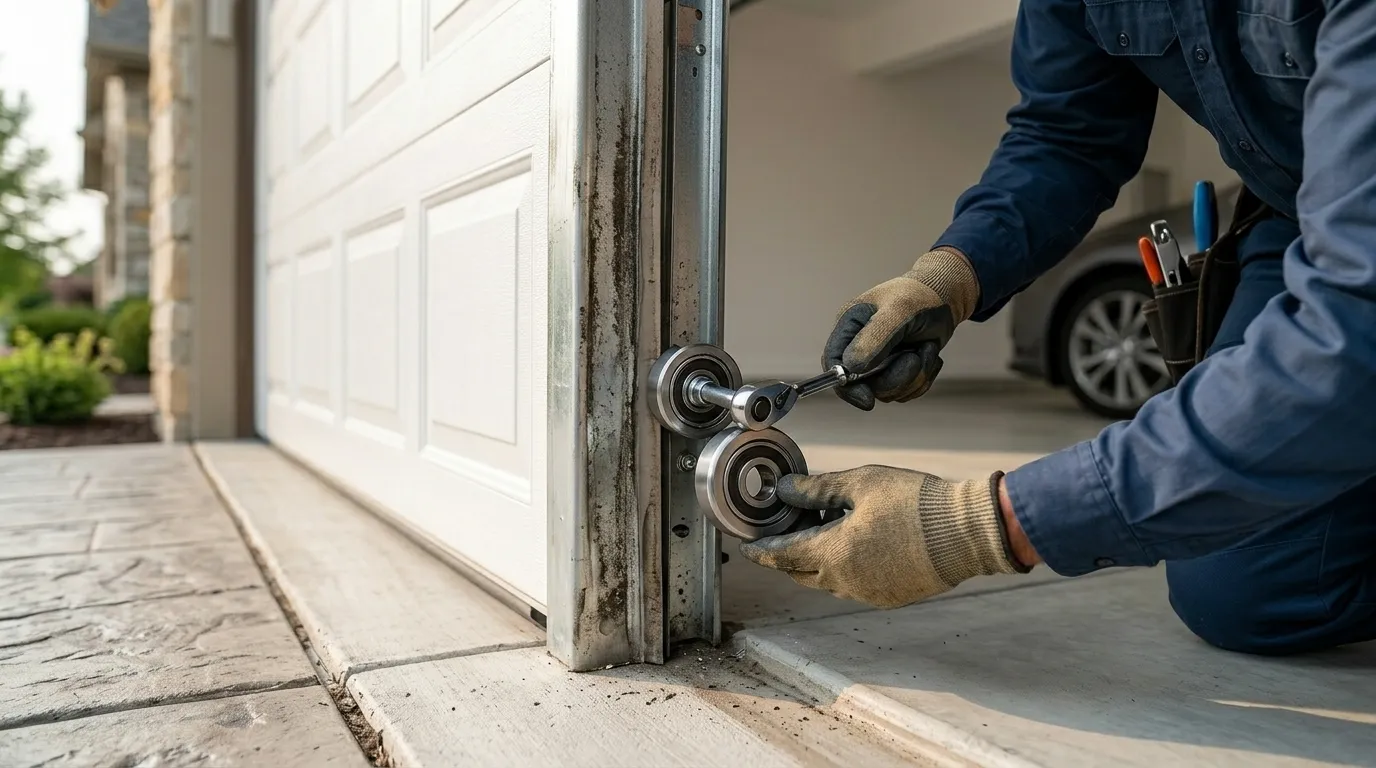
What we do see in newer Erie construction is opener boards and circuit sensors that fail outright rather than wear down slowly, plus torsion springs that were sized to a 2000s-era door and now need matching, not guessing. We carry standard spring and cable stock on the truck. Steel reinforcement brackets and specific opener control boards for a less common model sometimes need to be ordered, and that can add a day or two before we finish the job. That's the one honest limit here: newer doesn't mean every part is on the shelf.
Booking a Visit
We run this call out of Longmont, about 10 miles from Erie. There's no branch or drop box in town, so when you book, we're scheduling a truck to come to you rather than dispatching from around the corner. That's worth knowing if you're comparing us to someone based closer in - the tradeoff is a longer service area covering dozens of towns like Mead, and Frederick, rather than a shop that only knows one zip code.
When you call, tell us the age of the door if you know it and whether the opener is original to the house. For a 2007-era build, that's usually enough for us to bring the right spring wire gauge and the correct opener control board on the first trip, instead of a diagnostic visit followed by a second trip for parts.
What You Are Seeing
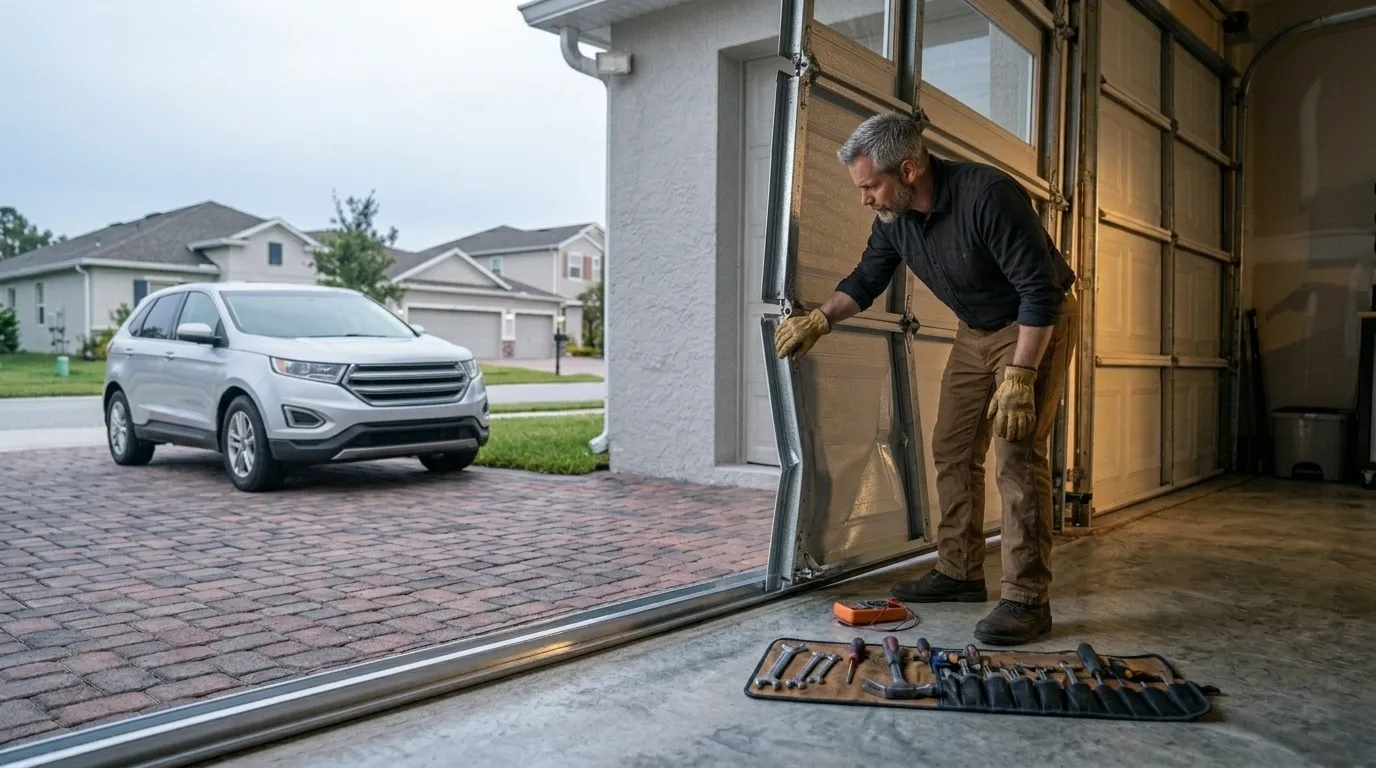
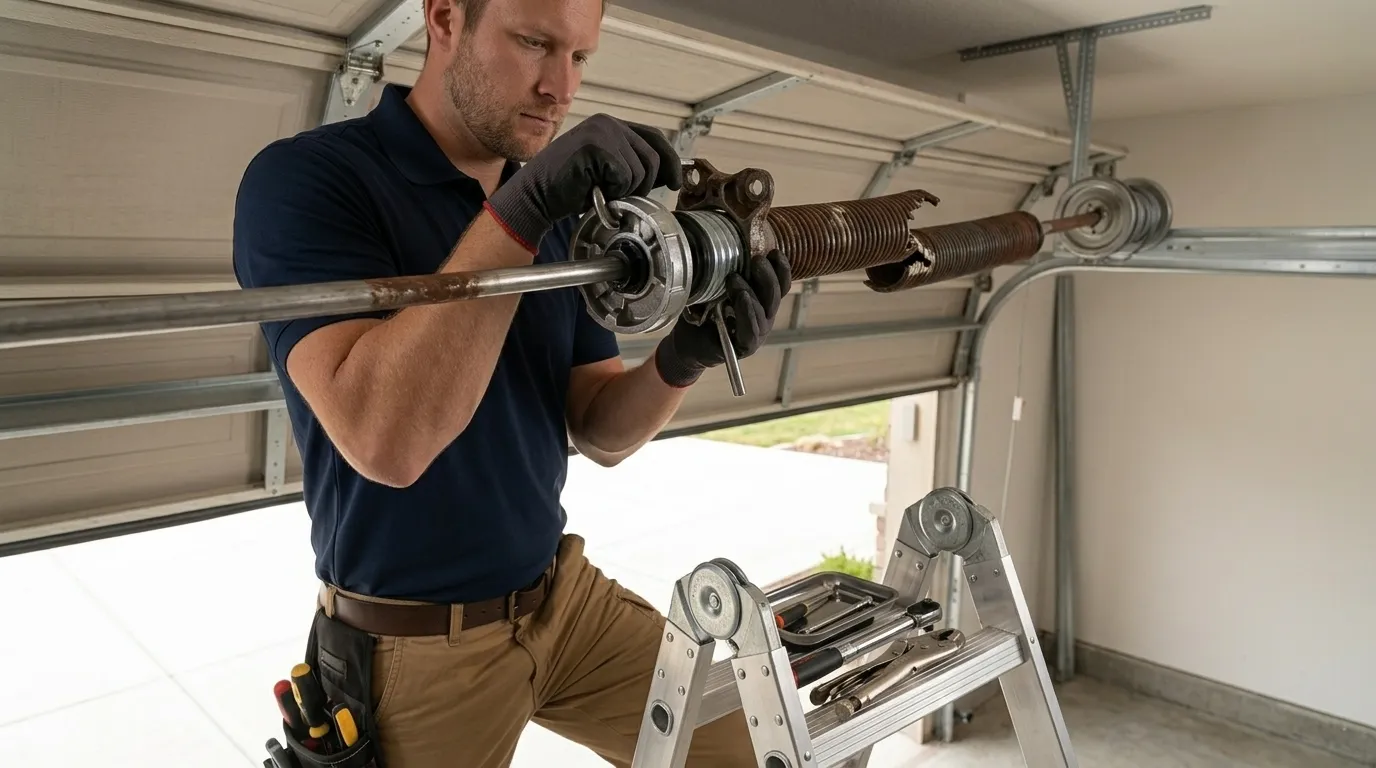
On a house built in the 2000s, the door and opener are matched to each other from the factory, which means when one part fails, it tends to fail cleanly rather than dragging a handful of worn parts with it. The most common calls we get from this kind of build: a torsion spring that snaps without warning (you'll hear it - a loud bang from the garage), an opener that runs but the door won't move (usually a stripped gear inside the unit, not the motor itself), or a sensor at the bottom of the track that's gotten knocked out of alignment and won't let the door close.
What you're less likely to see, compared to an older house, is rot in the door panel itself, rusted-through track, or a spring system sized for a door that's since been replaced with a heavier one. Those are older-housing problems. Newer Erie stock mostly breaks at the moving parts, not the structure.
The DIY Question
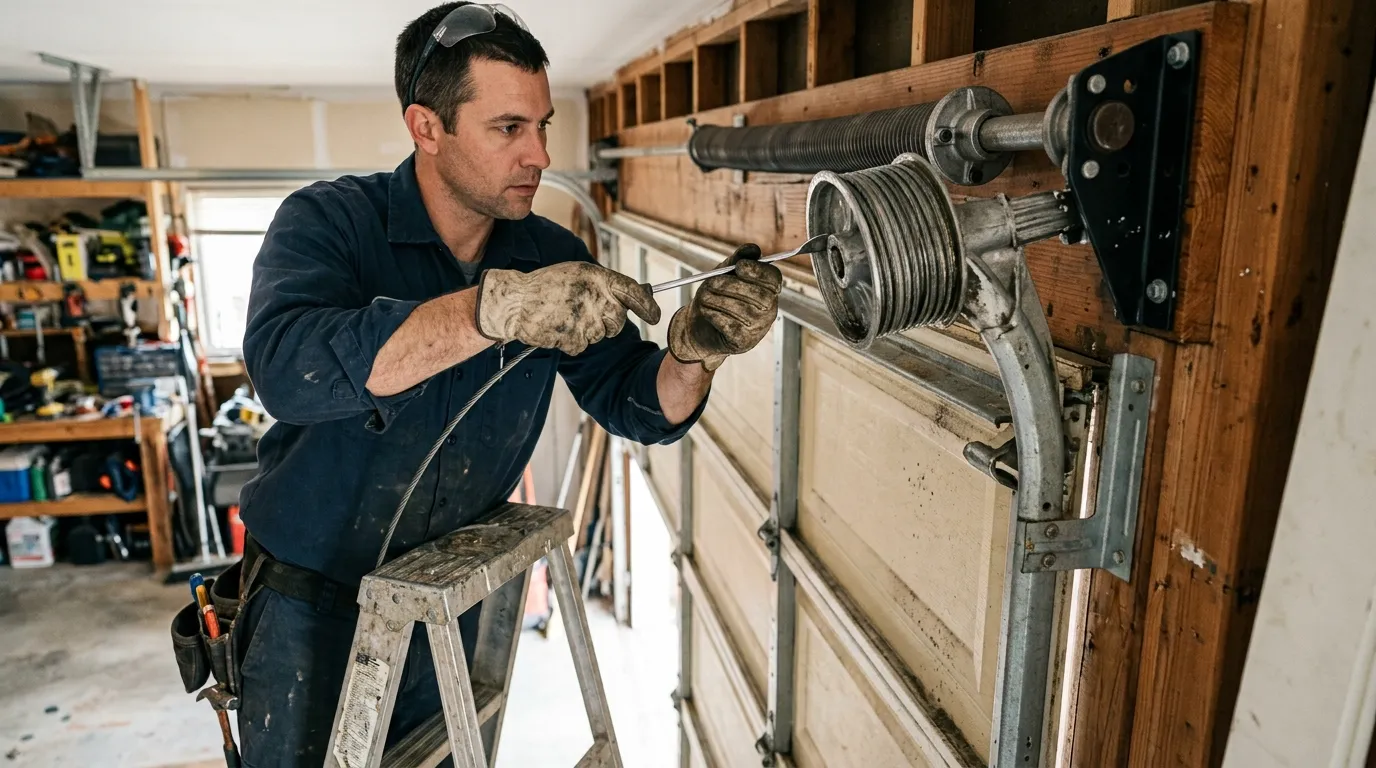
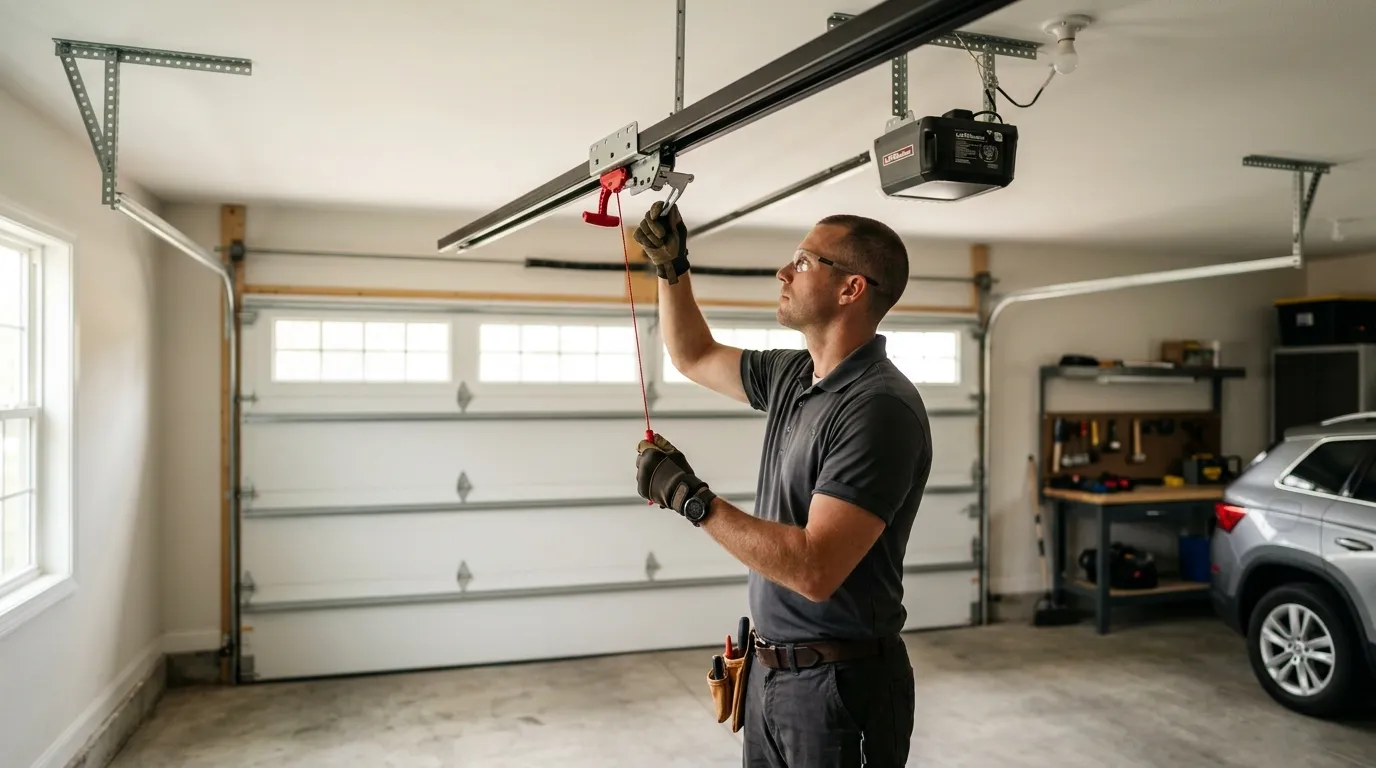
A torsion spring under tension is not a project to learn on, on any house, of any age - that part doesn't change with the town. What does change here is the opener side. Because Erie's opener units are newer and more likely to have a circuit board rather than pure mechanical relays, a homeowner comfortable with basic electrical troubleshooting can sometimes reset or reseat a board themselves before calling anyone. That's a legitimate DIY step.
What isn't: touching the spring, the cable, or the wound torsion bar. We'd rather tell you that up front than have you find out why the hard way.