
What the Repair Takes
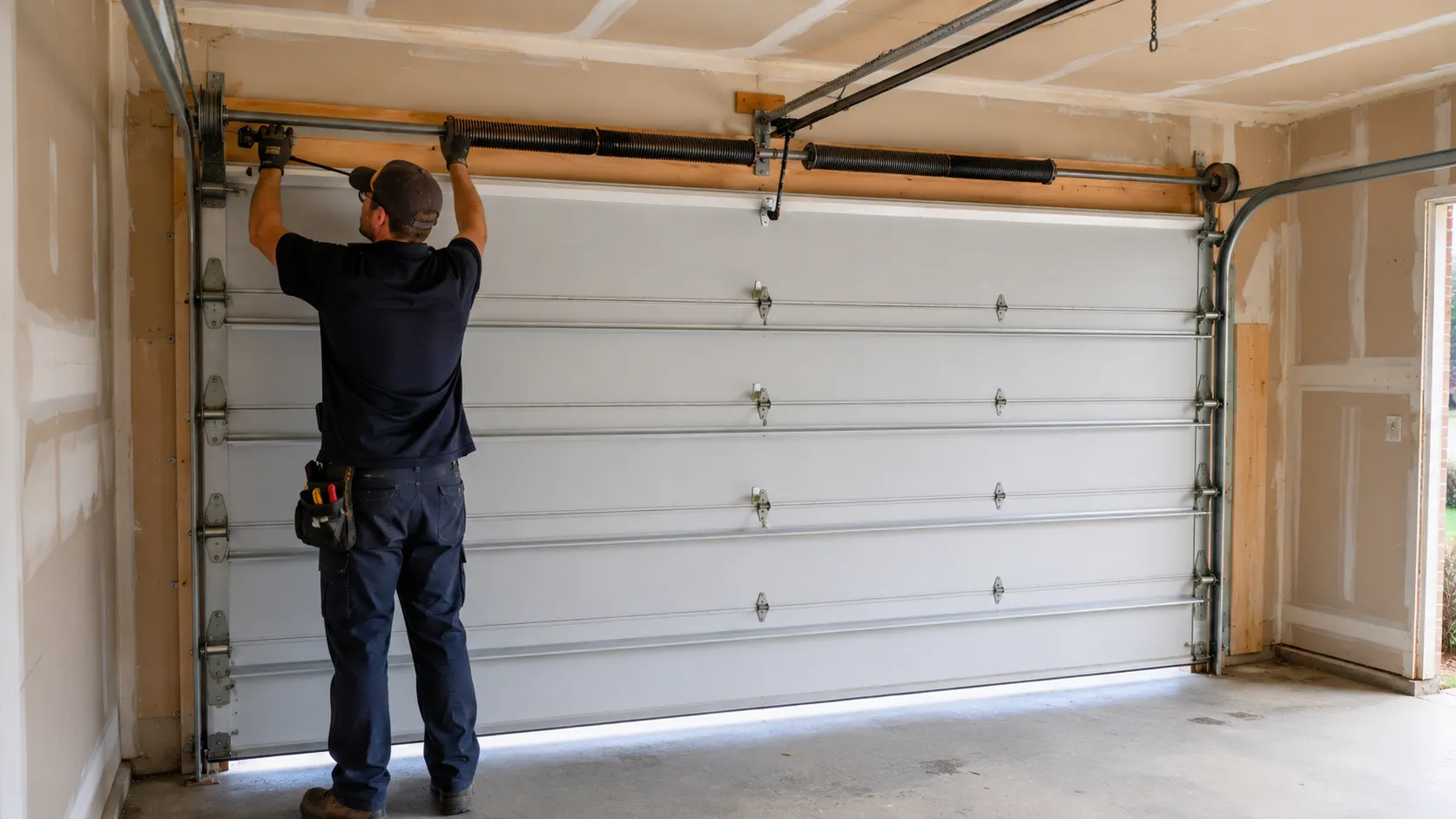
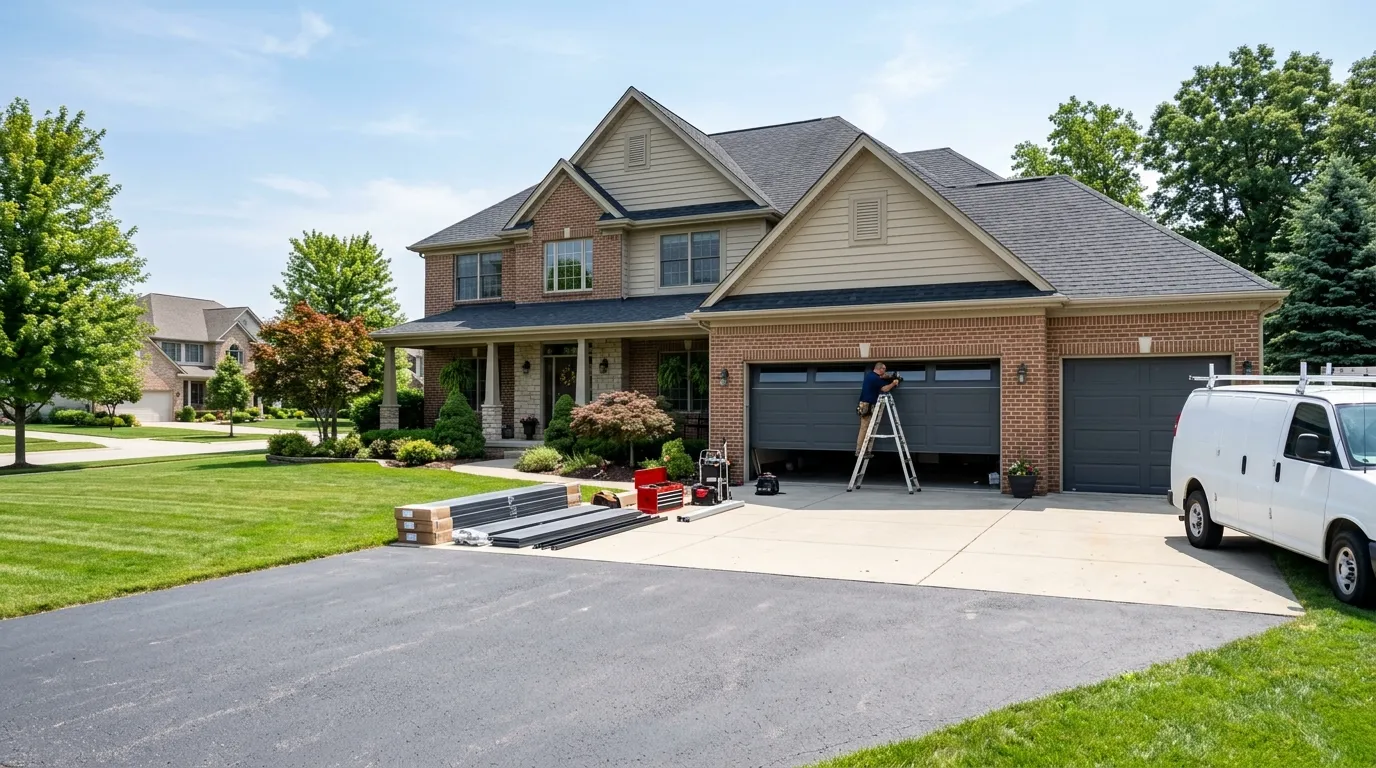
Erie's median home was built in 2007, a decade newer than the median for this whole service area. That matters here because houses from that era were built with wider garage bays - most take a double-wide steel or composite sectional door, 16 feet across instead of the narrower single doors common on older stock nearby. Wider means heavier, and heavier panels put more load on every roller and hinge along the track.
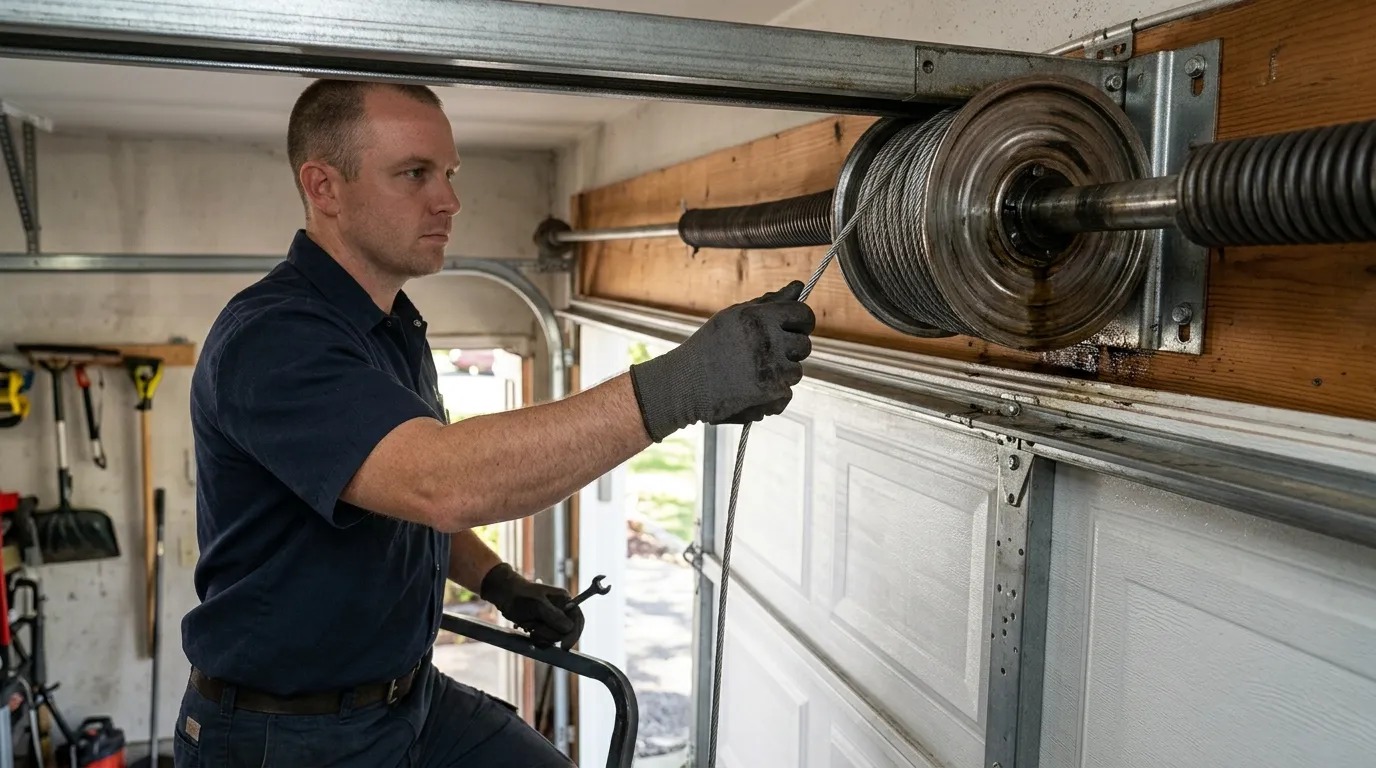
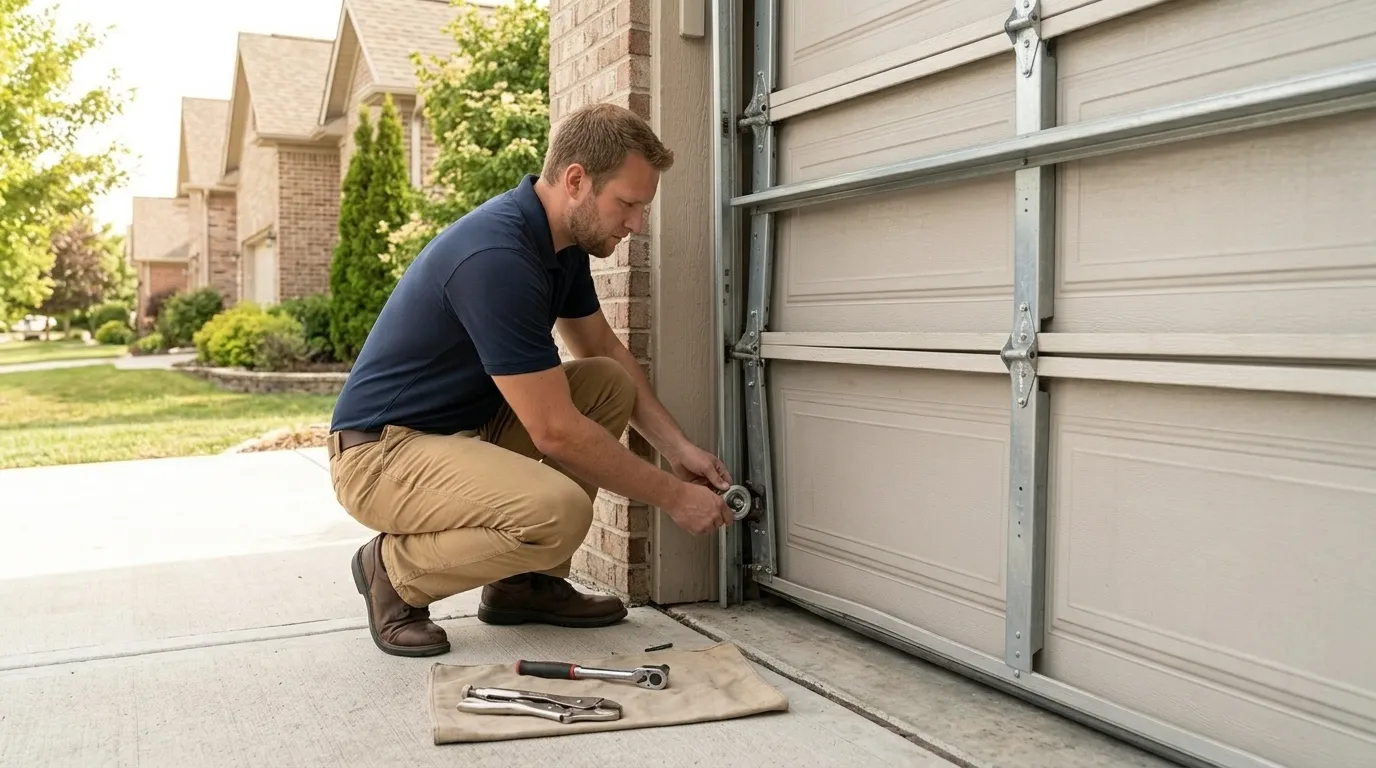
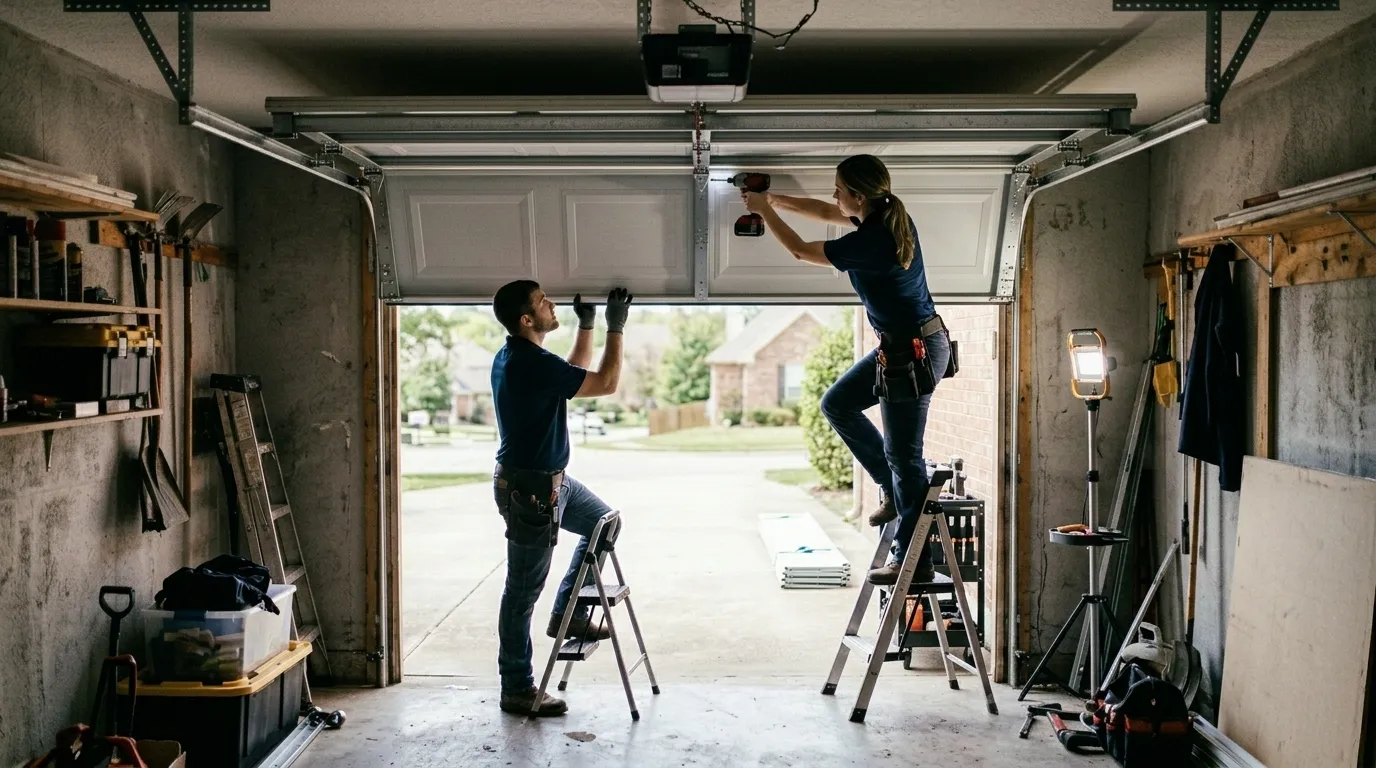
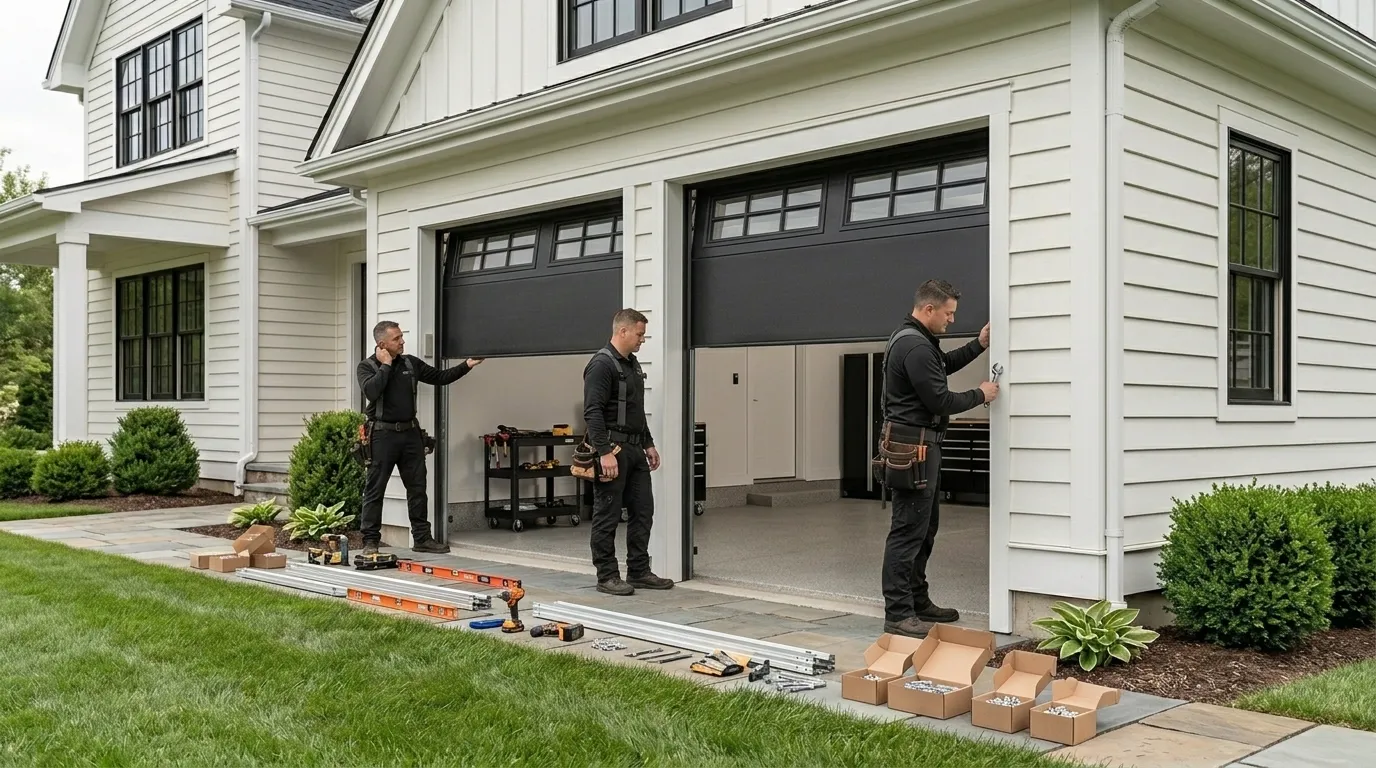
When one of those doors comes off track, the fix depends on where it left the rail. A roller that's worn through and popped out near the bottom section is a different job than a bent track section up near the header, and a cable that's slipped off its drum on one side is different again - that one usually means the door is hanging crooked, not stuck flat. On a door this wide, we check both tracks and both cable drums before we touch anything, because a repair that only looks at the side you can see often misses the reason it happened.
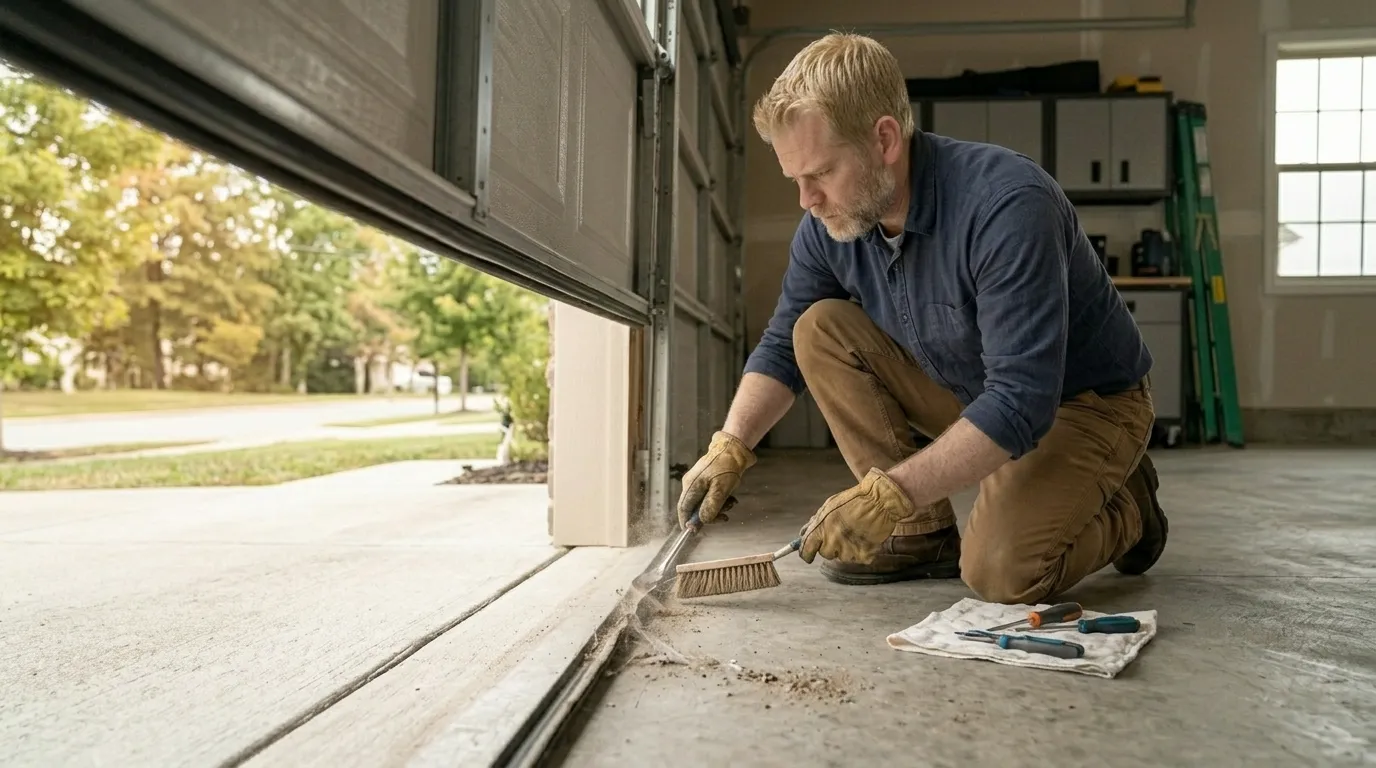
Winters here get cold enough (this area sits in a severe cold climate band) that grease in the rollers stiffens up and tracks can pull slightly out of alignment as the slab and framing shift with the freeze-thaw cycle. That's often the quiet cause behind a door that's been
Booking a Visit
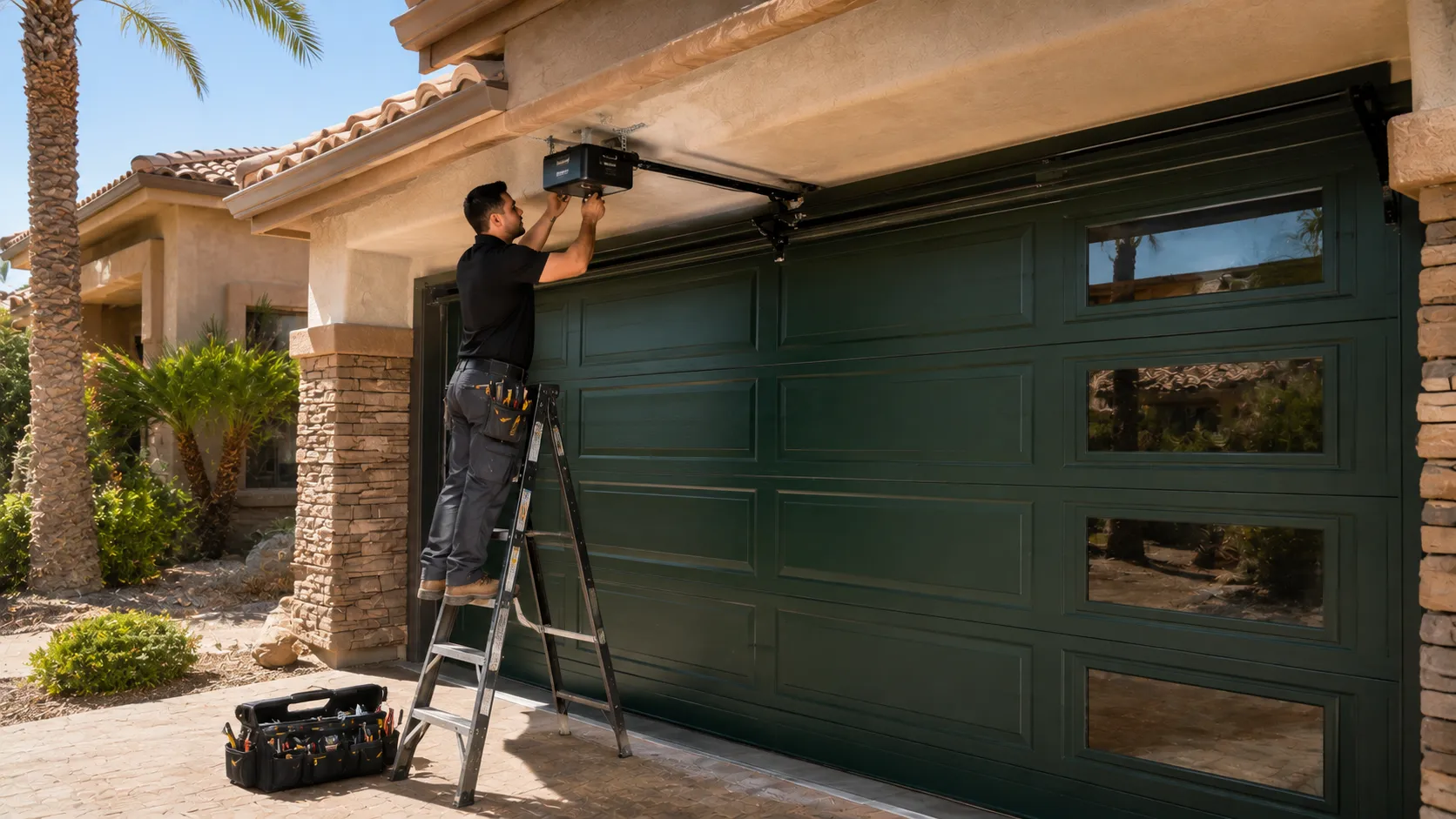
We run out of Longmont, about 10 miles from Erie, so there's no local branch or drop-in counter here - every visit is scheduled and driven out. That's worth knowing going in: we're not going to promise a same-hour arrival just because you called first thing. What we can do is look at your door, tell you honestly whether it's a track adjustment, a roller swap, or something that needs a fuller teardown, and give you a straight number before anything gets taken apart.
Because houses in Erie tend to run newer and the doors are larger, parts aren't always the same ones we'd pull for an older single door elsewhere in the territory. If your door uses a less common roller or track profile for its width, we may need to confirm we've got the right part on the truck before we commit to a same-visit fix versus a return trip. We'd rather tell you that up front than surprise you with it standing in your driveway.
Give us the make of the opener and, if you can see it, whether the door has one torsion spring centered over the opening or two - it helps us load the truck right the first time.
What You Are Seeing
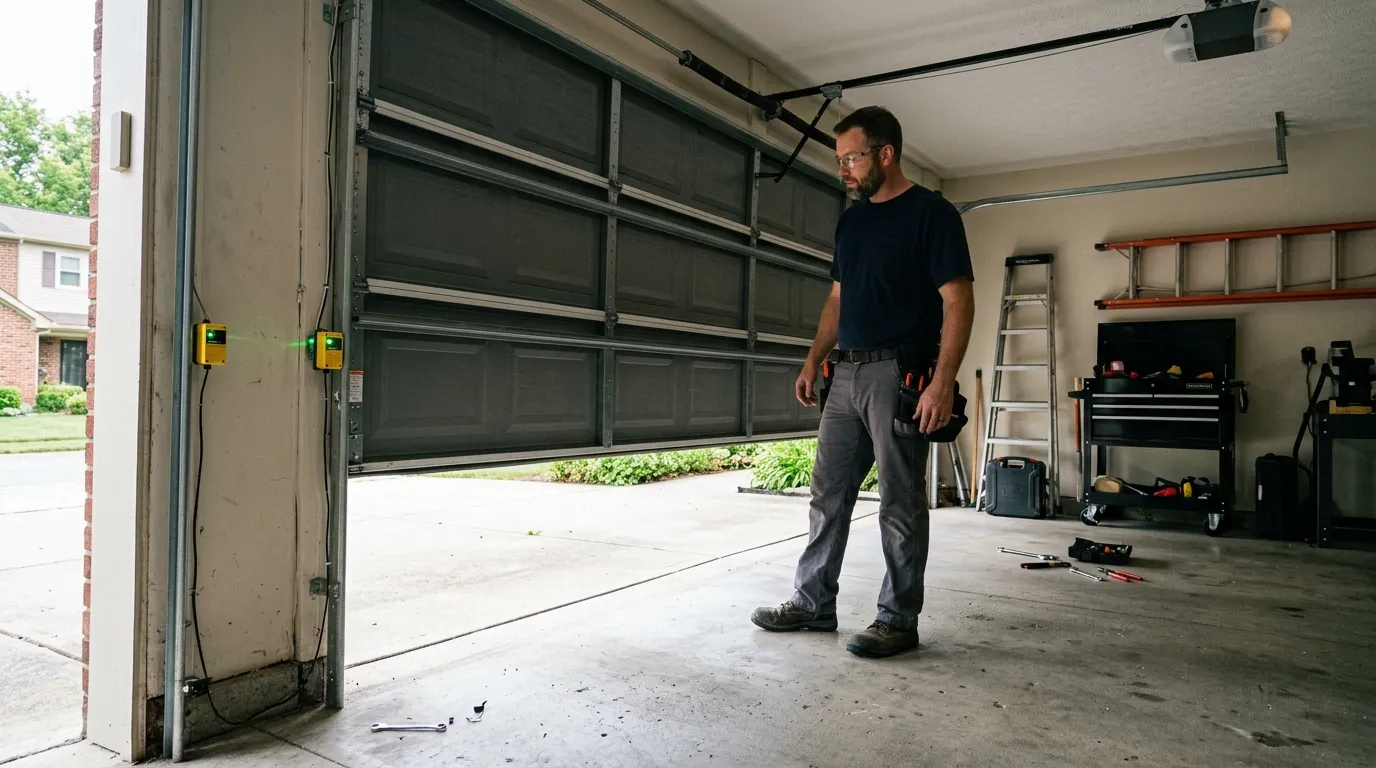
On a wider double door, off-track usually shows up as one specific thing: the door sitting visibly crooked in the opening, higher on one side than the other, with a gap of daylight at the bottom corner. Sometimes there's a loud bang first - that's a cable letting go under tension, and it's the reason we ask that nobody stand under the door once it's stuck partway.
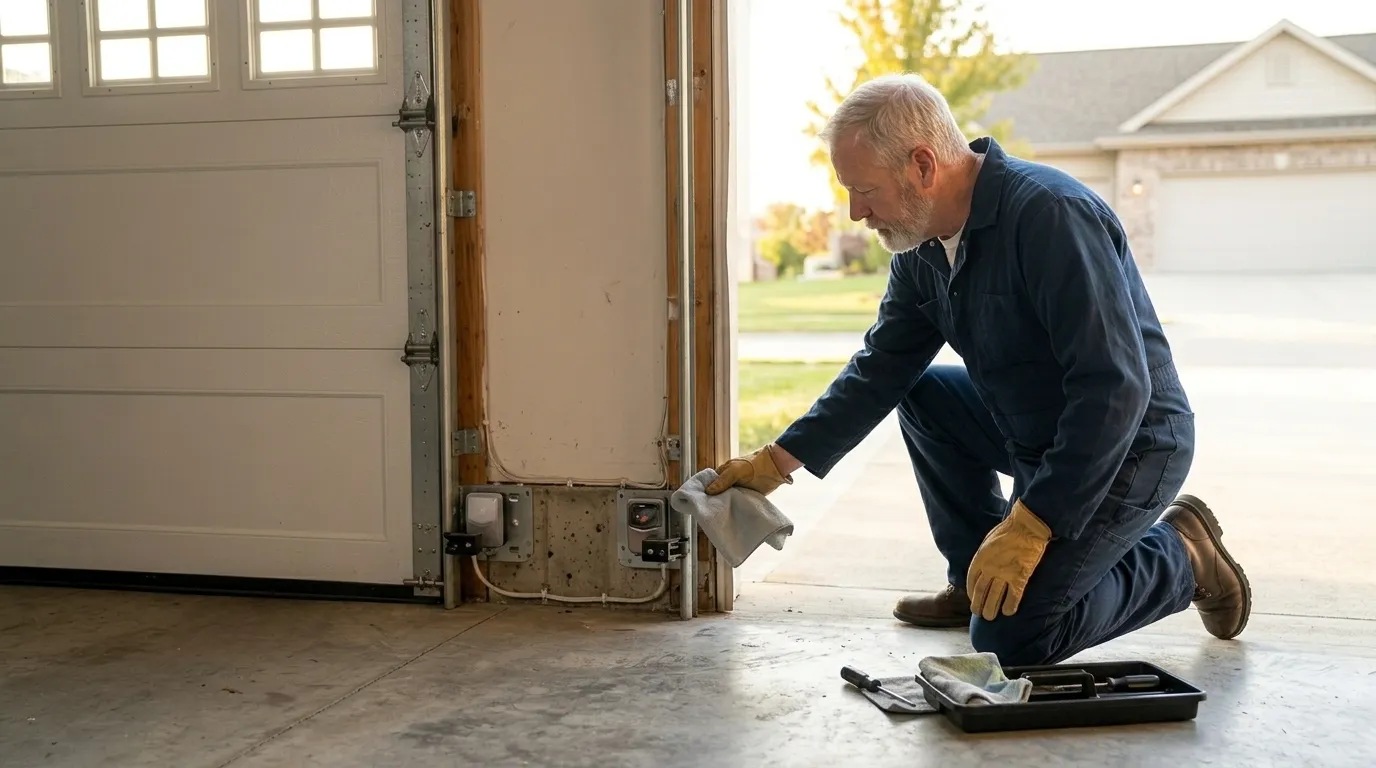
A grinding or scraping sound as the door moves, without it actually leaving the track, is usually a different problem - a roller wearing out rather than a full derailment - but it's often the early warning for the same failure a few weeks out. On newer builds like most of Erie's housing stock, we also see track brackets pulling loose from framing that's still settling; a bracket screw backing out a little each winter as the house shifts with the cold isn't unusual on a home built in the 2000s.
If the door won't move at all and the opener just hums, stop there. That's almost always a spring or cable problem, not something to force through with the wall switch.
The DIY Question
You can usually see whether a roller has jumped the track without opening the door further - a flashlight along both rails will show it. That part's fine to check yourself. What isn't worth doing yourself is putting the door back on the rail while it's under spring tension, especially on a door this wide. A double-wide sectional carries enough spring load that a slipped cable or a wrongly seated roller can let go fast, and there's no safe way to hold a panel that size by hand while you work.
If the door is off track but sitting still and stable, the safest thing to do is leave it exactly where it is, unplug the opener so nobody triggers it by habit, and wait for someone to look at both tracks and both cable drums. Forcing it back on one side without checking the other side just moves the problem instead of fixing it, and on a heavier newer door, that second failure tends to be worse than the first.