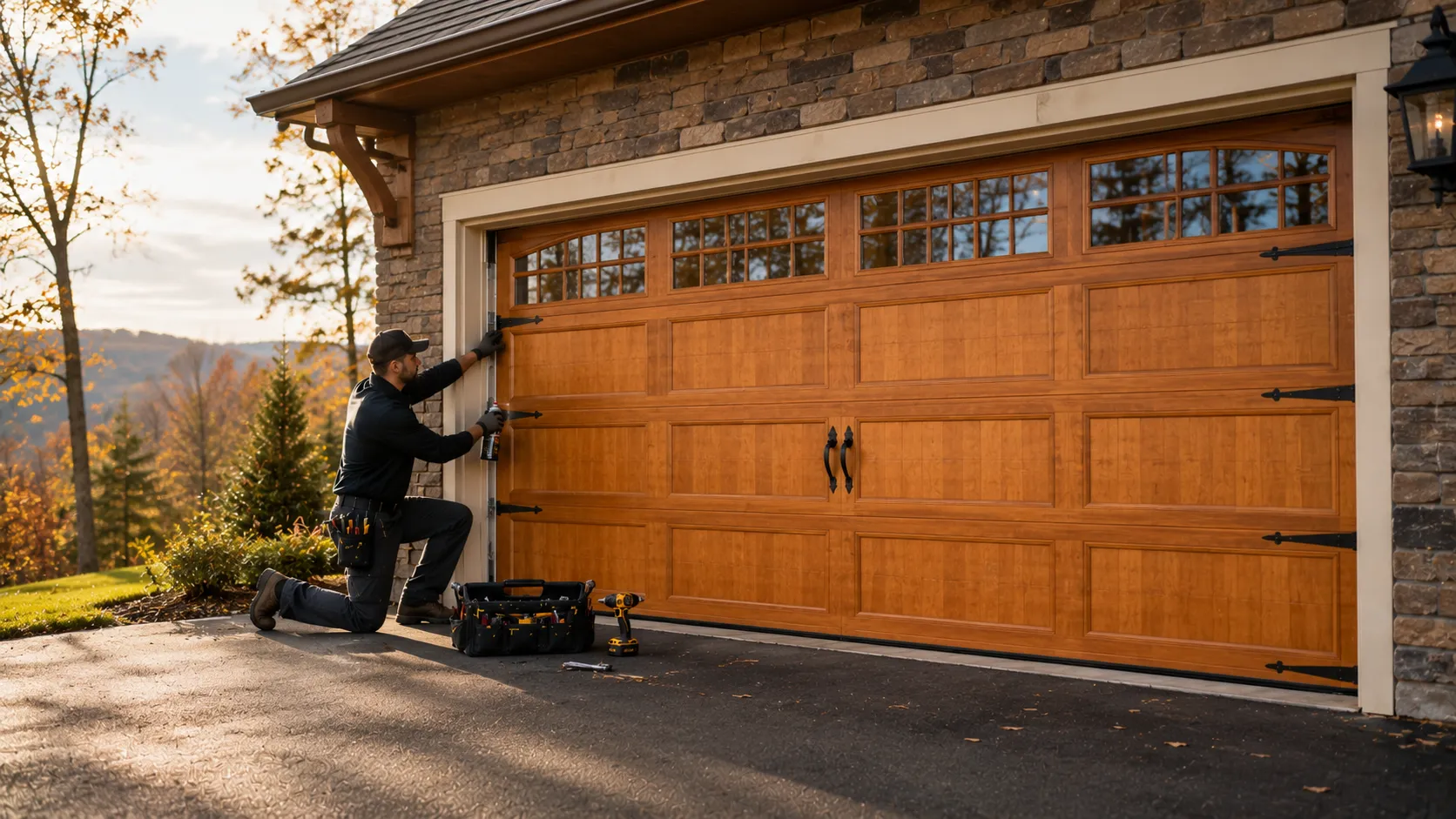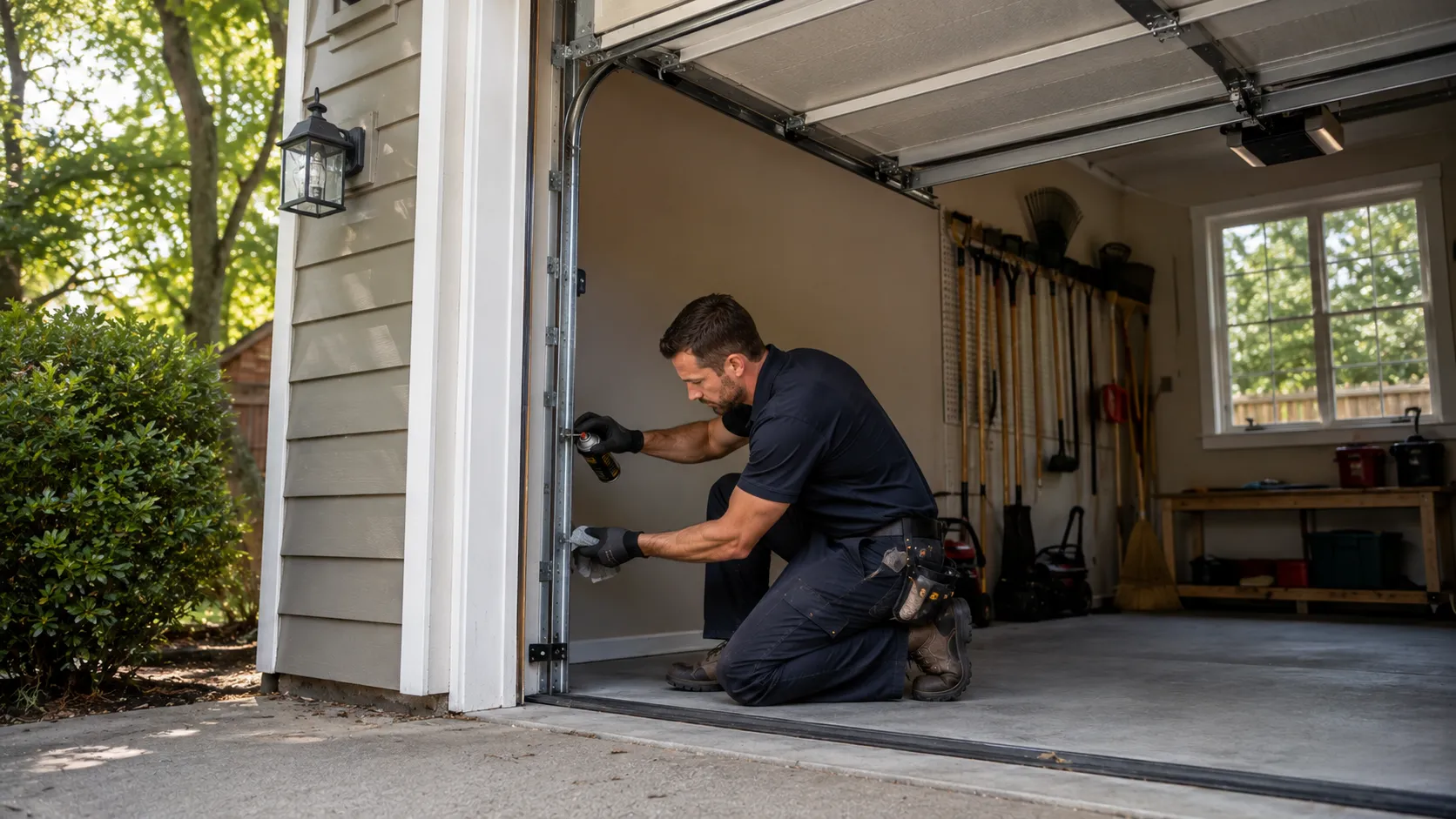
Why It Happens Here
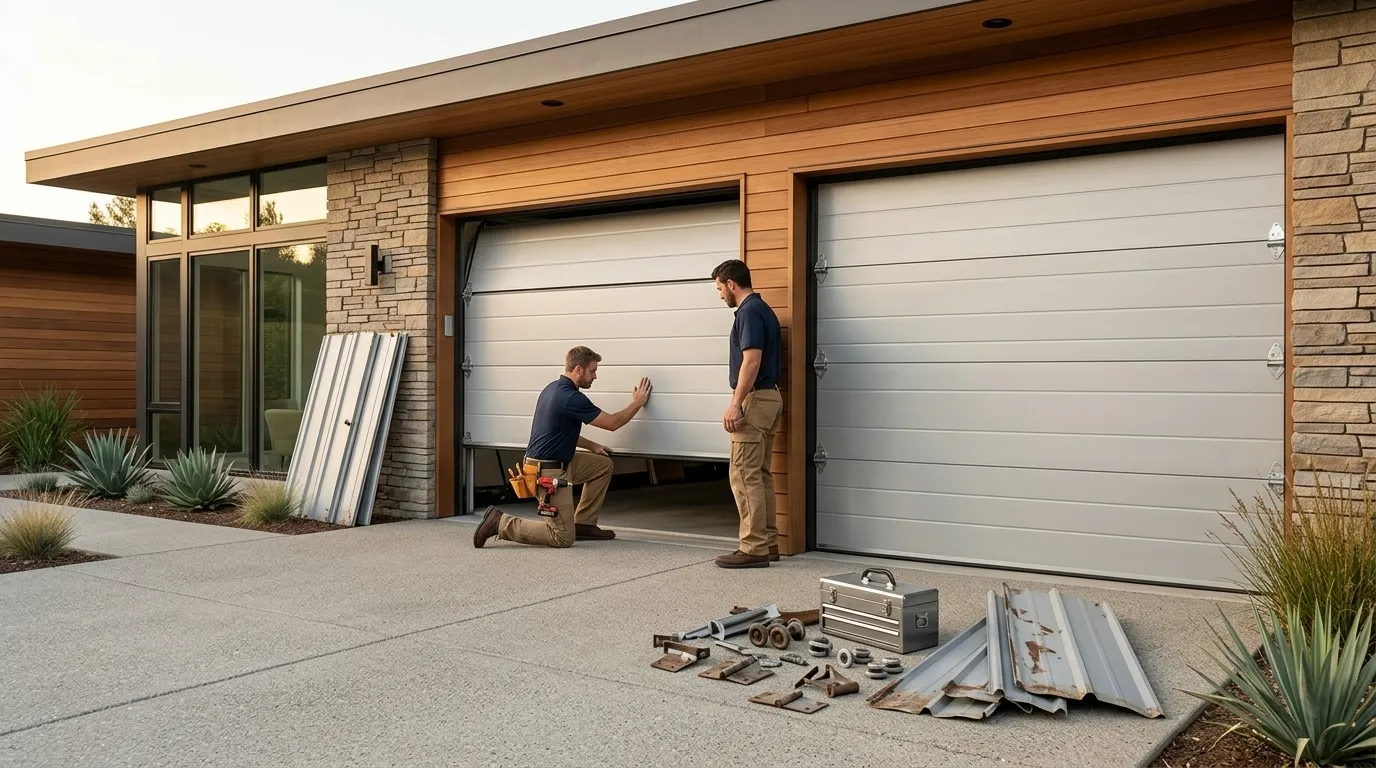
Firestone's housing stock skews newer than the rest of the territory we cover out of Longmont. The area's median build year lands around 2007, a full decade past the broader service area's median of 1997, and that gap matters for cable work. A door built in the last fifteen years is far more likely to be a wide double-car unit running on two lift cables to one torsion spring, instead of the narrower single-cable doors common on the older stock elsewhere in our coverage area. Two cables sharing a spring means when one starts fraying, the other is usually carrying uneven load already, and it's not far behind.
Cold, dry winters here work on cable strand the same way they work on any exposed steel - they don't cause the wear, but they speed it along. A cable that's stretched and frosted overnight on a Firestone garage can hold together for months and then let go on an ordinary Tuesday. That's the pattern we see most in this part of the territory: not a slow give, but a sudden one, right when the door is midway up or down.
What You Are Seeing
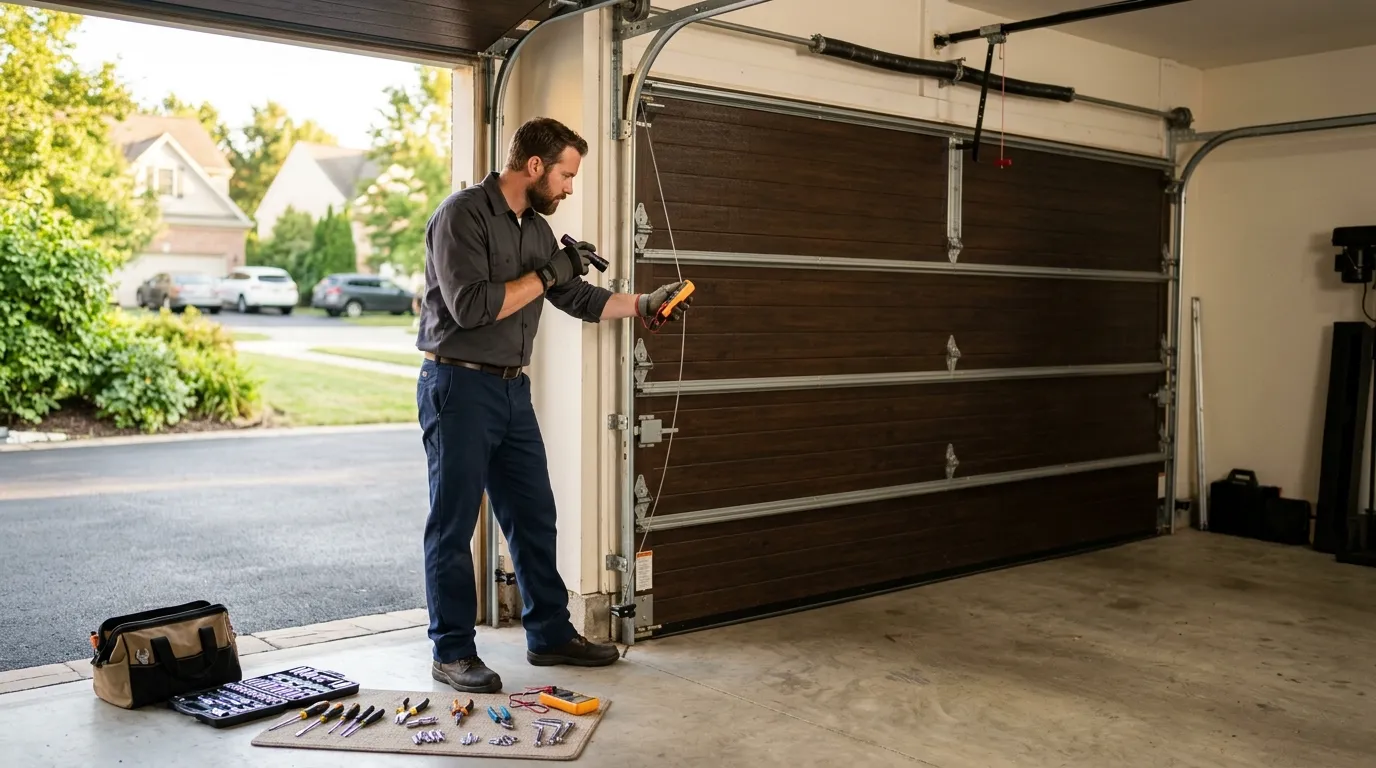
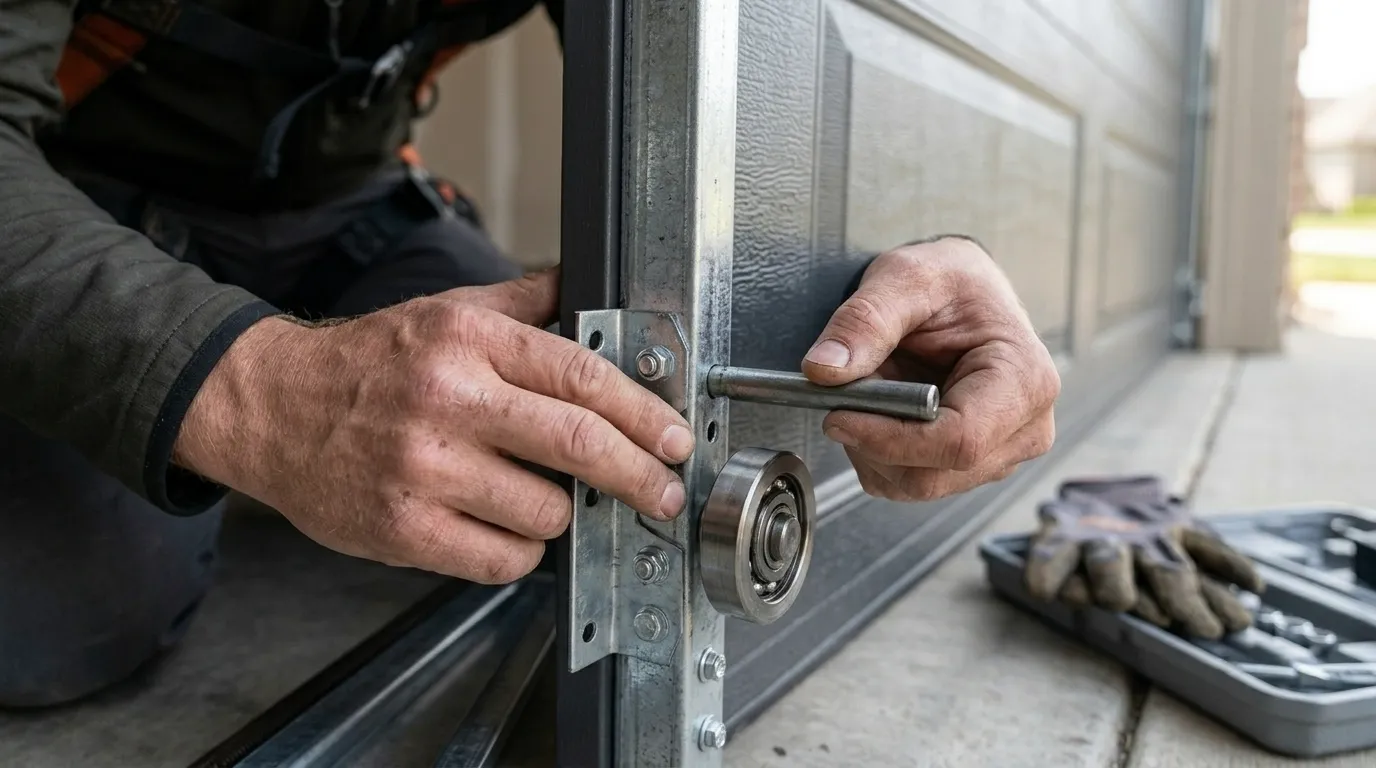
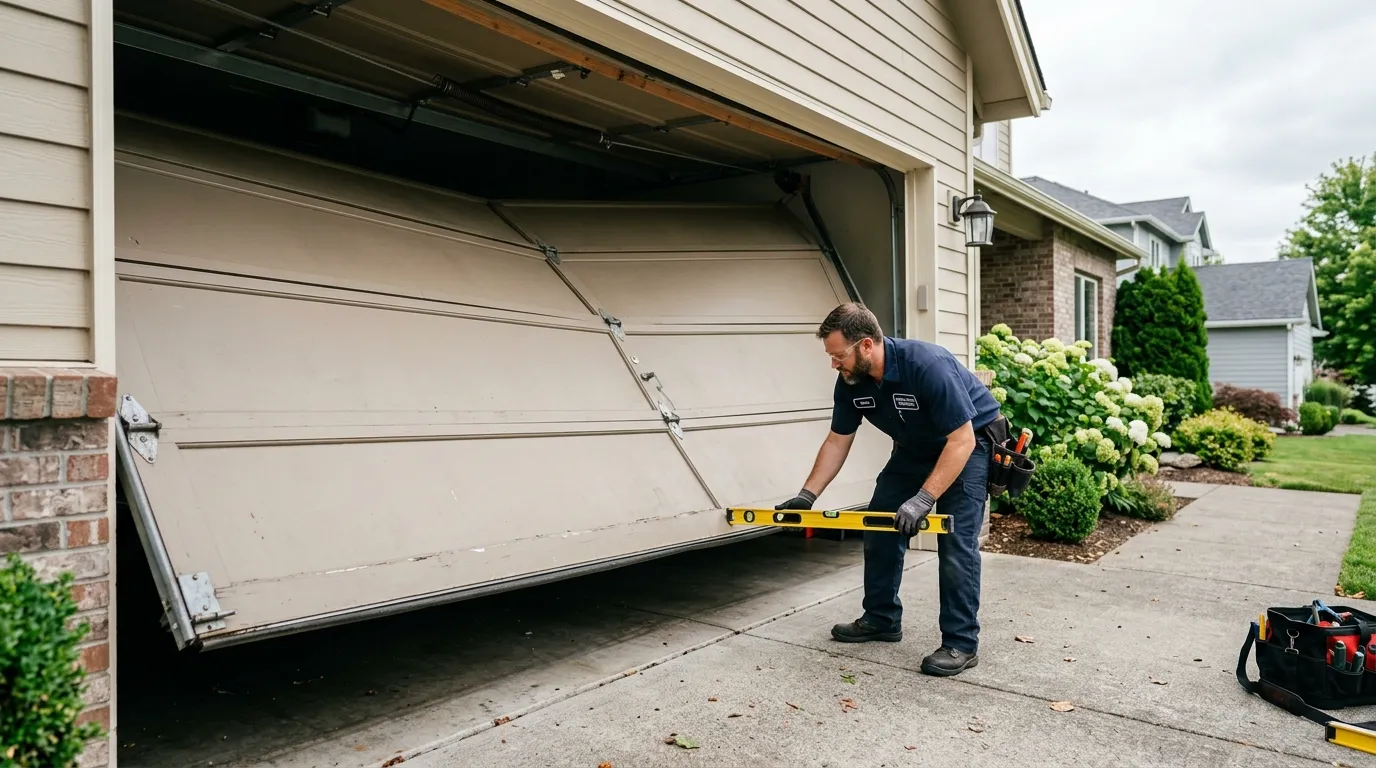
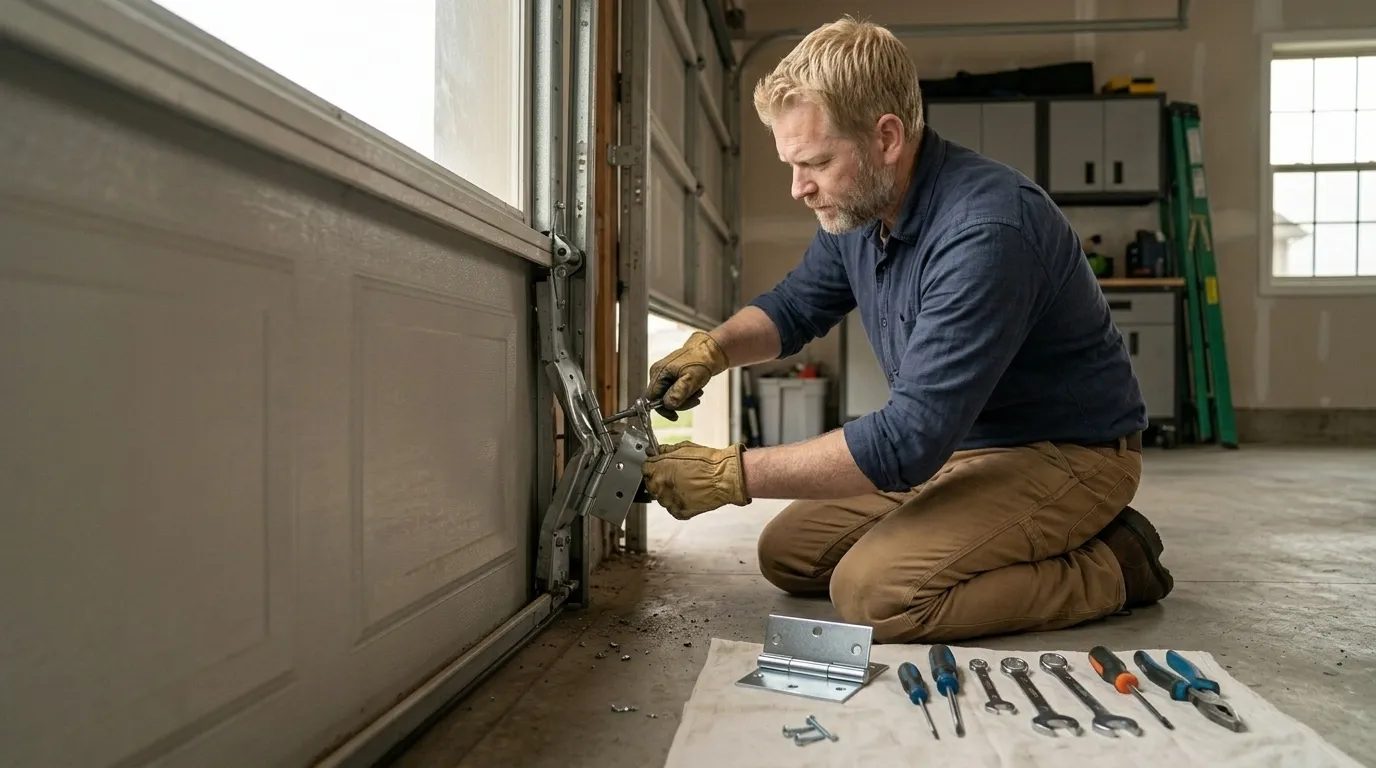
The tell on a failing cable is almost always visual before it's audible. Look at the cable where it wraps the drum at the top corner of the track - frayed strands sticking out like a broken wire brush, or a kink where the cable has jumped the groove. On the newer double doors common in Firestone, a cable failure often shows up as the door hanging crooked, one side higher than the other, because only one cable let go and the opener is still trying to pull the door square.
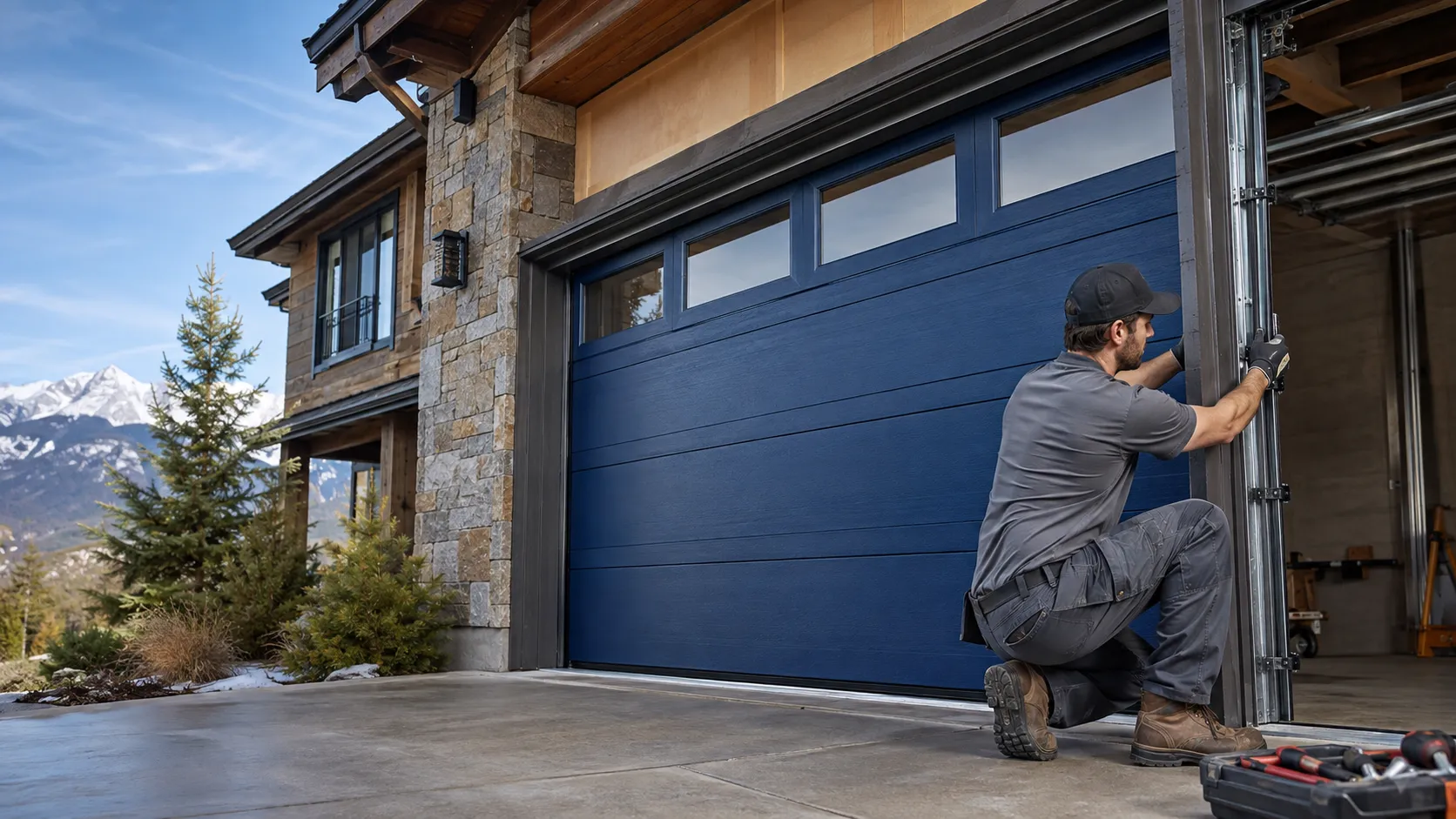
If the door won't move at all and the opener just hums, that's usually not the cable - that's the safety cable or the opener sensing resistance and stopping itself, which is the system doing its job. A door that drops fast on one side, or a loud bang followed by a door that won't lift past a foot off the ground, is a snapped cable and the door should not be forced up or down by hand until it's fixed.
How Long You Are Without the Door
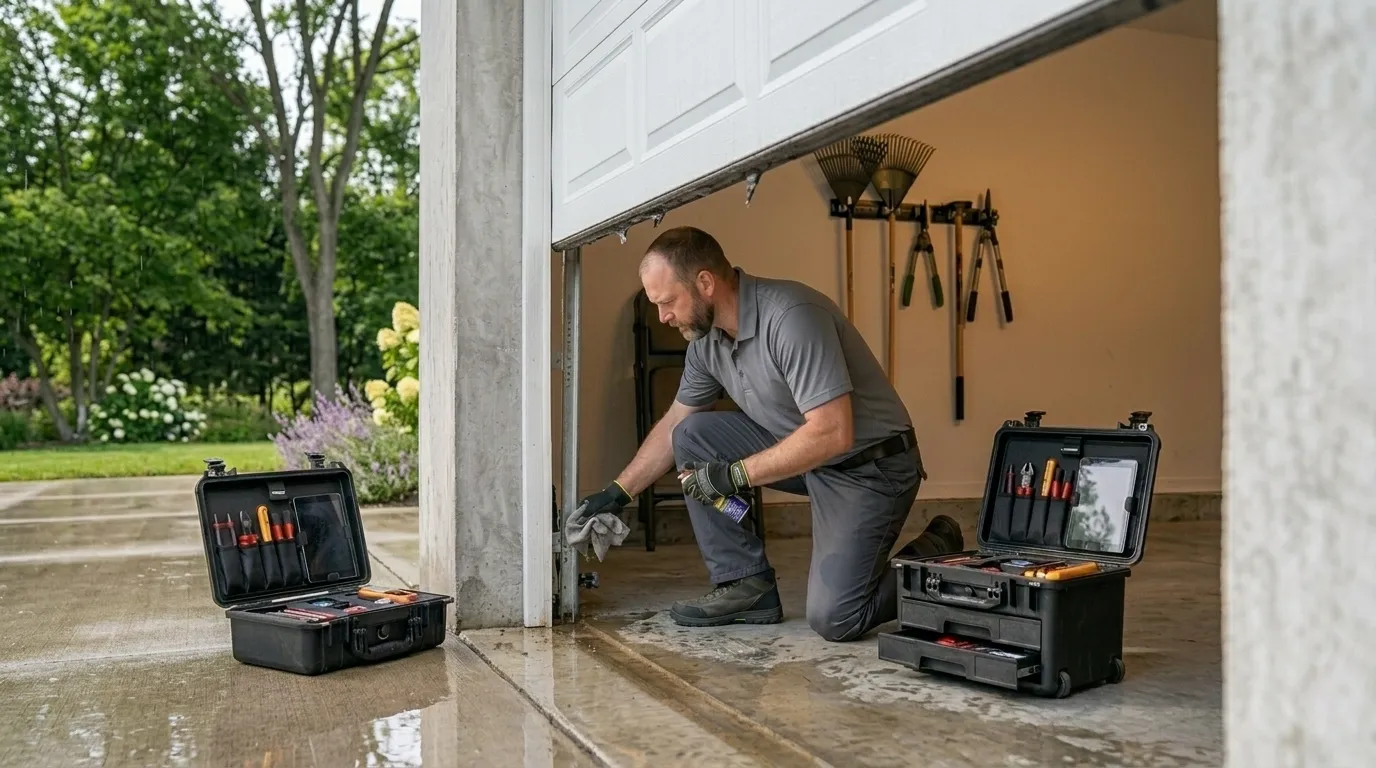
Once the truck is on site, a straight cable swap on one side of a double door is typically finished within the hour, spring retensioning included. If both cables need replacing, or the drum or pulley is damaged and needs swapping too, plan on the visit running longer. We travel the 8 miles out from Longmont for these calls, so the door is out of service for the length of the drive plus the job itself, not a separate dispatch window.
Parts availability is the one variable outside our control. Standard cable gauge and drum sizes for the newer builds common here are usually on the truck already. A less common size, or a specialty low-headroom drum on an unusual older install, may need to be ordered, which stretches the timeline past the same visit.
The DIY Question
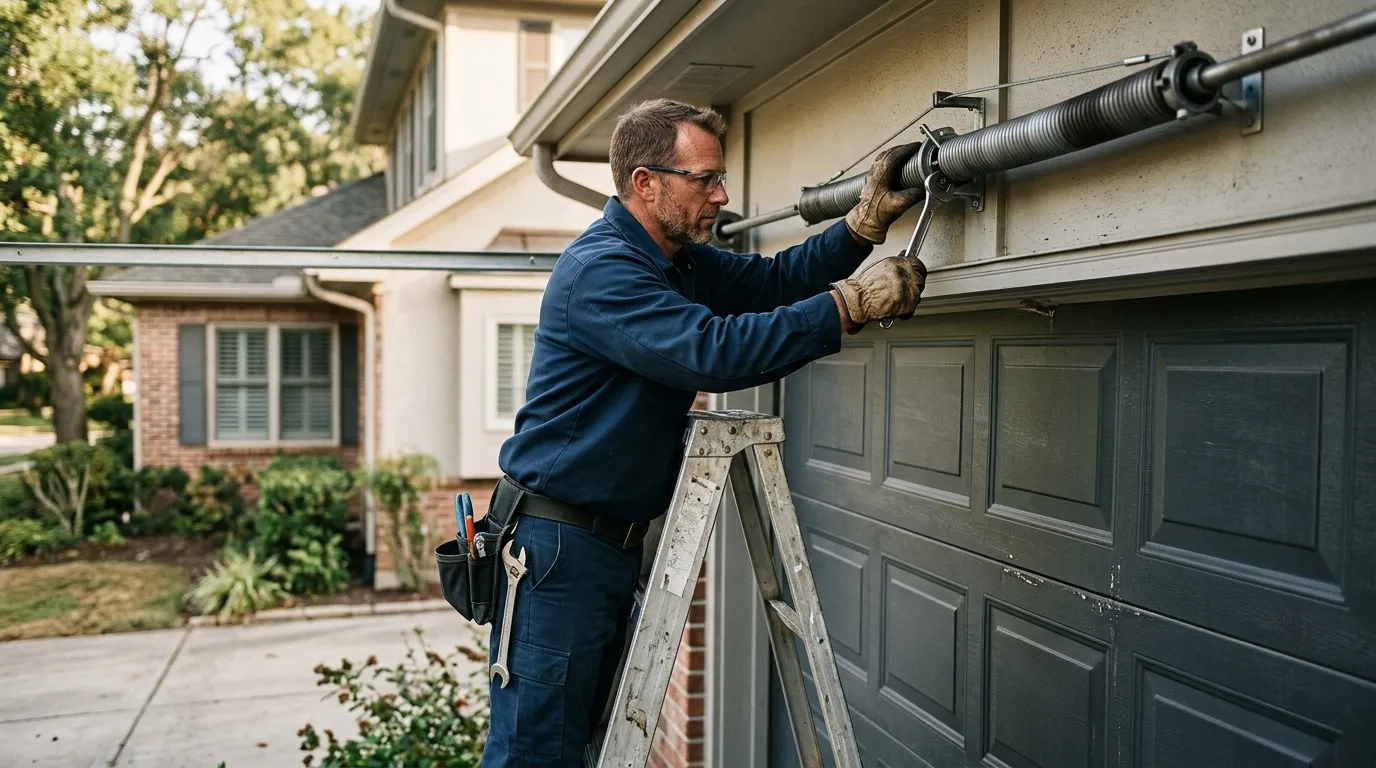
A garage door cable job is not a good candidate for a weekend fix, and this is the honest limitation worth stating plainly: the torsion spring holding tension on that door stores enough force to break bones or worse if it's released wrong, and you cannot safely replace a cable without dealing with that spring first. This isn't a caution built to sell a service call - it's the actual mechanics of the system.
What a homeowner can safely do is the diagnostic step: look at the cable and drum, note whether one side or both are affected, and check whether the door is hanging level or crooked. That tells us what we're walking into before we're 8 miles down the road. Beyond that - pulling the old cable, releasing spring tension, re-threading and retensioning - is where this becomes a two-person job with the right clamps, not a solo one with a ladder.