Why It Happens Here
Firestone runs about 5,877 households, which is a small enough town that the fault pattern doesn't scatter the way it does in an older, bigger city. Most of the housing here went up after 2000 - the area median build year is 2007 - so you're not dealing with decades of mismatched replacement parts stacked on top of an original door. What you get instead is a lot of the same builder-grade opener units and lift springs installed in a tight window, which means when one starts failing, we tend to see the same failure a few streets over within a season. That's useful: it lets us know what part to bring on the truck before we even pull into the driveway. We come out from Longmont, about 8 miles south, so we're not guessing at what's common in this town - we've seen the pattern enough times to expect it.
What You Are Seeing
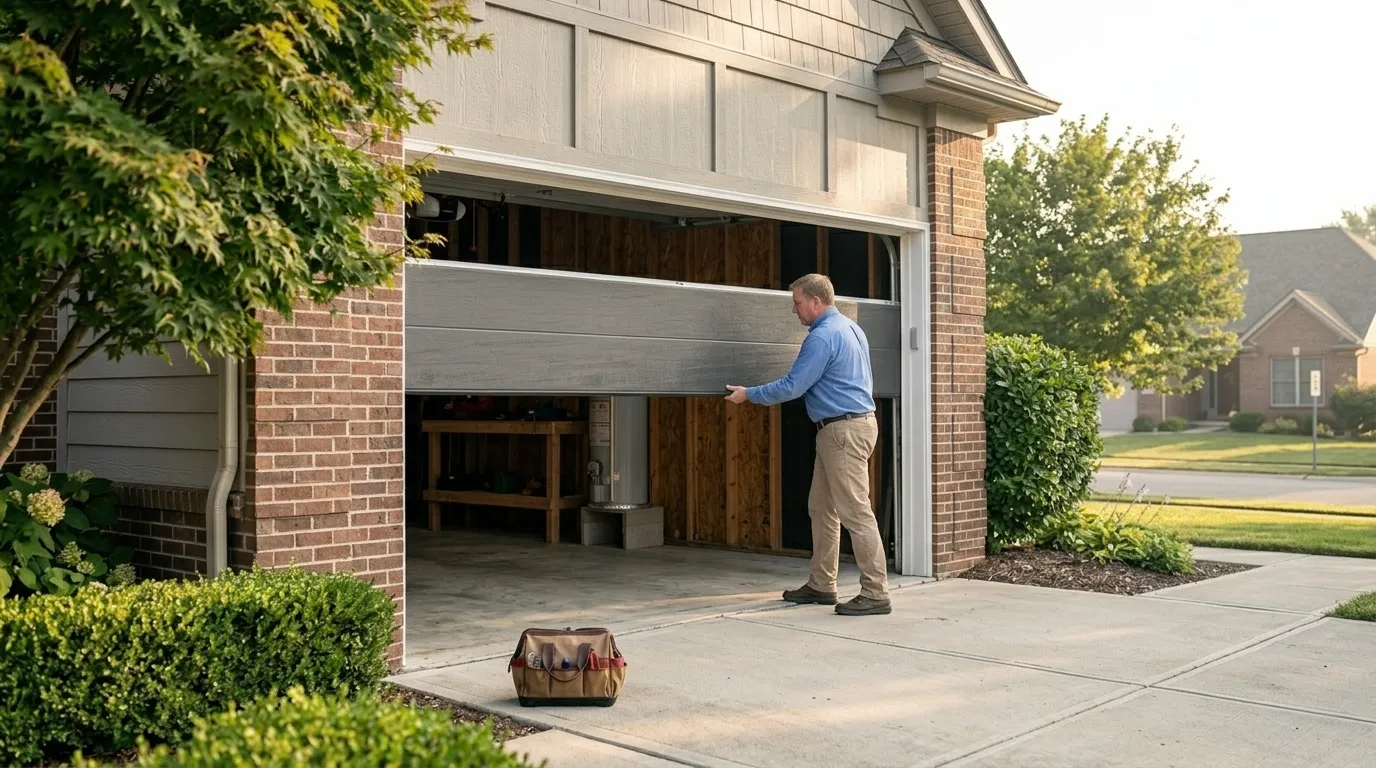
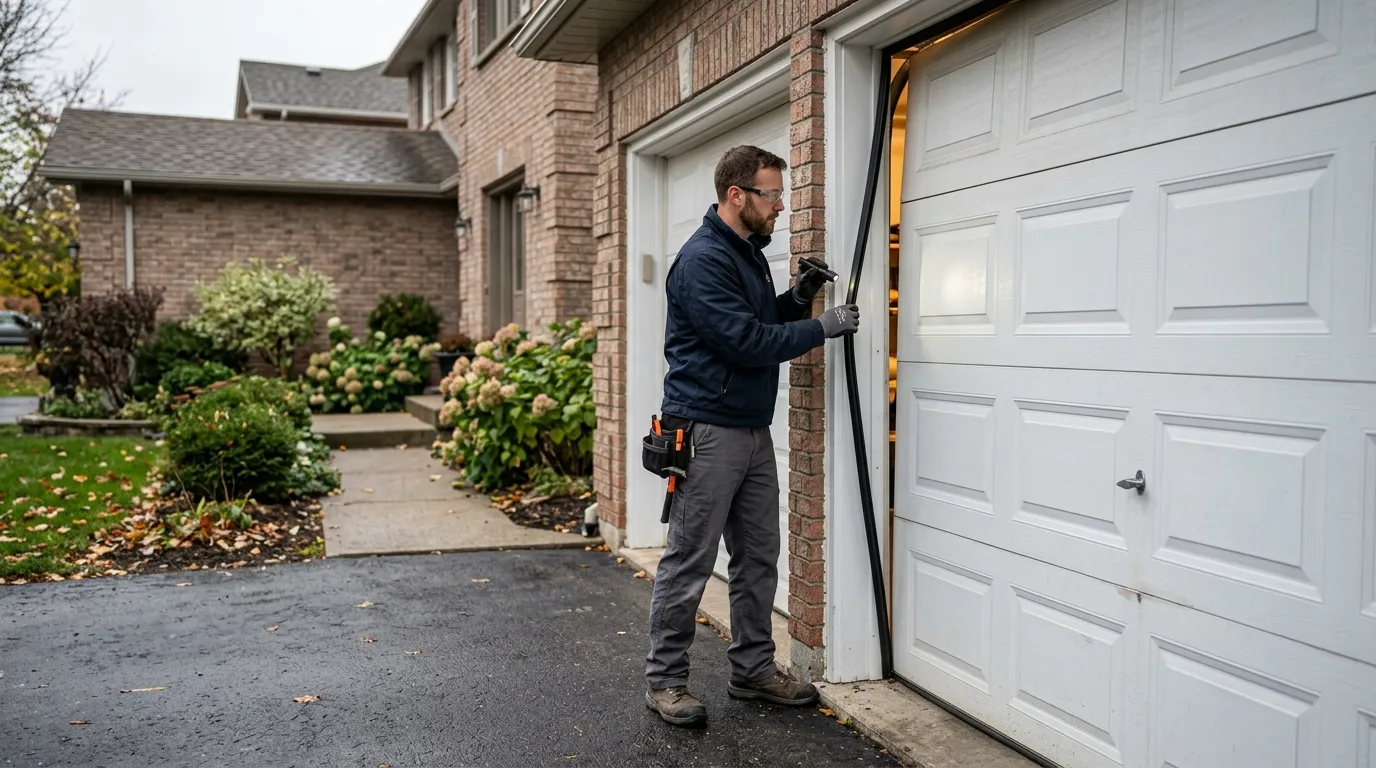
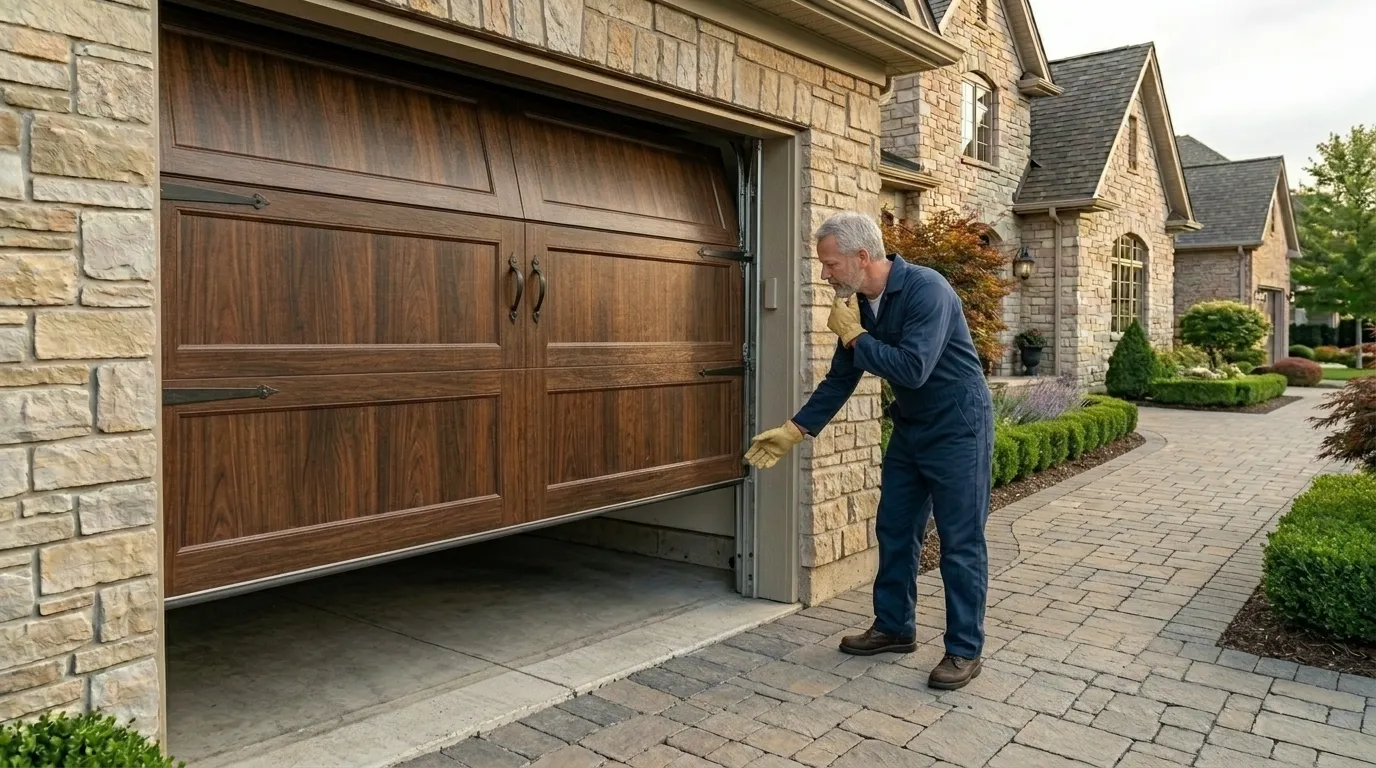
With a housing stock this young, the complaints skew toward openers rather than the door panels themselves - circuit boards, sensor eyes going out of alignment, or a drive gear stripping on a belt-drive unit that's been running ten-plus years without a look. Torsion springs installed around 2005-2010 are hitting the end of their rated cycle count right about now, so a spring that snaps without warning on a lift isn't unusual. You'll also see cold-weather symptoms specific to this area - Colorado's Front Range gets severe cold stretches, and vinyl and rubber weatherstripping that's fifteen-plus years old cracks and lets the door bind on the track on the coldest mornings. If your door is heavier to lift by hand in January than it was in July, that's the spring losing tension, not your imagination.
How Long You Are Without the Door
For a spring or opener repair, the door goes back into service the same visit - we don't leave you with a door that won't close overnight. What stretches the timeline is parts availability, not labor: if your opener is an older model no longer stocked, or a track section needs to be special-ordered, that's a return trip once the part's in hand. Given how recent most of this housing stock is, we're not chasing obsolete one-piece door parts here the way we would in an older neighborhood - the common failure points on 2000s-era openers and springs are still stocked parts, which keeps most repairs to a single visit.
The DIY Question
A sensor that's knocked out of alignment or a remote that needs reprogramming - fine to try yourself, no spring involved, low risk. A torsion spring is a different matter: it's wound under enough tension to break a wrist or worse if the winding bars slip, and that's true whether the door is five years old or thirty. We'd also say skip it if you're not sure whether the noise is the opener or the spring - a wrong guess means buying the wrong part and paying for two visits instead of one. Where we'd tell you not to bother calling anyone: a sticky track that just needs the rollers cleaned and lubricated. That's a five-minute job with a shop rag and a can of the right lubricant, not a service call.