Why It Happens Here
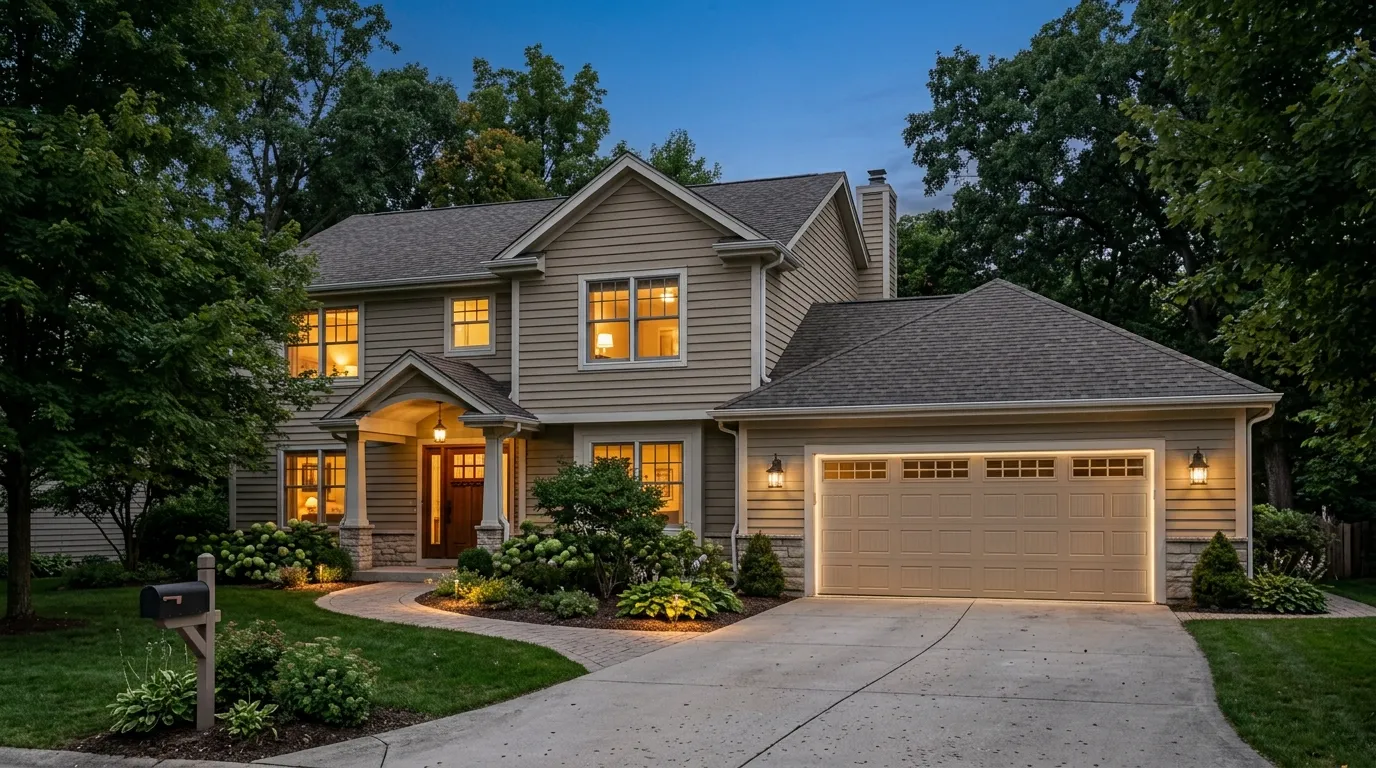
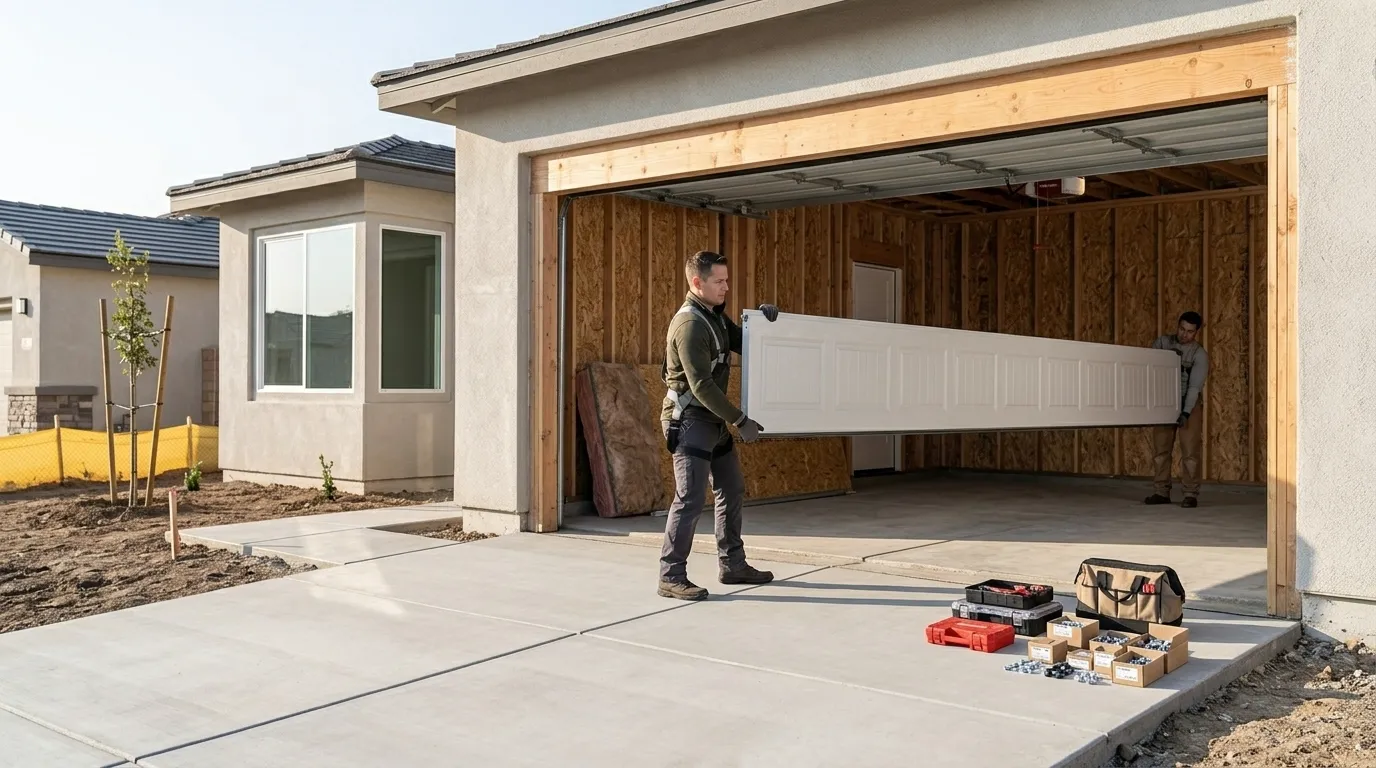
The drive out to Firestone runs about 8 miles from our shop in Longmont, which is close enough that a same-day slot isn't a gamble the way it can be on a longer run, but it's still a drive, so we build the route around what's actually failing rather than showing up blind. That matters more here than it sounds, because Firestone's housing stock skews younger than the rest of the service area. The median home here was built around 2007, well past the 1997 median that covers Longmont and the surrounding county. That gap changes the failure. Homes from this era were built to a newer energy code with tighter garage envelopes, factory-installed steel sectional doors, and openers with circuit boards instead of the older relay-and-chain setups. The springs are usually still torsion, but they're wound for lighter insulated panels, not the heavier wood or single-layer steel doors that show up on older streets closer to Longmont's core. When something breaks in a 2007-built Firestone garage, it's rarely the door itself sagging with age. It's an opener logic board, a sensor knocked out of alignment, or a spring that's simply reached the end of its cycle count faster than expected because the door gets used more - these are newer neighborhoods with more two-car, two-commuter households.
What You Are Seeing
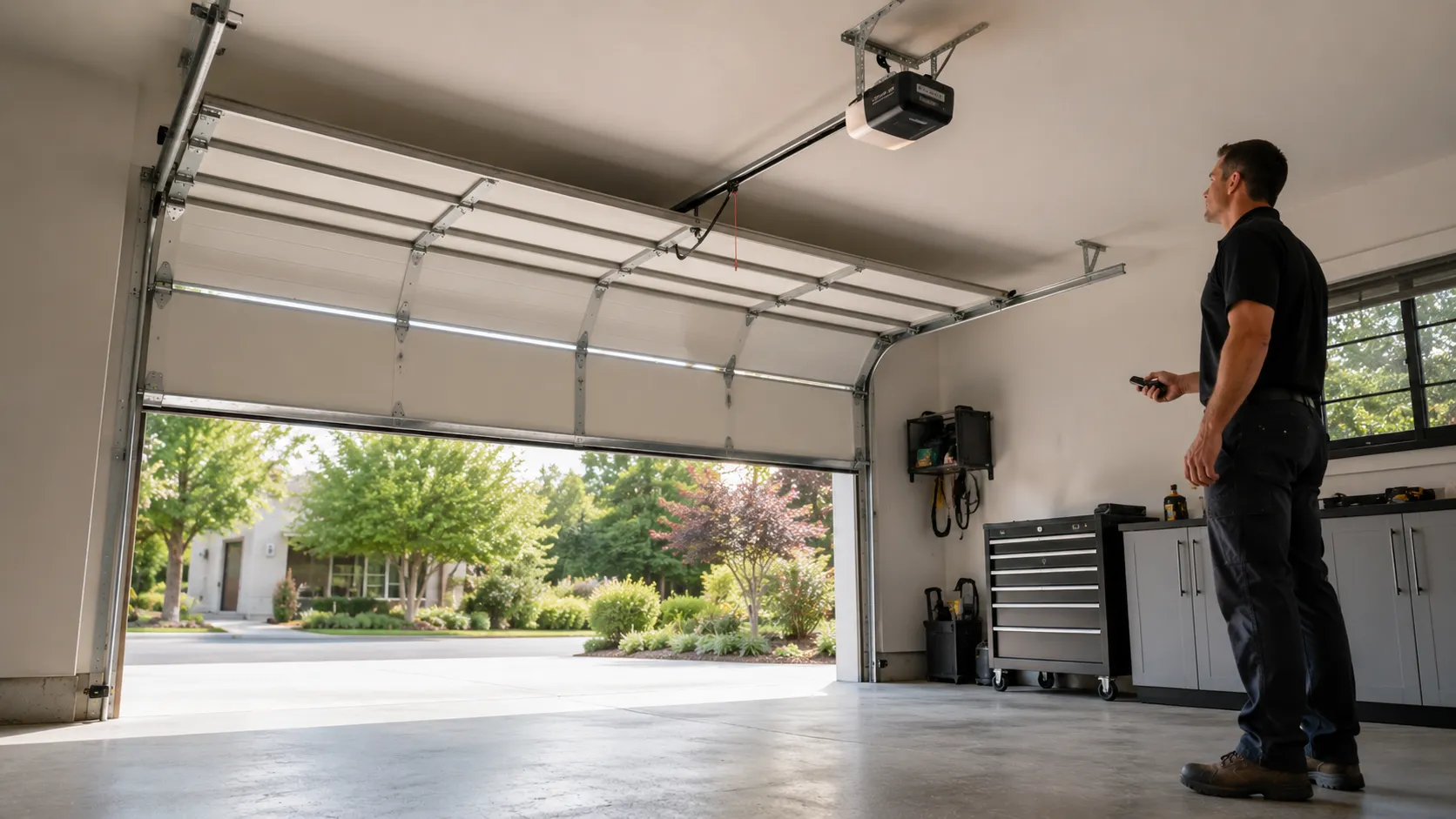
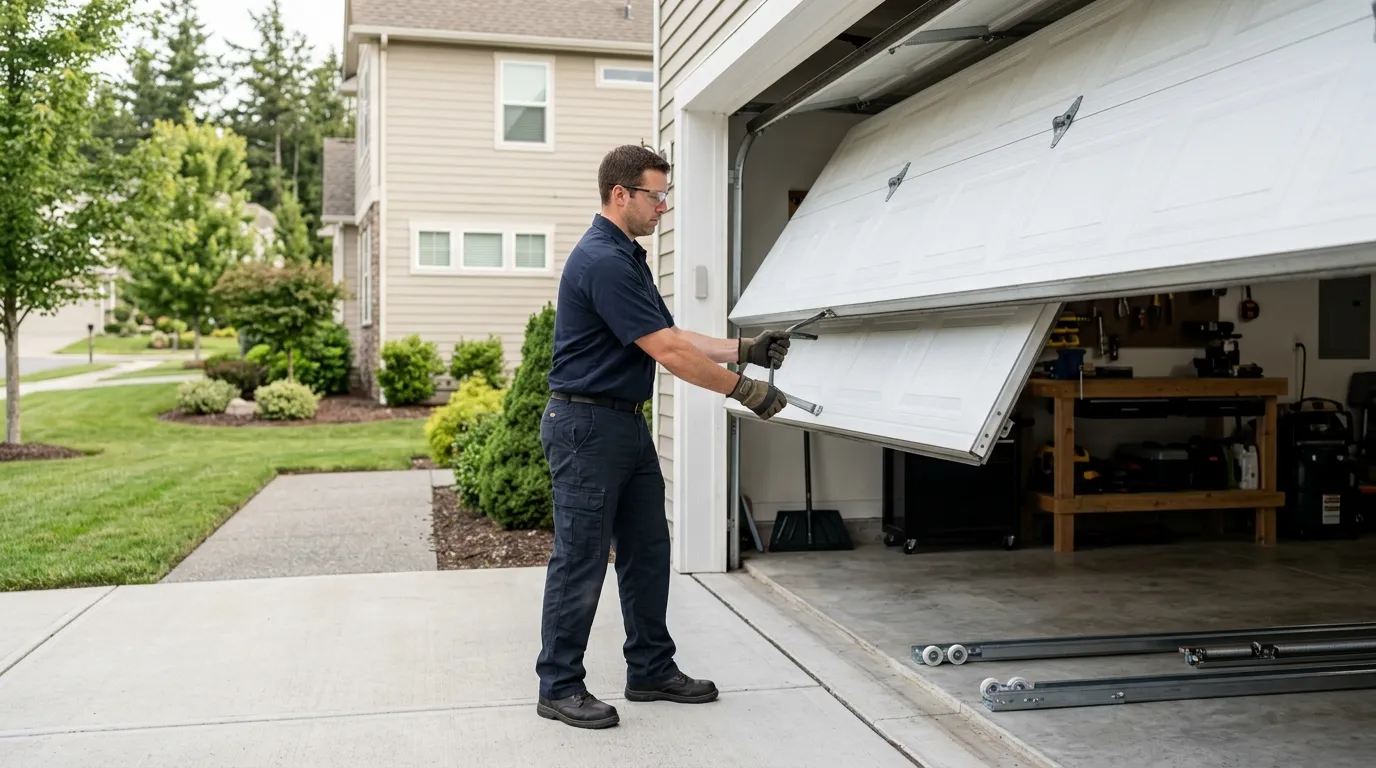
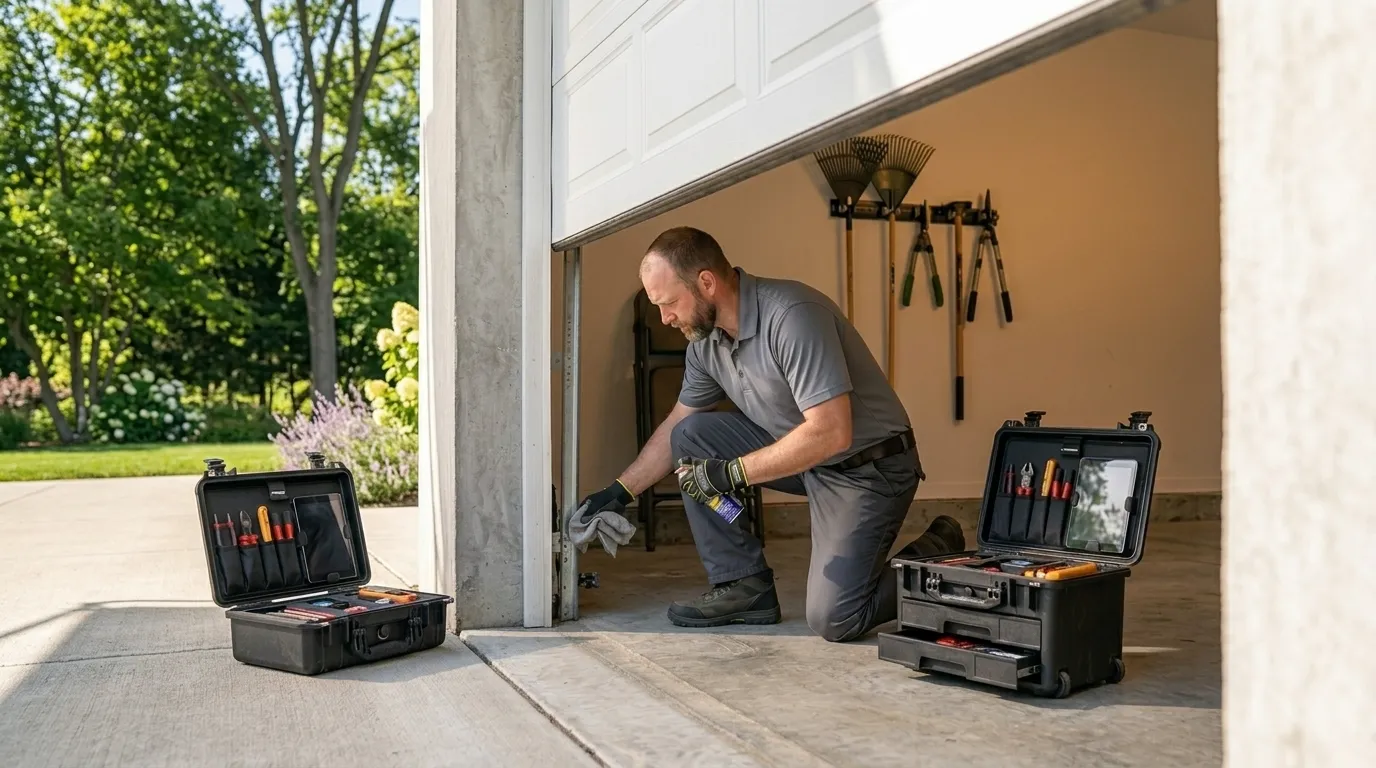
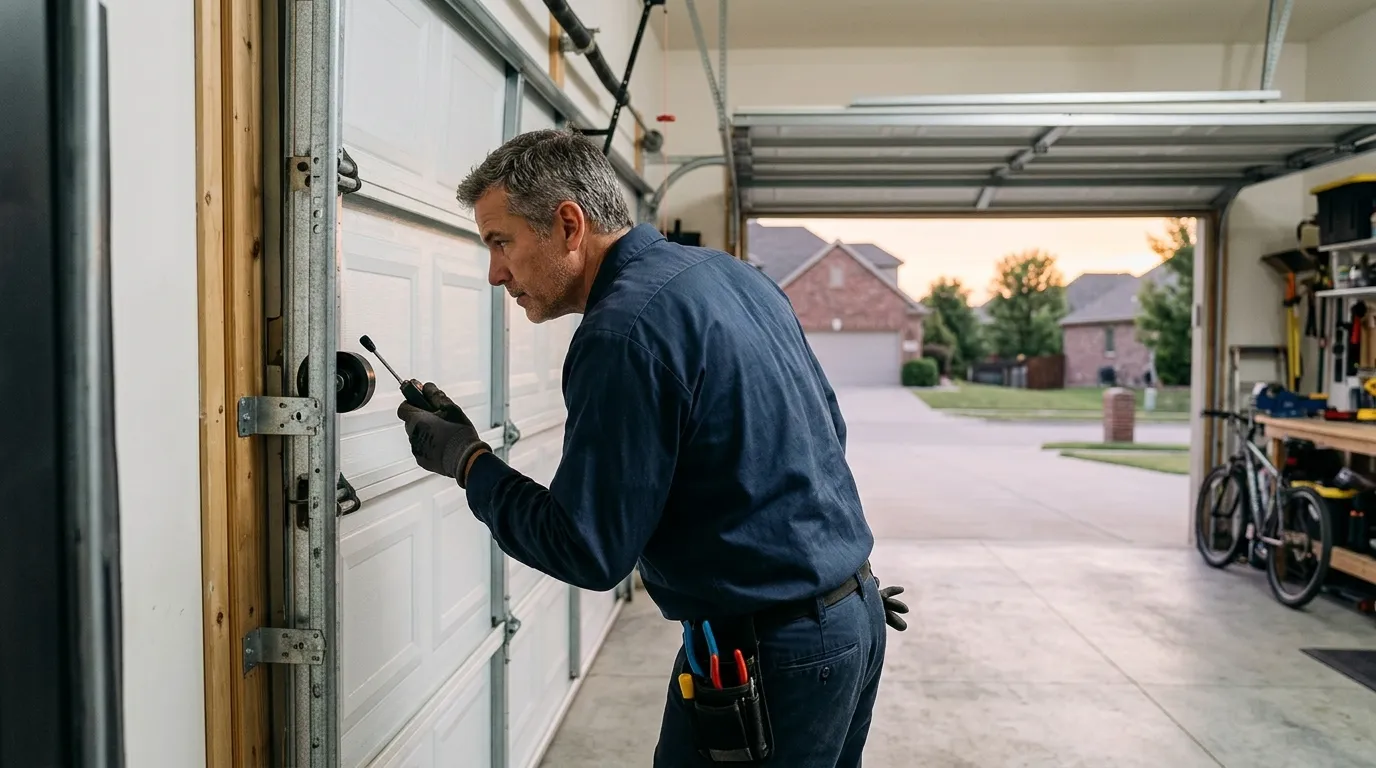
On a door this age, the complaint is almost never "the door won't lift at all." It's usually one of three things: the opener runs but the door doesn't move, the door reverses partway up or down for no clear reason, or it moves but grinds, jerks, or drifts to one side on the track. Boards from the mid-2000s onward use photo-eye safety sensors low on the track, and on a lot of these newer builds those sensors sit closer to the driveway slab than older installs did - dust, frost, or a knock from a bike or trash can is enough to throw the alignment off and stop the door cold. Winters here are cold enough that a stiff torsion spring on a cold morning can also feel like a dead opener when it's really just tension that's dropped with age and temperature. If you're hearing a single loud pop before the door refuses to budge, that's a spring failure, not an opener problem, and it needs the tension released safely before anyone touches the panel.
How Long You Are Without the Door
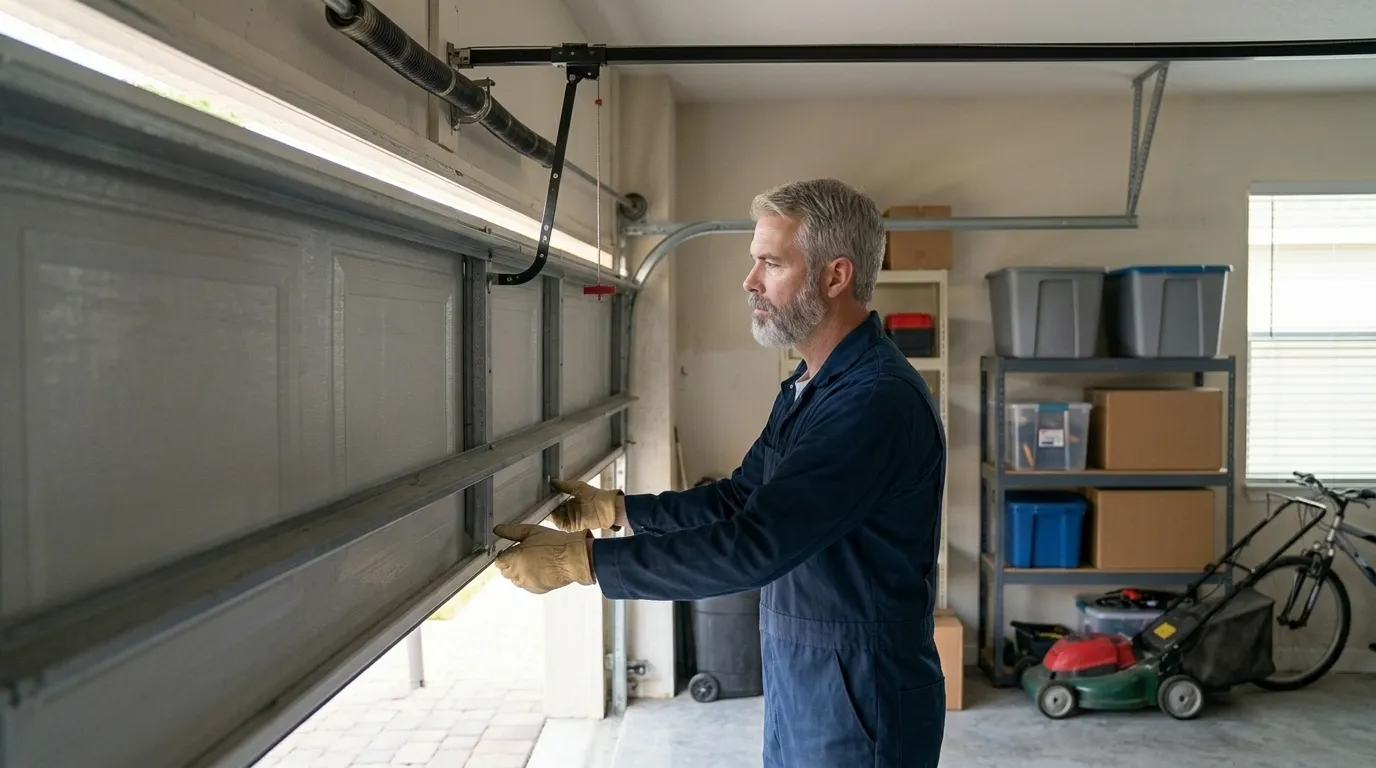
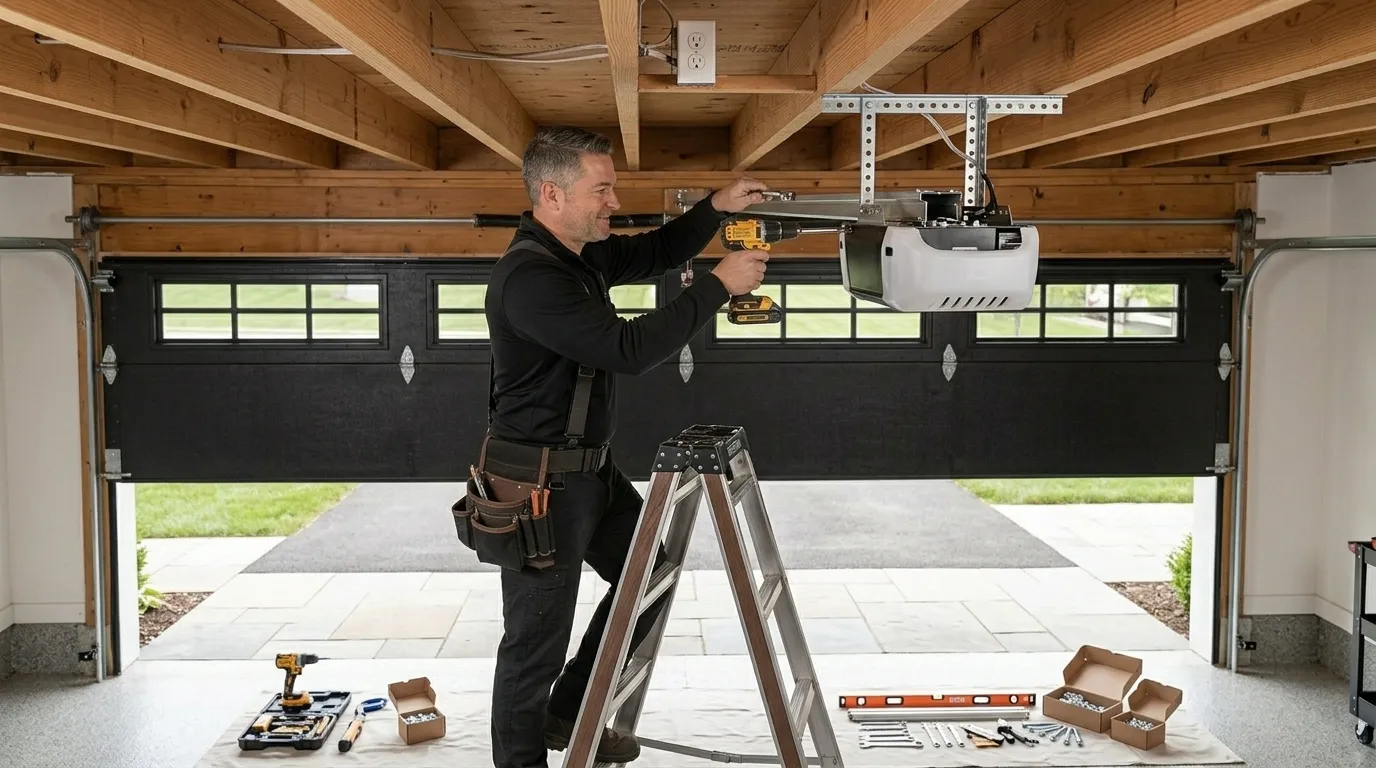
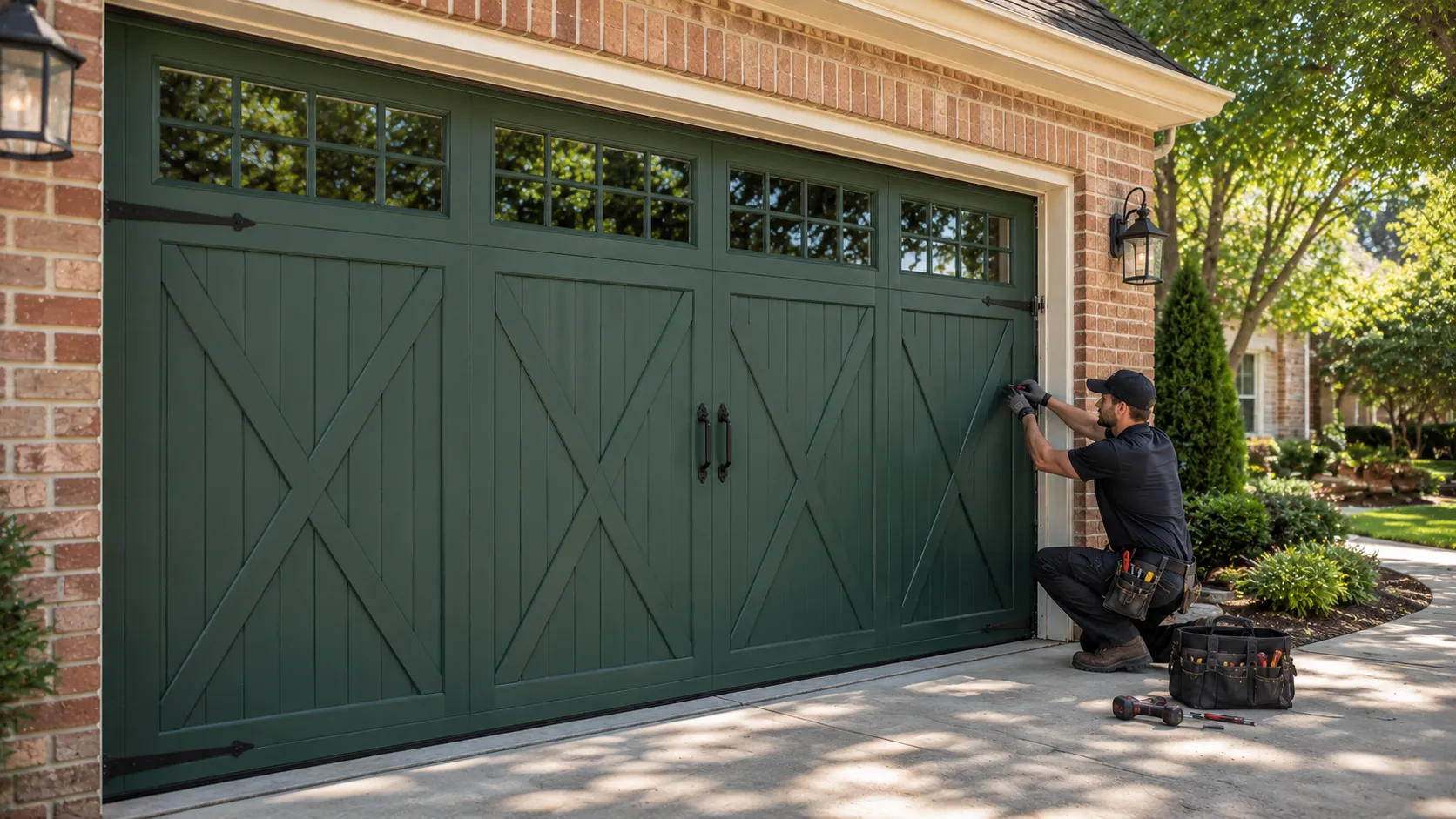
A photo-eye realignment or a broken cable swap is usually a same-visit fix - we're in and out within the hour once the truck is on site. A torsion spring replacement on a standard double door takes longer to set up safely than it does to actually do, but it's still a same-visit job in most cases. Where it stretches out is opener boards and full assemblies: if the part isn't something we carry stocked on the truck, that's a return trip once it's in hand. We won't promise a same-day opener swap sight unseen - we'll tell you after we've seen the unit whether it's a shelf part or an order.
The DIY Question
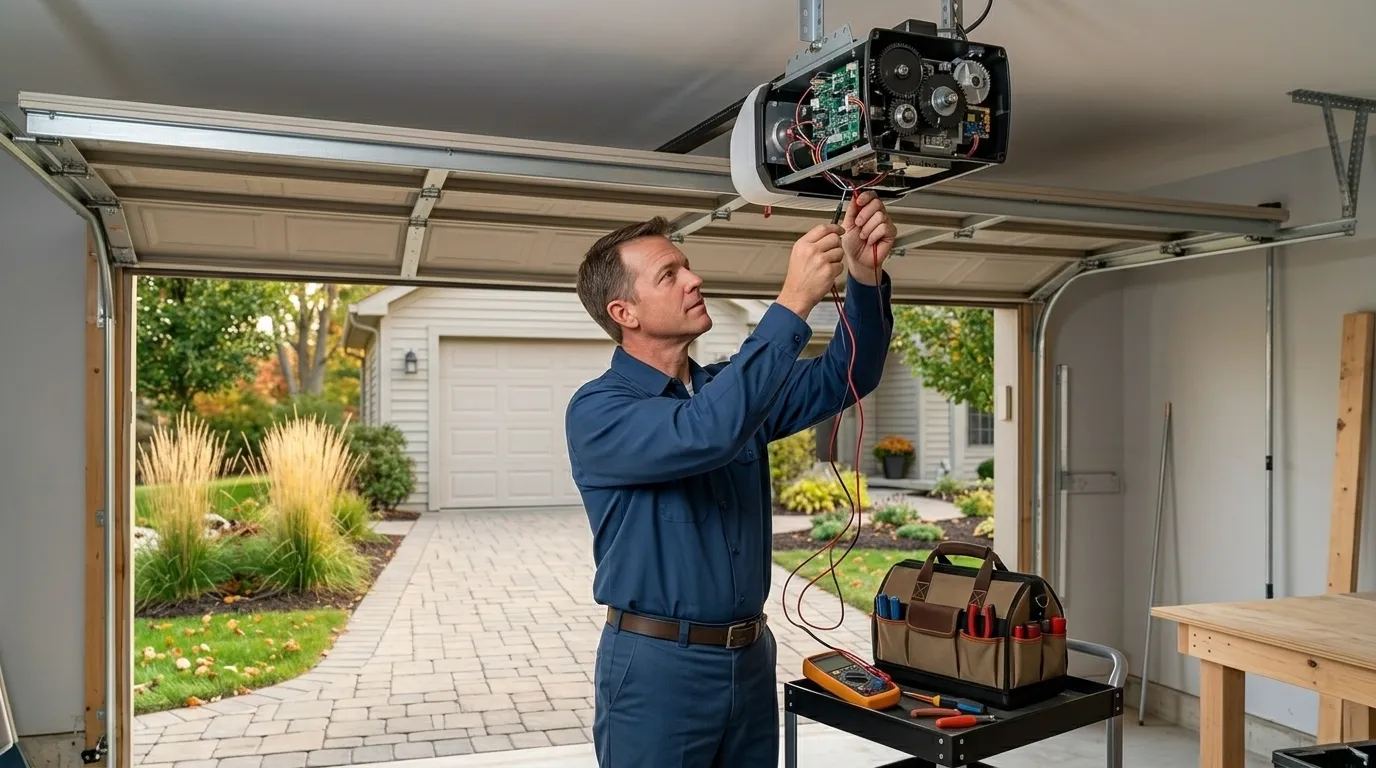
Realigning a photo-eye yourself is fair game - loosen the wing nut, nudge the bracket until both LEDs go solid, tighten it back down. That's a homeowner job. Torsion springs are not. The tension stored in a wound spring on even a lightweight newer door is enough to break a hand or worse if the winding bars slip, and there's no shortcut that changes that physics regardless of how new or light the door is. If your opener is a board issue and you're comfortable with a multimeter, checking for a blown fuse or a loose low-voltage connection before you call is reasonable. Past that - anything involving the spring, the cable drum, or pulling the opener head off the rail - it's not worth the trip to urgent care to save a service call.