Why It Happens Here
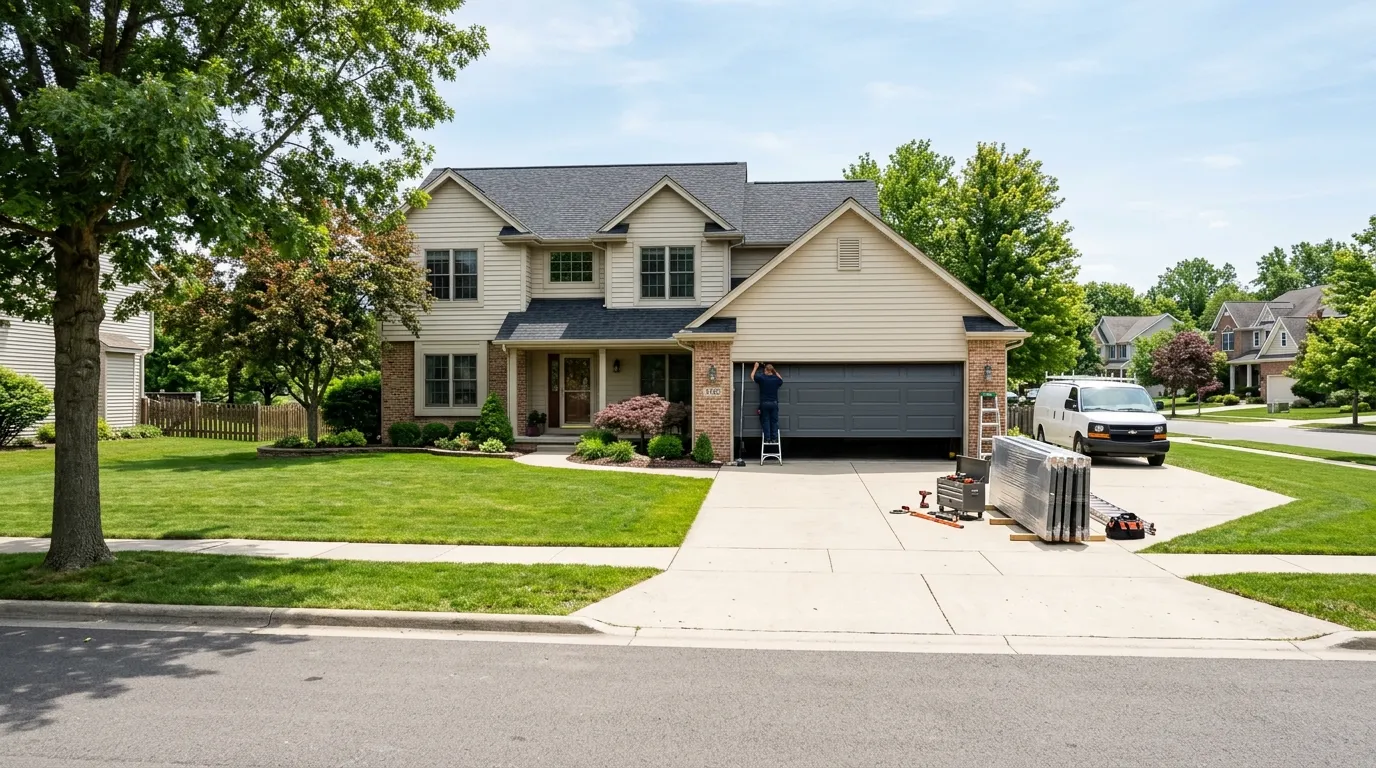
Most of Firestone went up well after 2000, which puts it on the newer end of what we see across the Longmont service area, where homes date anywhere from 1952 to 2010 with a median around 1997. That gap matters. A house built in the early 2000s came with a builder-grade torsion spring rated for a set number of cycles, usually good for somewhere around seven to nine years of normal use before fatigue sets in. If your door is original to the house, that spring has likely been opening and closing since the mid-2000s and it's simply worn out its steel. This isn't a corrosion problem or a botched install from decades back. It's a factory-spec spring that did its job and reached the end of its rated life at roughly the same time as every other door on the block, because the block was built in the same three or four years. Add in the cold-climate demands on steel that gets stiff and brittle in winter, and a spring already near the end of its cycle count has one more reason to give out on a January morning instead of a mild one.
What You Are Seeing
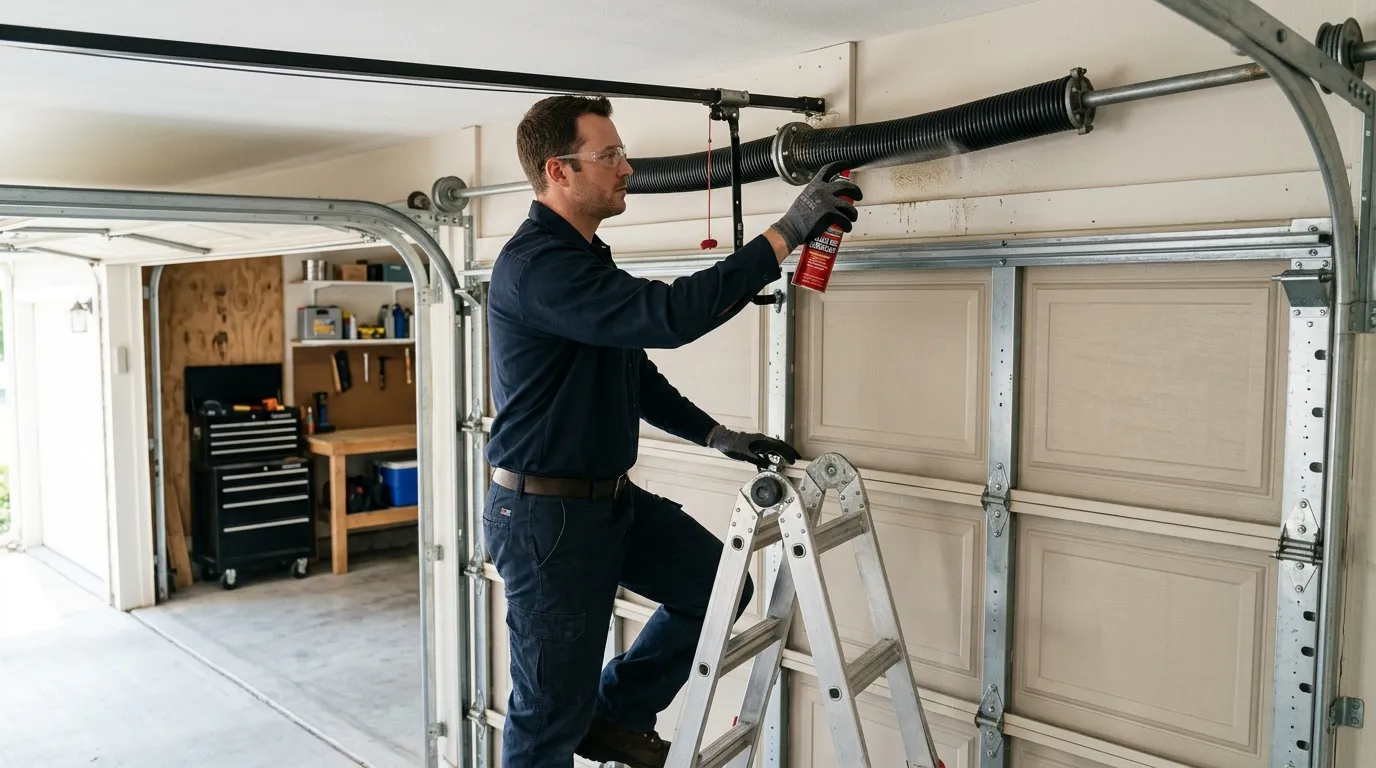
A door that won't budge, or one that lurches up a few inches and stalls, points to a broken torsion spring rather than an opener problem. Look above the door at the horizontal bar over the header. If you see a gap in the coil, or one side of the bar sitting lower than the other, that's your answer. Some owners hear it before they see it: a sharp bang from the garage, often when nobody's touched the door, which is the spring letting go under tension. On newer builds like the ones common in Firestone, you'll typically find a single torsion spring on a standard double door, sized to the door's weight and factory-installed with a winding cone that isn't meant for repeat adjustment. If the opener strains, reverses, or the door feels heavier than it used to before it fails outright, that's the spring losing strength gradually rather than snapping. Either way, don't force the door by hand or run the opener repeatedly. A spring under partial tension can shift unexpectedly, and the drums and cables around it aren't built to take the load alone.
How Long You Are Without the Door
A single torsion spring swap on a door with no secondary damage is a same-visit job once we're on site with the correct spring in hand. The time that adds up is mostly the drive and the diagnosis, not the repair itself. Because the housing stock here is newer and more consistent in door size and spring rating than older parts of the service area, we can usually confirm the spring type over the phone before we head out, which cuts down on a second trip for the wrong part. Where it runs longer is if the cables or rollers need replacing alongside the spring, or if the opener has burned out trying to lift a door on a broken spring for days before anyone called. That's a case where the door itself is fine but the machine trying to move it isn't, and that adds a separate repair to the visit.
The DIY Question
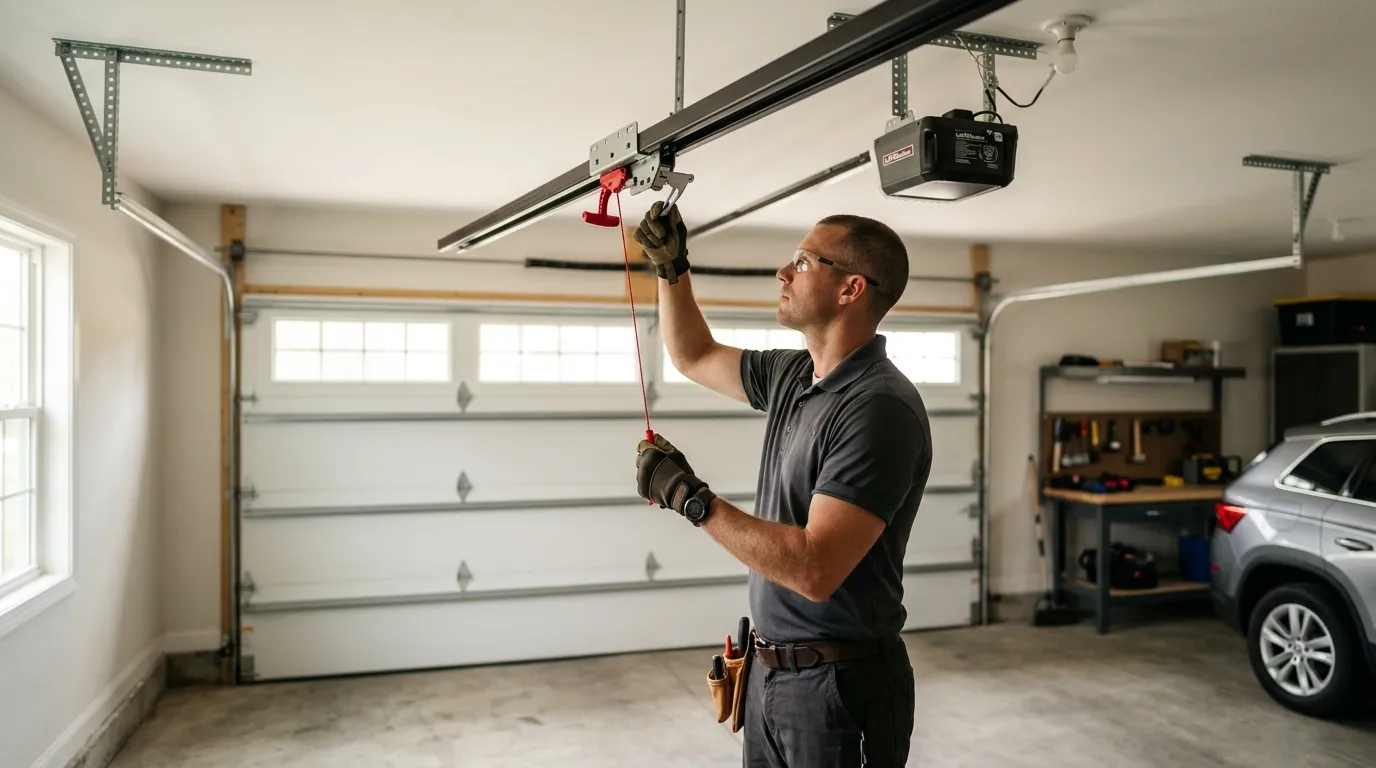
Don't wind or unwind a torsion spring yourself. The tension stored in even a standard residential spring is enough to break bones or worse if the winding bars slip, and that risk doesn't change because the door is newer or the house is nicer. What you can safely do is the diagnosis: look at the spring above the header for a visible gap, listen for that bang, and note whether the door stalls partway or won't lift at all. That information helps on the phone. Given how uniform the construction is across Firestone's 2000s-era subdivisions, a lot of homeowners find their neighbor's door failed the same way around the same age, which tells you this is a wear issue tied to the house's build year, not something you did wrong. If you're at all unsure whether it's the spring or the opener, don't keep running the opener to test it. That's the fastest way to turn a spring repair into a spring-and-opener repair.