What Is Going On
Longmont's housing stock runs from 1952 through 2010, with the median build year landing at 1997. Across the 23 named areas we cover, most of what's actually on the ground dates to the 1980s and 90s - a wave of construction that shipped garage doors with thin vinyl bottom seals and single-flap jamb weatherstripping. That rubber had a service life, and for a huge share of these houses, that life is over.
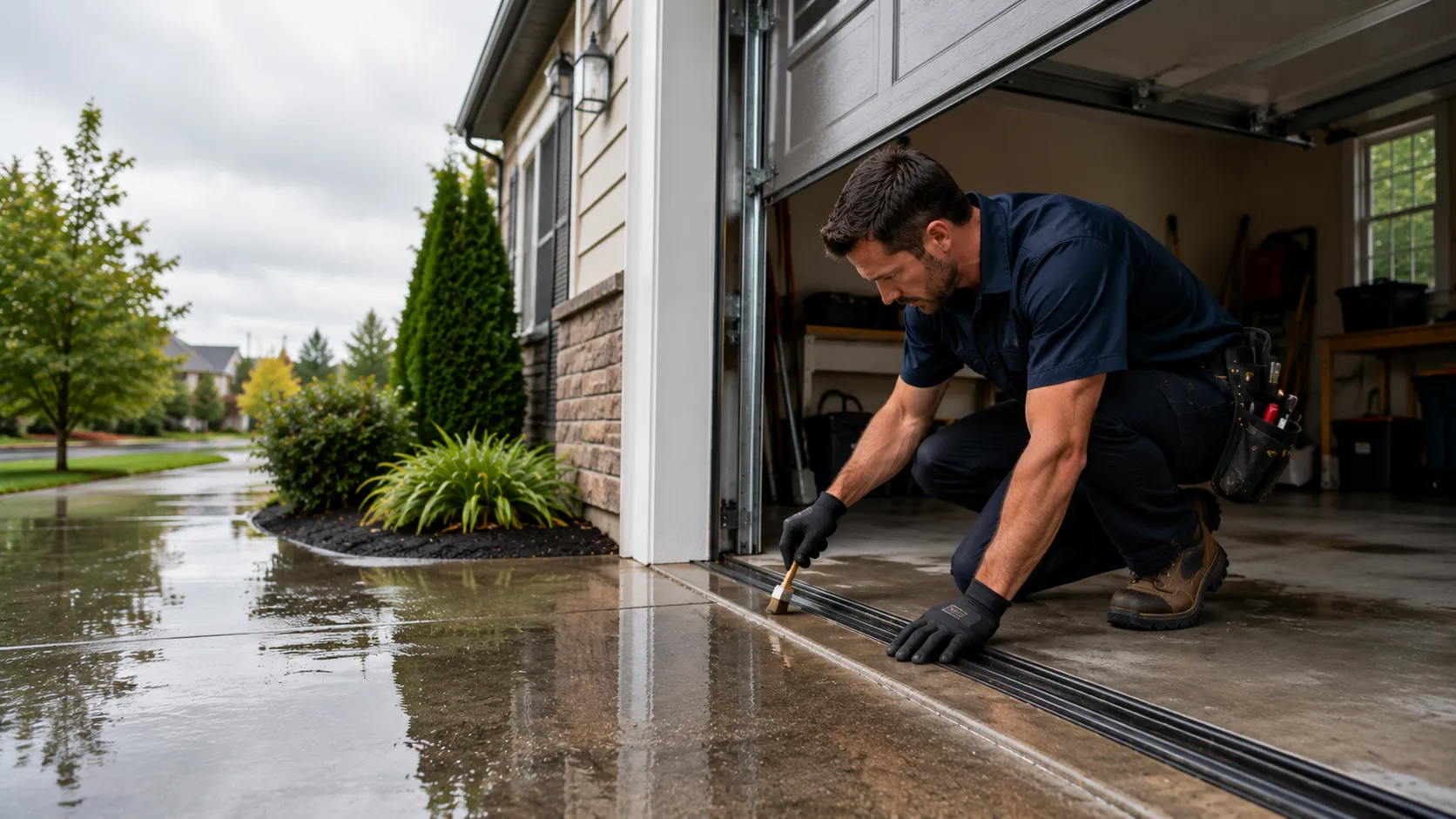
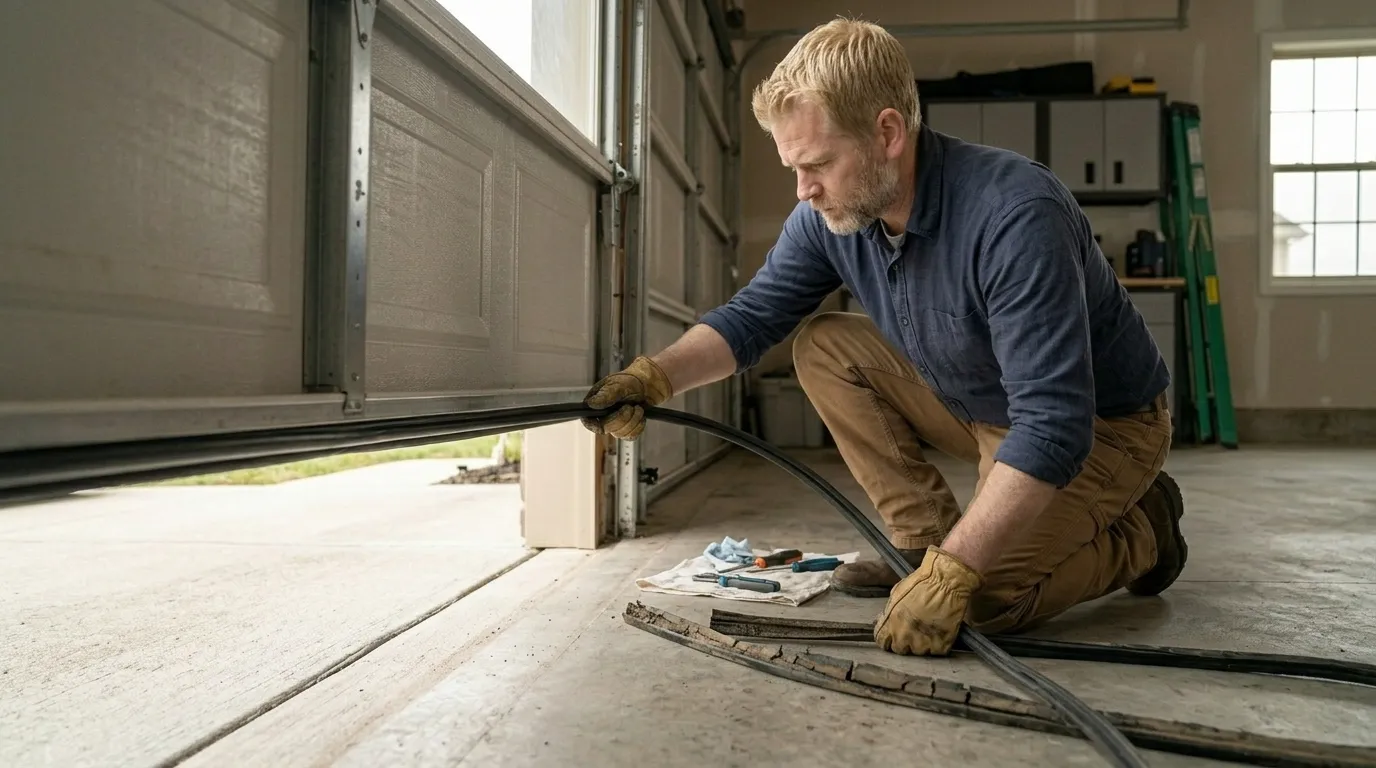
What you notice first is cold air along the floor, right where the bottom panel meets the slab. Sometimes it's a draft you can feel with your hand. Sometimes it's just a garage that never warms up even with the door shut for days. Either way, the seal has hardened and shrunk away from the concrete, or the jamb weatherstrip has split at the corner where it flexes every time the door cycles.
On a house from that 1980s-90s wave, the original seal is original. Nobody re-weatherstripped it along the way, because nobody thought about it until the draft got bad enough to notice. That's the pattern we see house after house in this area - not a design flaw, just rubber doing exactly what rubber does after three decades outdoors.
When It Stops Being a DIY Job
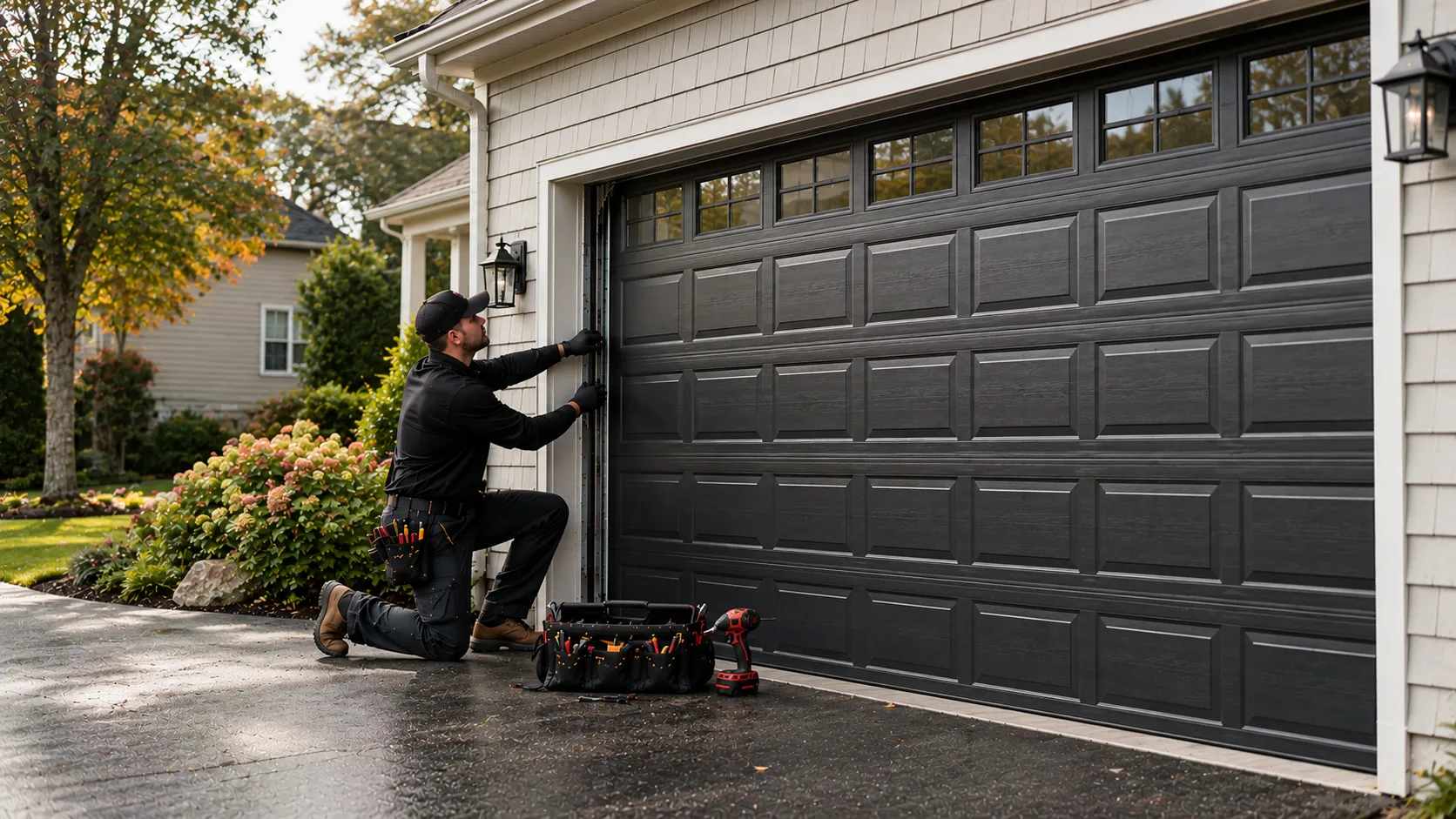
A straight bottom-seal swap is a fair DIY job on most doors - pull the old vinyl out of the retainer track, feed the new strip in, done in under an hour. Where it stops being that simple is when the seal has been letting in water or ice for a season or two and the bottom panel itself has started to rust or delaminate underneath. At that point you're not replacing weatherstrip, you're replacing a panel, and that's a different job.
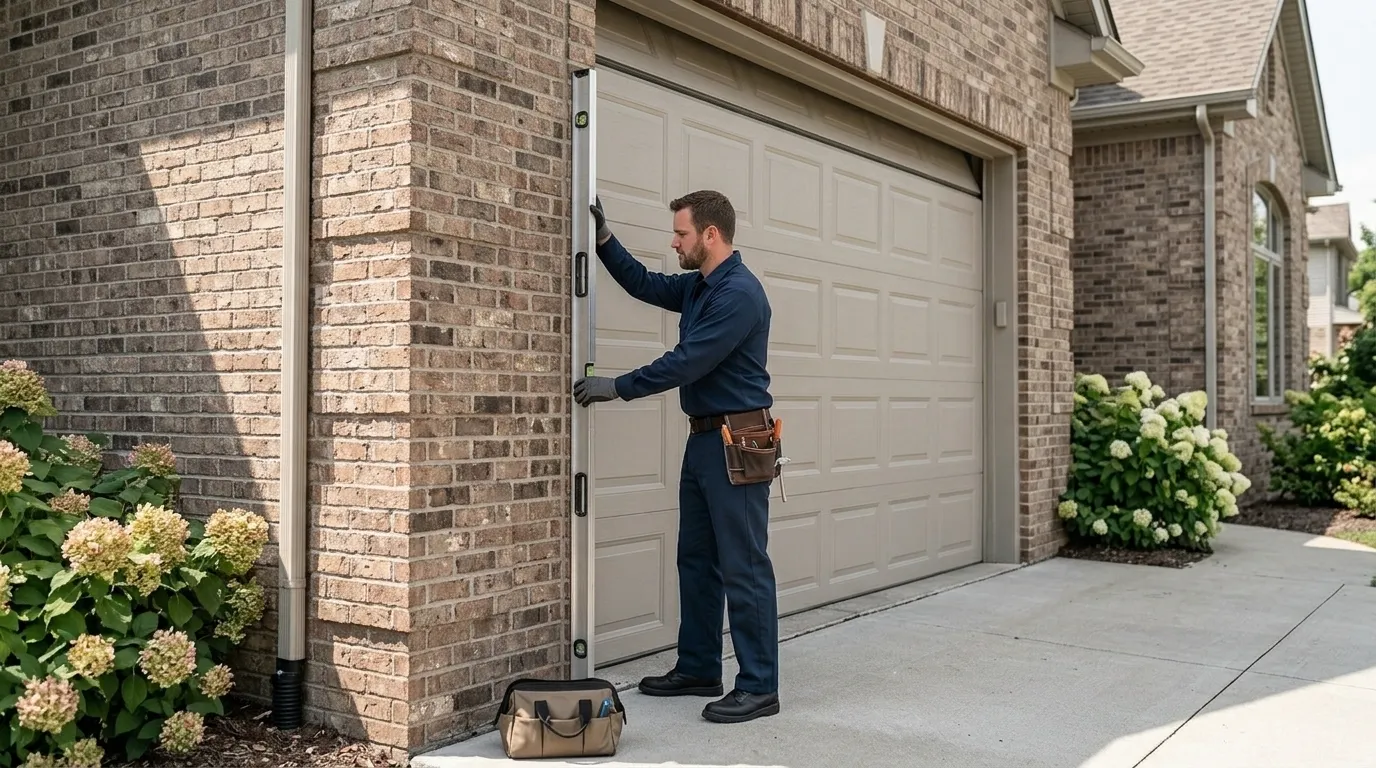
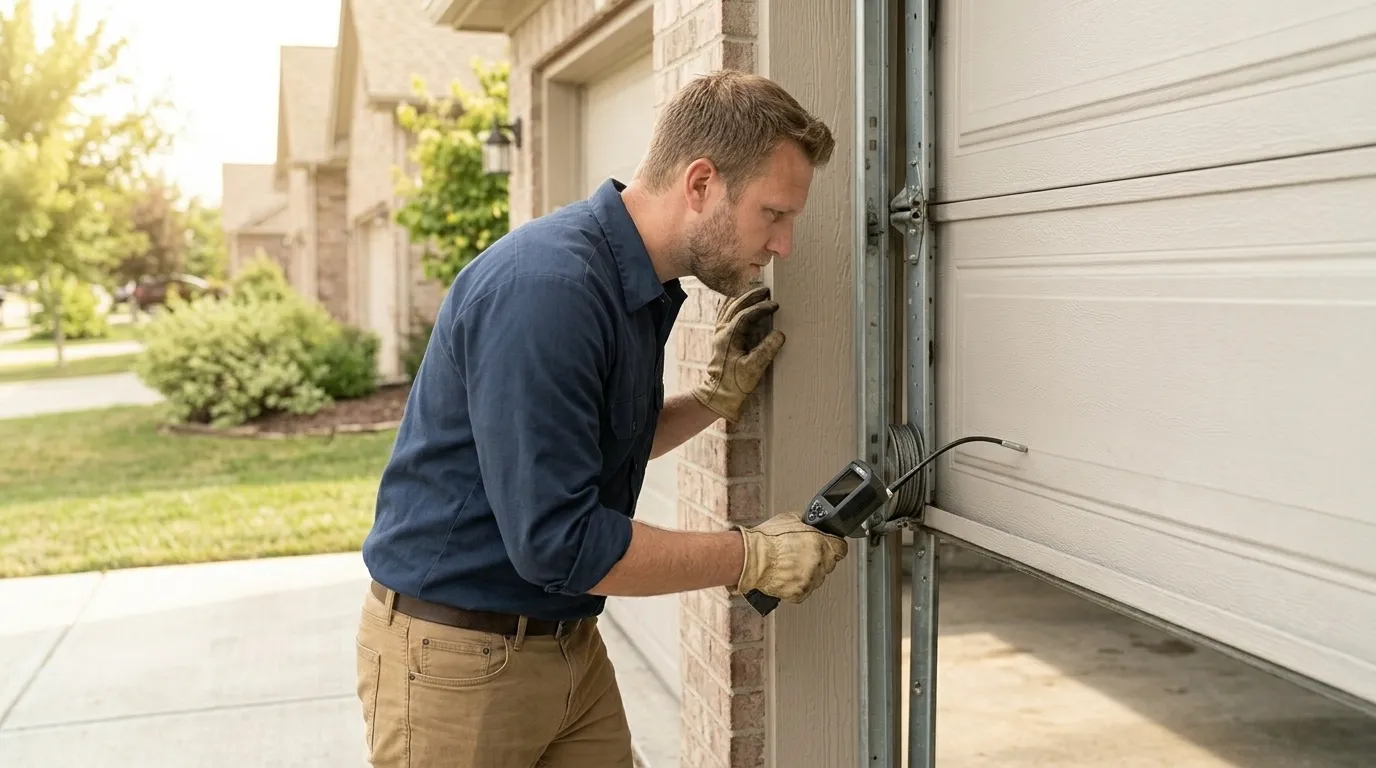
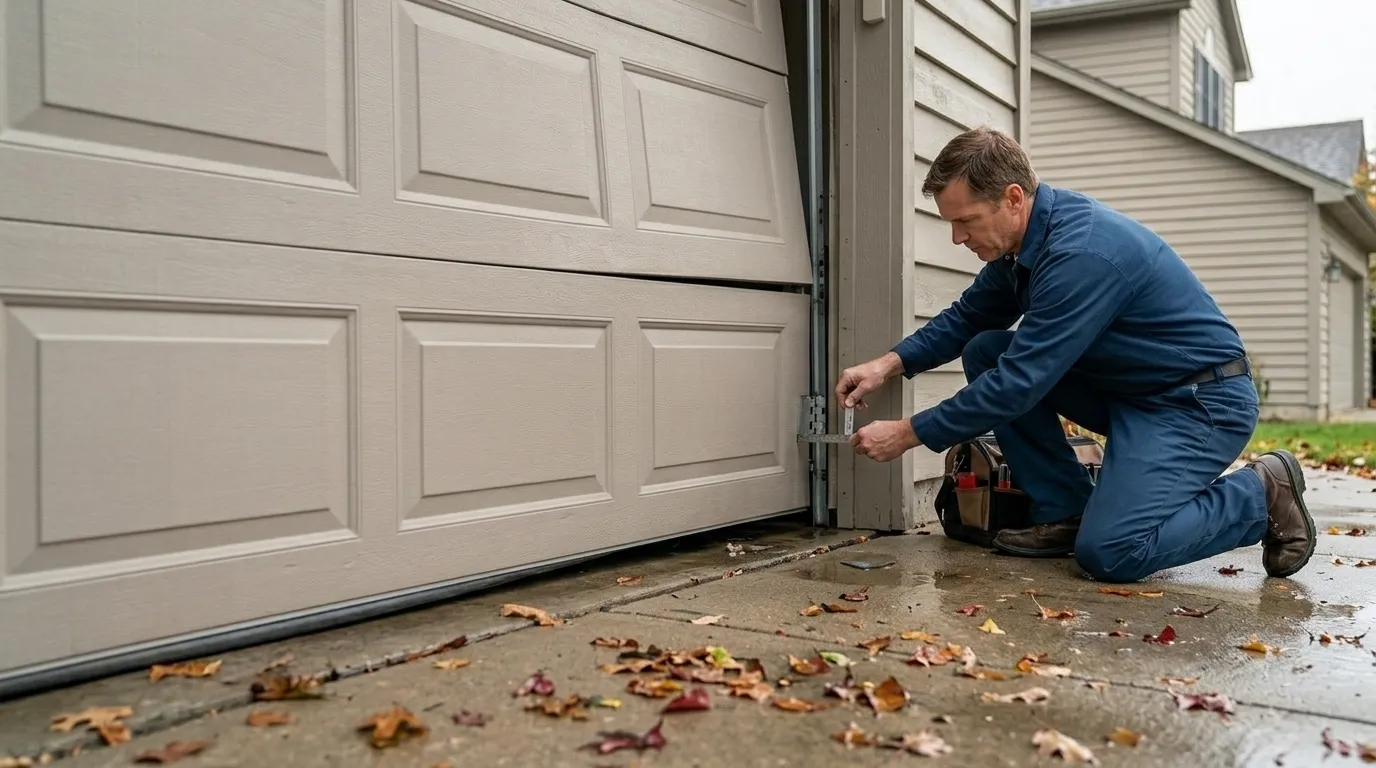
It also gets past DIY when the draft isn't coming from the bottom seal at all but from the jamb weatherstrip pulling away from a frame that's shifted slightly, which happens on older aluminum-frame doors from that same 1980s-90s build era. Realigning a frame is not a caulk-gun fix.
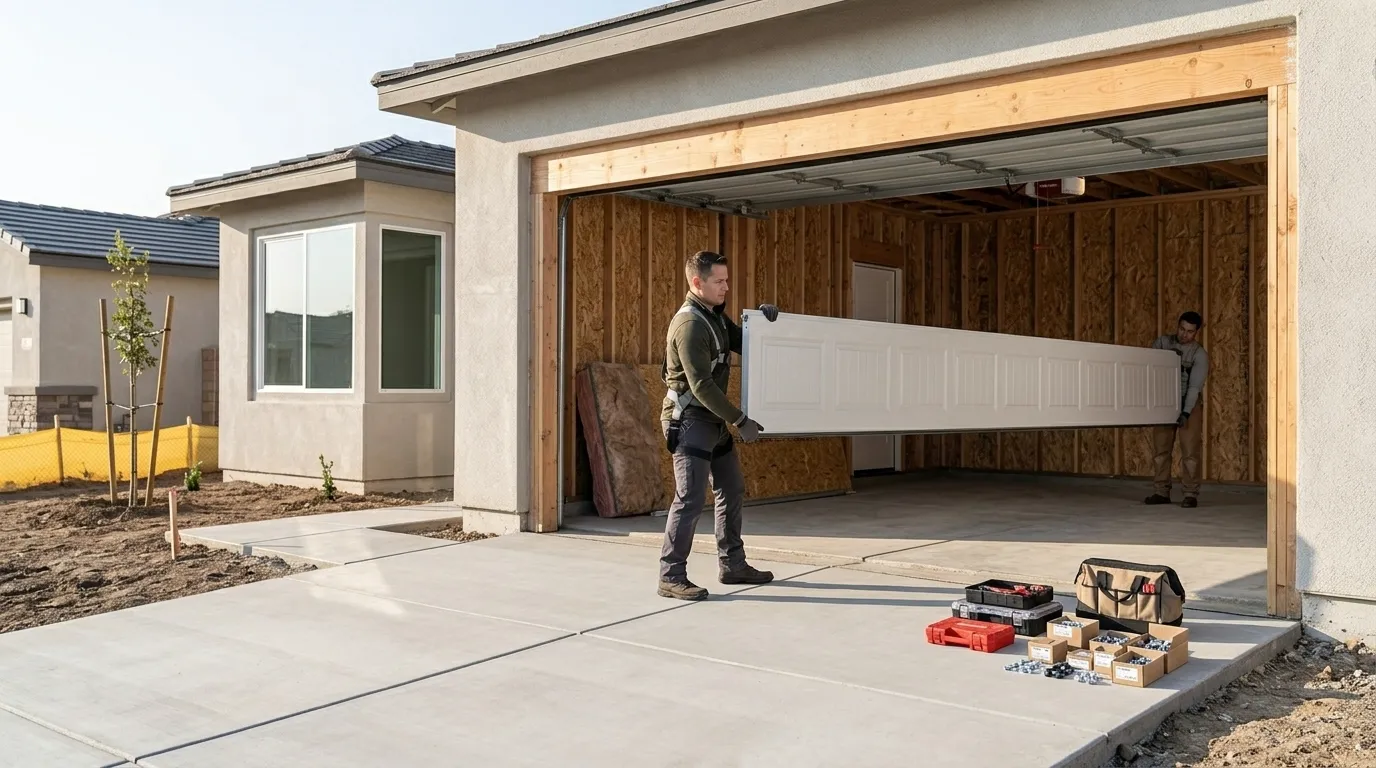
Honest limitation here: we don't stock every seal profile for the older aluminum-frame doors from that era on the truck. Some of those need a special-order strip, and that means a second visit rather than a same-day fix. If your door is one of the newer ones from the 2000s stock, parts are usually on hand and it's a one-trip job.
Doing Nothing For Now
A draft under the door isn't an emergency. The door still opens, still closes, still does its job. But leaving it costs you in ways that aren't obvious in the moment - a cold garage pulls heat off any wall it shares with living space, and in a climate this cold, that's not a small loss over a full winter.
There's also the water side of it. A gap at the bottom seal doesn't just let in cold air, it lets in meltwater and slush that pools on the slab and eventually finds its way to whatever's stored along that wall. On the 1980s-90s stock that makes up most of this area, we see corrosion at the bottom corner of steel panels start exactly there, at the seal line, long before the rest of the door shows any wear.
If the draft is new this season, waiting a few weeks to see if it's worth fixing is reasonable. If it's been there more than a winter or two already, the cost of doing nothing is quietly higher than the cost of a seal swap, and it doesn't reverse itself once the rubber's gone.