This Area's Housing
Lafayette's housing stock centers on a median build year of 1993, which puts it a few years ahead of the newer construction that pulls the rest of our service territory's median up to 1997. That matters because a house built in 1993 was framed and fitted with garage door hardware from a different era of manufacturing than one built in 2005. With 13,056 households in Lafayette, we're not talking about a handful of outliers - this is the dominant era for the town.
The practical result: a lot of these garages still have their original torsion spring setup, and a fair number never had the opener swapped out even once. Median household income here runs $110,431, a bit under the broader area's $116,074, which we mention only because it shapes the kind of call we get - more repair requests to keep an existing door running right, fewer full teardown-and-replace jobs than you'd see in a newer subdivision.
We're not guessing at this from a windshield survey. It's the pattern across roughly three decades of doors installed under a build code that predates a lot of the safety and insulation standards common today.
What That Means for Doors
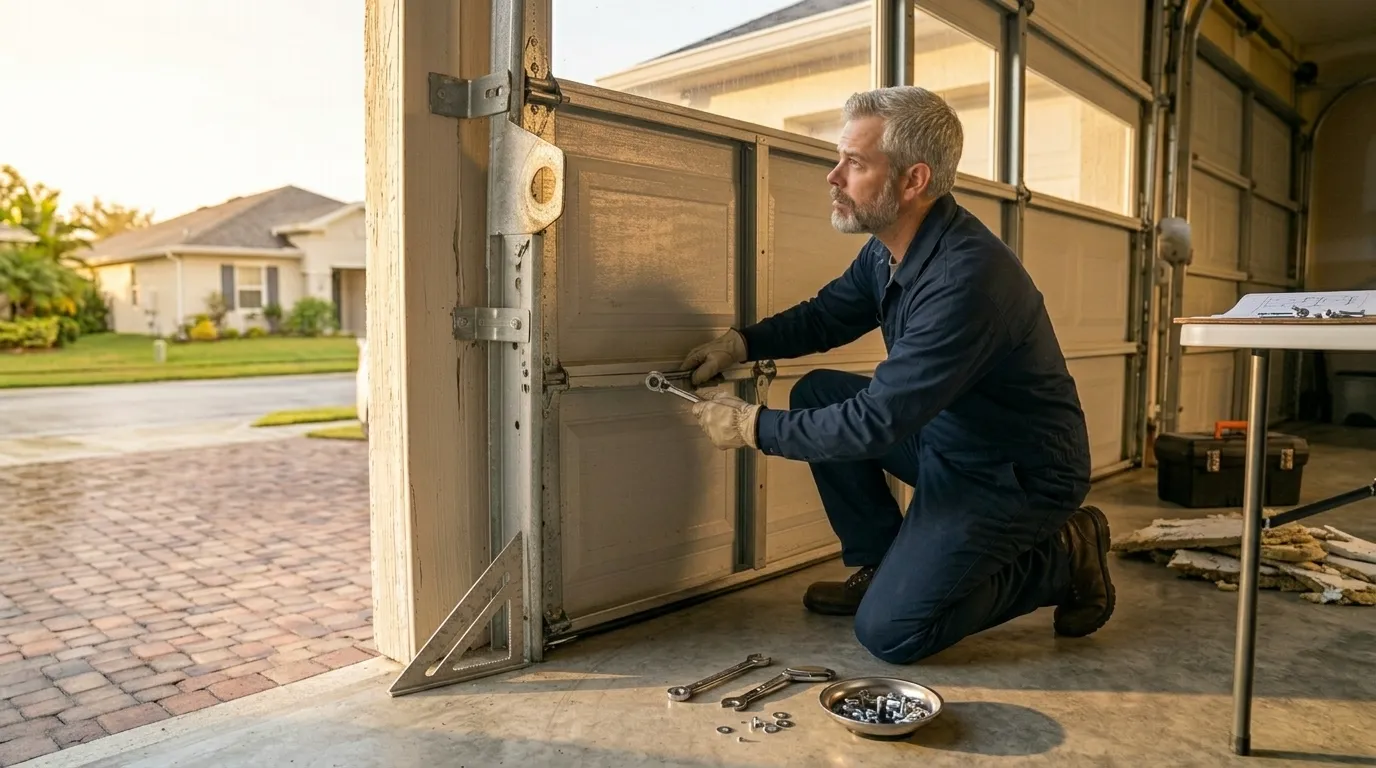
A door installed around 1993 typically means a torsion spring rated for a specific door weight that's now been cycling for close to 30 years. Springs don't fail on a schedule, but they do fail - and a spring that old is well past the point where we'd recommend anything but full replacement, not a patch.
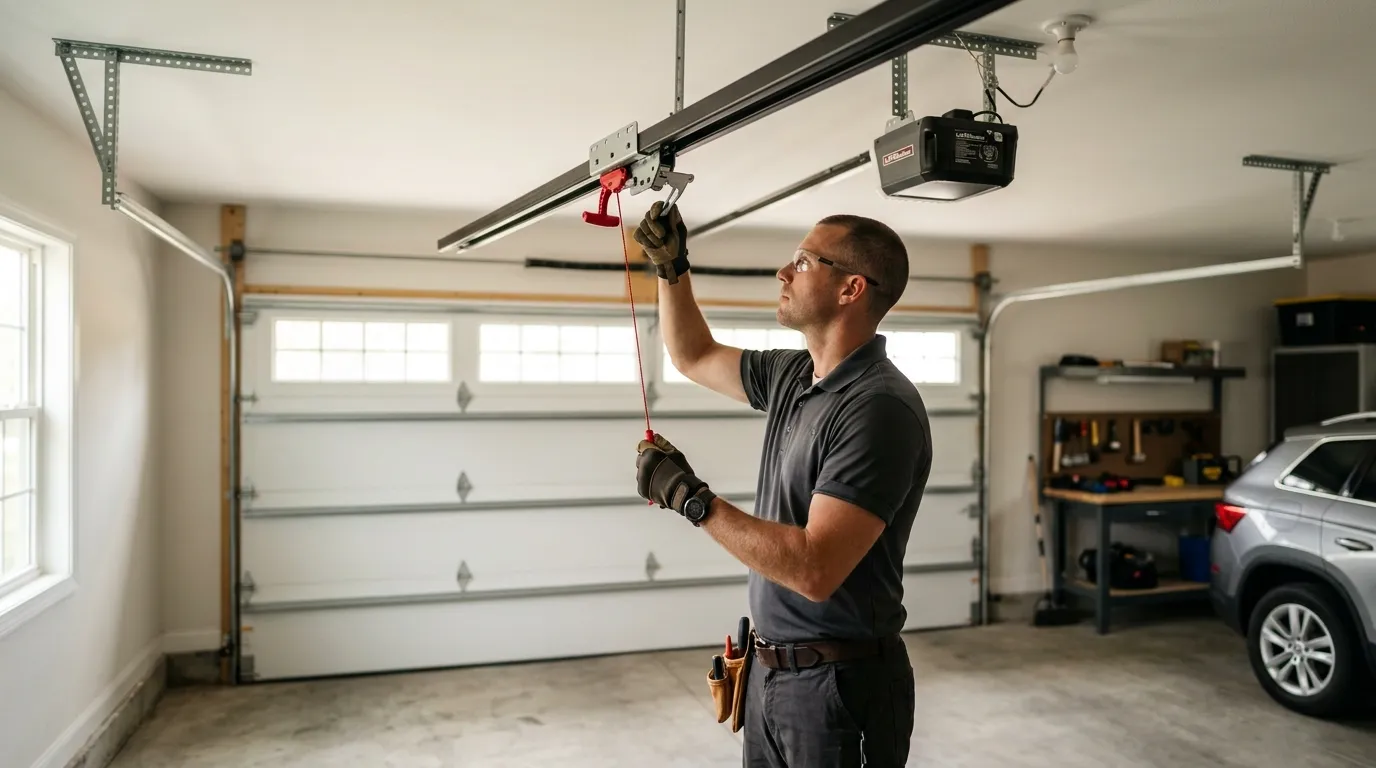
Openers from that window are also worth flagging. Chain-drive units from the early-to-mid '90s were built solid, but the circuit boards and safety-reversal sensors in them are dated technology now. If a homeowner in Lafayette tells us their opener is original to the house, we're not surprised - and we're also not surprised when the logic board is the actual point of failure, not the motor.
The cold severe climate this whole area sits in adds another layer. Steel panels and their seals age differently under repeated freeze-thaw cycling than they would somewhere milder, and a door hardware set from 1993 wasn't built with today's weatherproofing standards in mind. None of this means every door here is due - plenty of these units run fine with basic upkeep. It just means the failure patterns lean toward age-related wear rather than defect.
The Calls We Get From Here
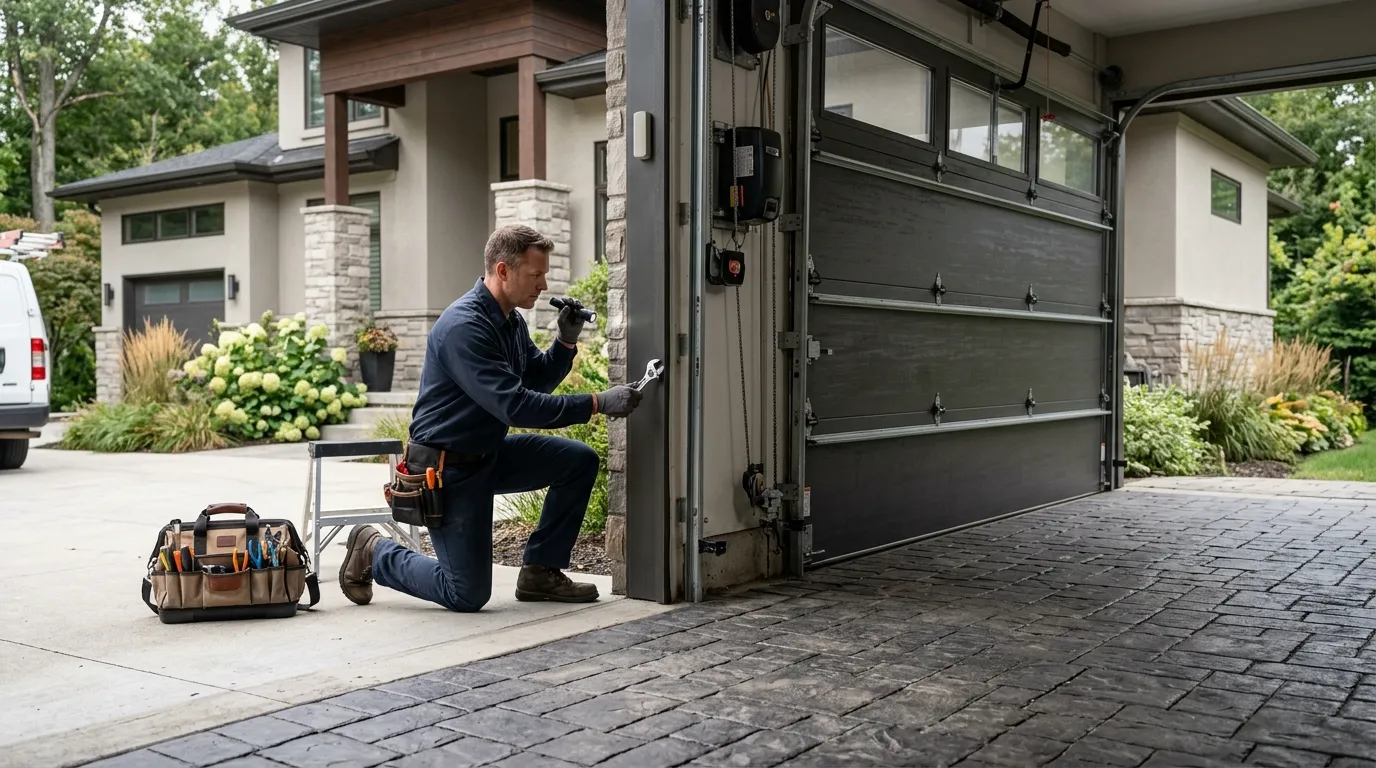
We work out of Longmont, about 12 miles from Lafayette, and the trip doesn't change what we bring to the job - same trucks, same stock, same crew that handles the rest of the territory. What changes is what we expect to find once we're there: hardware from a build era that's different enough from the newer stock closer to Longmont that we plan the truck load differently before we even leave.
Most Lafayette calls come in as either "the door won't open" - often a spring - or "the opener is making noise and not lifting right," which points to a motor or gear set that's finally worn out after three decades of use. We get fewer calls here for brand-new installation issues than we do in newer parts of the territory, simply because there's less new construction in the mix.
If you're not sure whether your door's problem is a quick fix or something bigger, the age of the house is actually a decent starting clue - and for Lafayette, that starting point is almost always the early 1990s.